vivo X Fold6 In-Depth Review: Is This the Ultimate Foldable?
Verdict
Comprehensive Review: vivo X Fold6
Introduction, specs, unboxing
Introduction
Historically, choosing a foldable device meant accepting a series of trade-offs. Because internal space is divided between two chassis halves, users typically had to settle for mediocre camera hardware and underwhelming battery capacities—there simply wasn't enough room to house flagship-grade components alongside the folding screen mechanism.
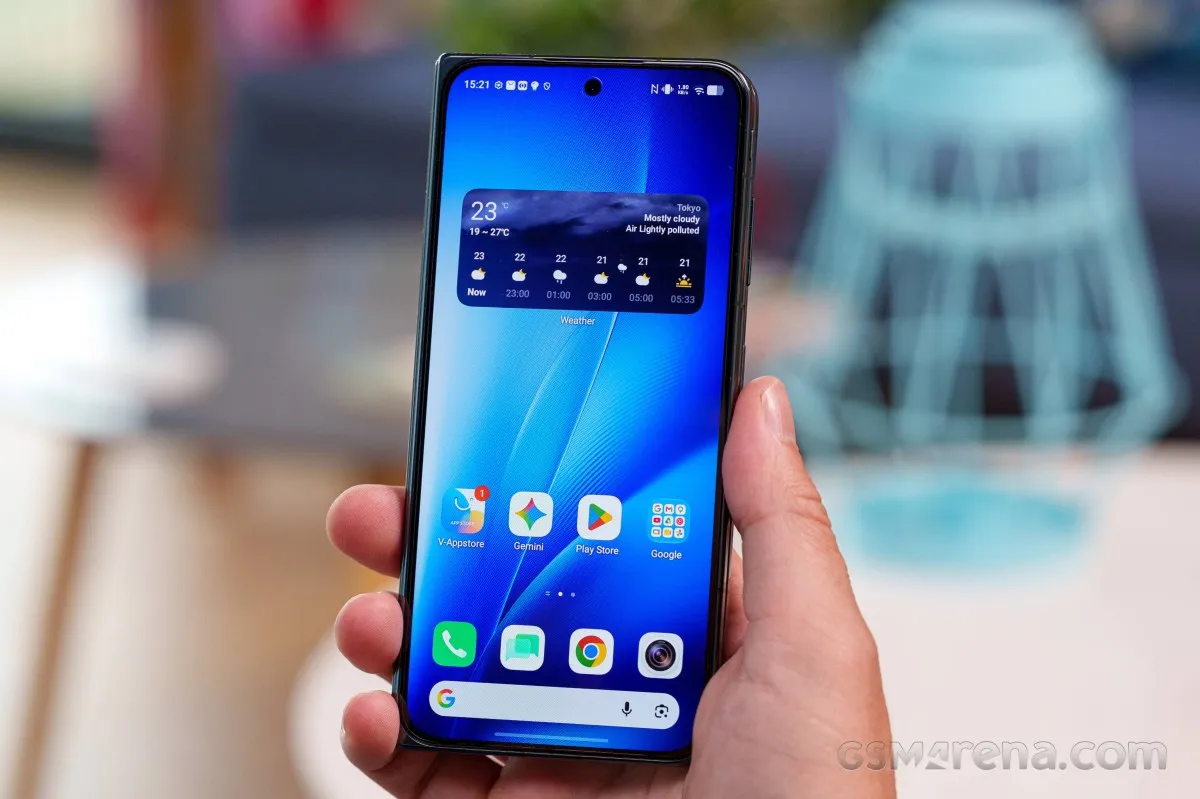
Vivo's engineering team aimed to dismantle these limitations. Enter the X Fold6, a device designed to redefine the standards for endurance and photographic capability within the book-style foldable category.
vivo X Fold6 specs at a glance:
- Body: 157.2x145.7x4.4mm, 228g; Glass front (closed), aluminum frame, glass-fiber reinforced plastic back; IP58/IP59 dust protected and water resistant (high-pressure water jets; immersible up to 1m for 30 min).
- Display: 8.02" Foldable LTPO AMOLED, 1B colors, 120Hz, HDR10+, HDR Vivid, Dolby Vision, 2312x2504px resolution, 9.75:9 aspect ratio, 425ppi; Cover display:, LTPO AMOLED, 120Hz, HDR10+, Dolby Vision, 5000 nits (peak), 6.51 inches, 1120 x 2528 pixels, 20:9 ratio.
- Chipset: Mediatek Dimensity 9500 Super (3 nm).
- Memory: 512GB 12GB RAM; UFS 4.1.
- OS/Software: Android 16, OriginOS 6 Fold.
- Rear camera: Wide (main): 200 MP, f/1.7, 1/1.4", PDAF, OIS; Telephoto: 50 MP, f/2.6, 70mm, 1/1.95", 0.8µm, PDAF, OIS, 3x optical zoom; Ultra wide angle: 50 MP, f/2.1, 16mm, 119-degree, 1/2.76", 0.64µm, PDAF.
- Front camera: Wide (main): 20 MP, f/2.4, 21mm, 1/3.6", 0.61µm; Wide (main): 20 MP, f/2.4, 21mm, 1/3.6", 0.61µm;.
- Video capture: Rear camera: 8K@30fps, 4K@30/60fps, 1080p@30/60fps, gyro-EIS; Front camera: 1080p@30fps.
- Battery: 6900mAh; 80W wired, 40W wireless, Reverse wired, 5W reverse wireless.
- Connectivity: 5G; Wi-Fi 7; BT 5.4, aptX HD, LHDC 5; NFC; Infrared port.
- Misc: Fingerprint reader (side-mounted); stereo speakers.
Now entering its global launch phase, the vivo X Fold6 introduces two pivotal enhancements over the previous X Fold5. First is the massive 200MP Zeiss-branded primary sensor. Utilizing Samsung's 1/1.4-inch HPB sensor—the same hardware that powered the high-end telephoto lenses in the vivo X300 and X300 Pro—it brings professional-grade clarity to a foldable. The imaging array is rounded out by a 50MP LYT602 telephoto lens with 3x optical zoom and a 50MP ultrawide sensor featuring autofocus. For those needing even more reach, the X Fold6 is compatible with the ZEISS Teleconverter G2, extending the focal length to 200mm.
The second major leap is in power management. By employing a dual-battery system, vivo has achieved a staggering 6,900 mAh total capacity. This marks a 900 mAh increase over its predecessor and establishes the X Fold6 as the battery king of global foldables, surpassing the Honor Magic V6's international variant (6,660 mAh). This leap is largely thanks to the advancements in Si/C battery chemistry.
Charging speeds remain top-tier, with no compromises made to accommodate the larger cells. The device continues to support 80W wired and 40W wireless charging, alongside both wired and wireless reverse charging capabilities.
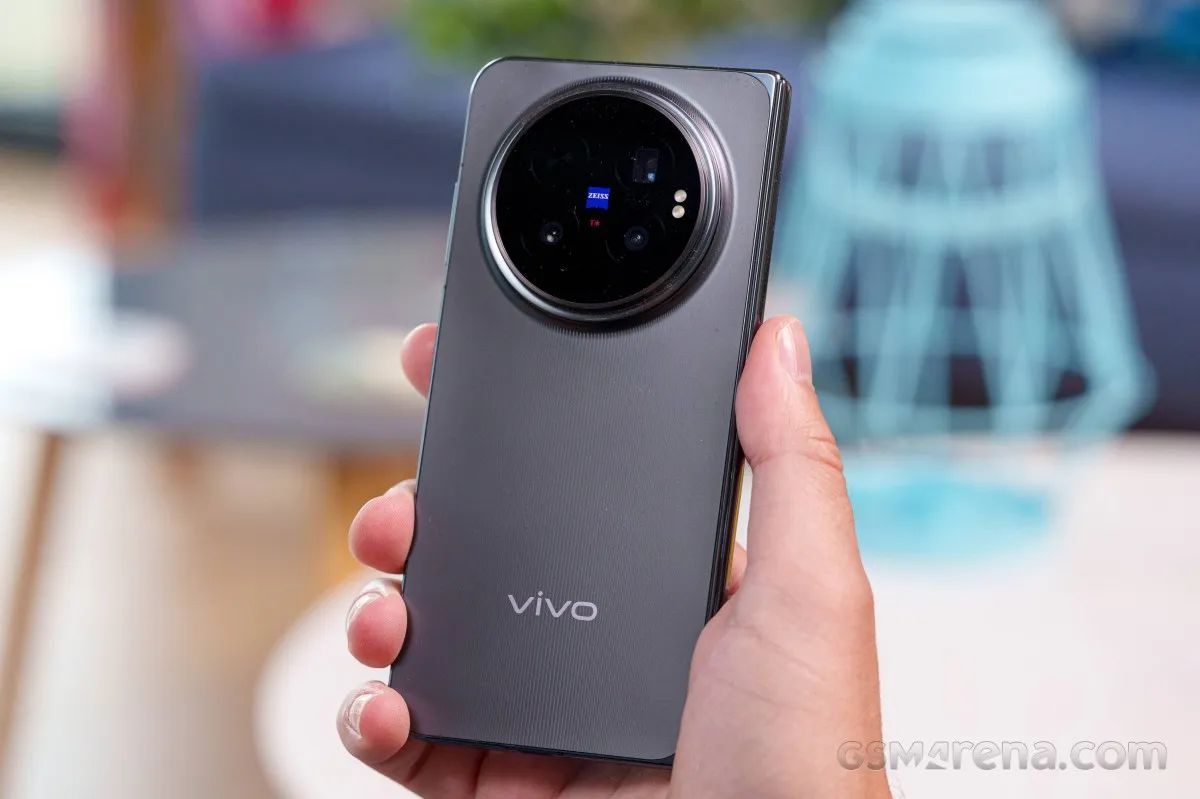
Technically, the X Fold6 checks every box. However, these gains come with a slight increase in weight compared to last year, and the oversized camera module remains a bit cumbersome. Additionally, the shift from Qualcomm to MediaTek silicon is a significant change that will require real-world testing to evaluate.
Unboxing
The debate over extravagant packaging is a polarizing one. From an environmental and logistical standpoint, oversized boxes filled with unused accessories are inefficient and contribute to e-waste. Conversely, a luxurious unboxing experience reinforces the premium nature of the investment and evokes a nostalgic era of smartphone launches where the presentation was part of the prestige.
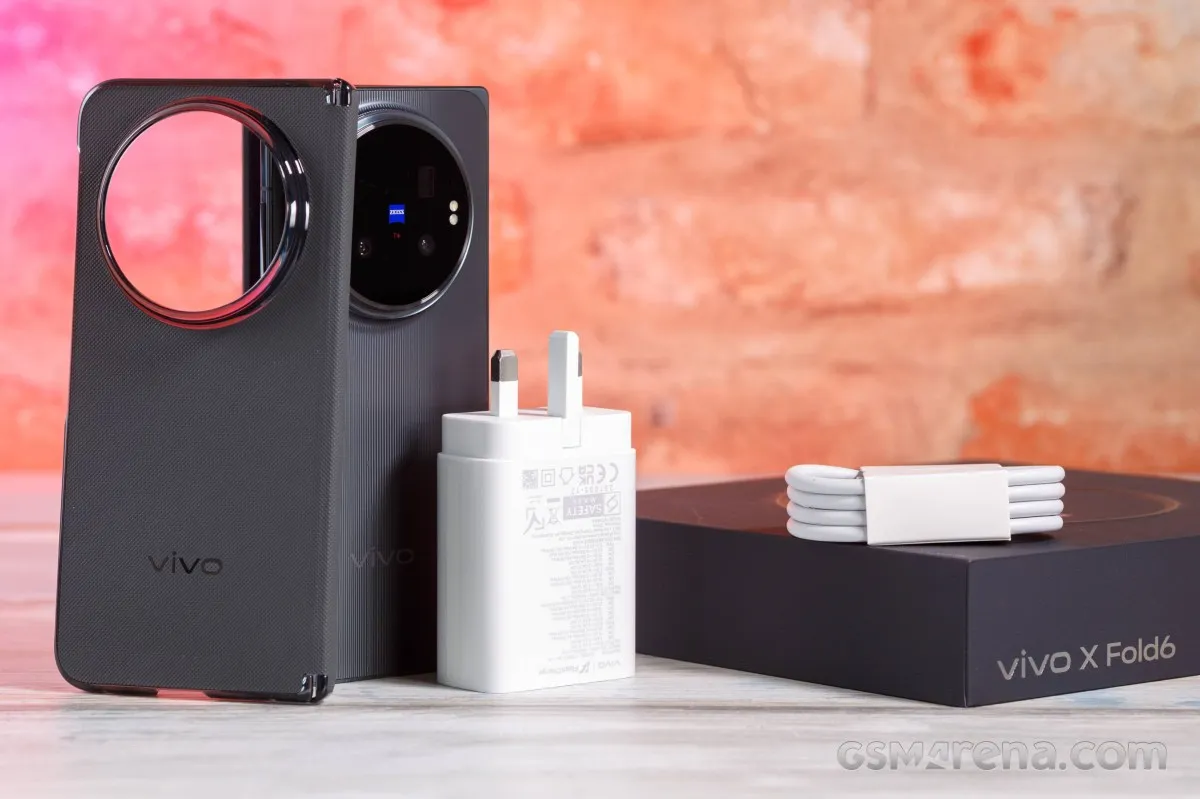
Samsung's X Fold6 arrives in a robust, two-part packaging suite that exudes luxury. The exterior is wrapped in a smooth, faux-leather material featuring elegant embossing and a raised decorative ring, ensuring a high-end first impression. However, the sustainability effort is mixed; while the box utilizes soy-based inks, the device itself is secured within a plastic cradle, a choice that feels somewhat dated in today's eco-conscious market.
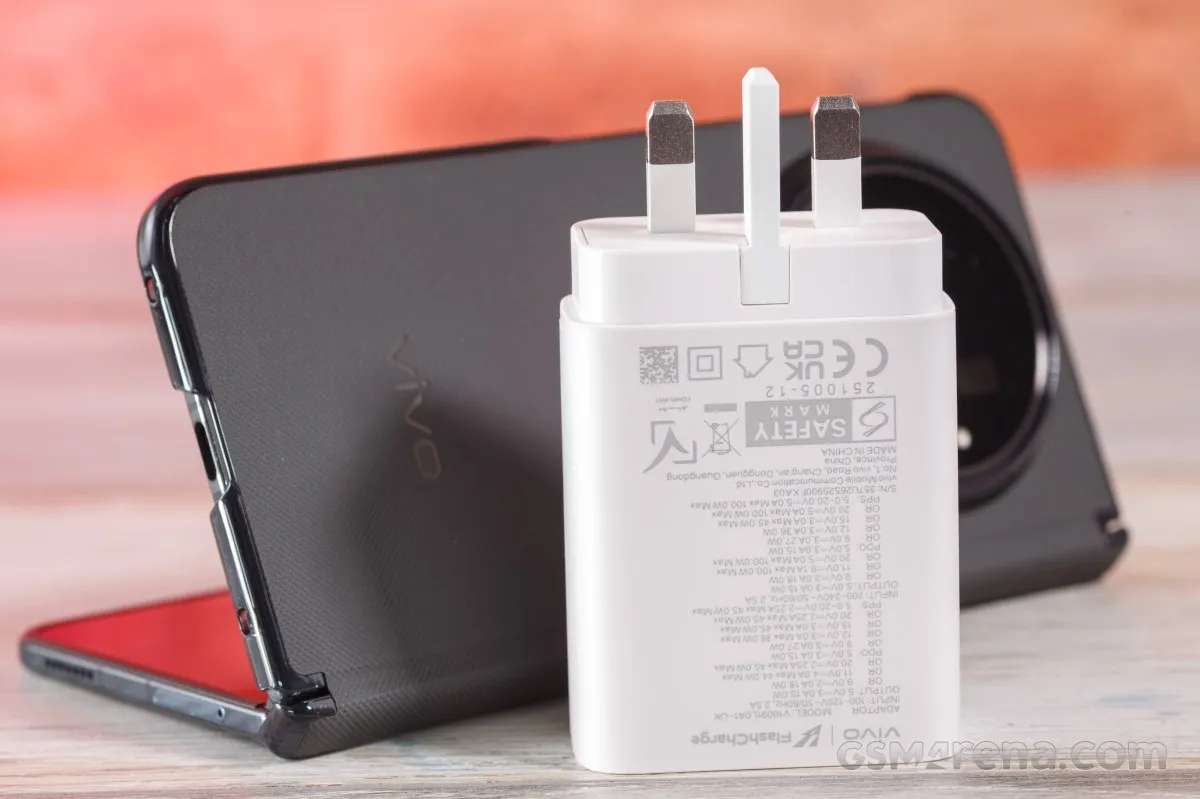
Depending on your region, the accessory bundle may vary. While EU shipments typically omit the power brick, our non-EU review unit arrived with a comprehensive charging kit. This includes a 100W vivo FlashCharge adapter (model V10091L0A1-UK) paired with a USB-C to USB-C cable. While the cable is e-Marked for 20V and 5A, it bears a "9.2A" label, aligning with the charger's capability to deliver 11V@9.1A in specific modes. To maximize charging velocities, we strongly recommend utilizing this specific pairing.
Adding further value to the retail package is a semi-transparent, hard-shell snap-on case. Although it provides basic rather than heavy-duty protection, its inclusion is a welcome gesture that saves users an immediate trip to the accessory store.
Design, build quality, handling
Aesthetics, Construction, and Ergonomics
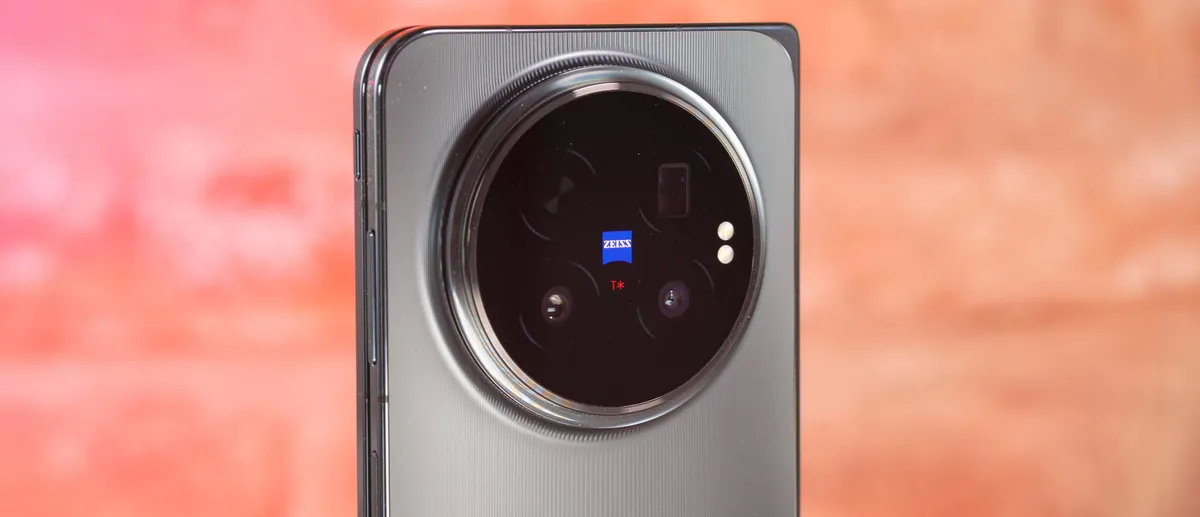
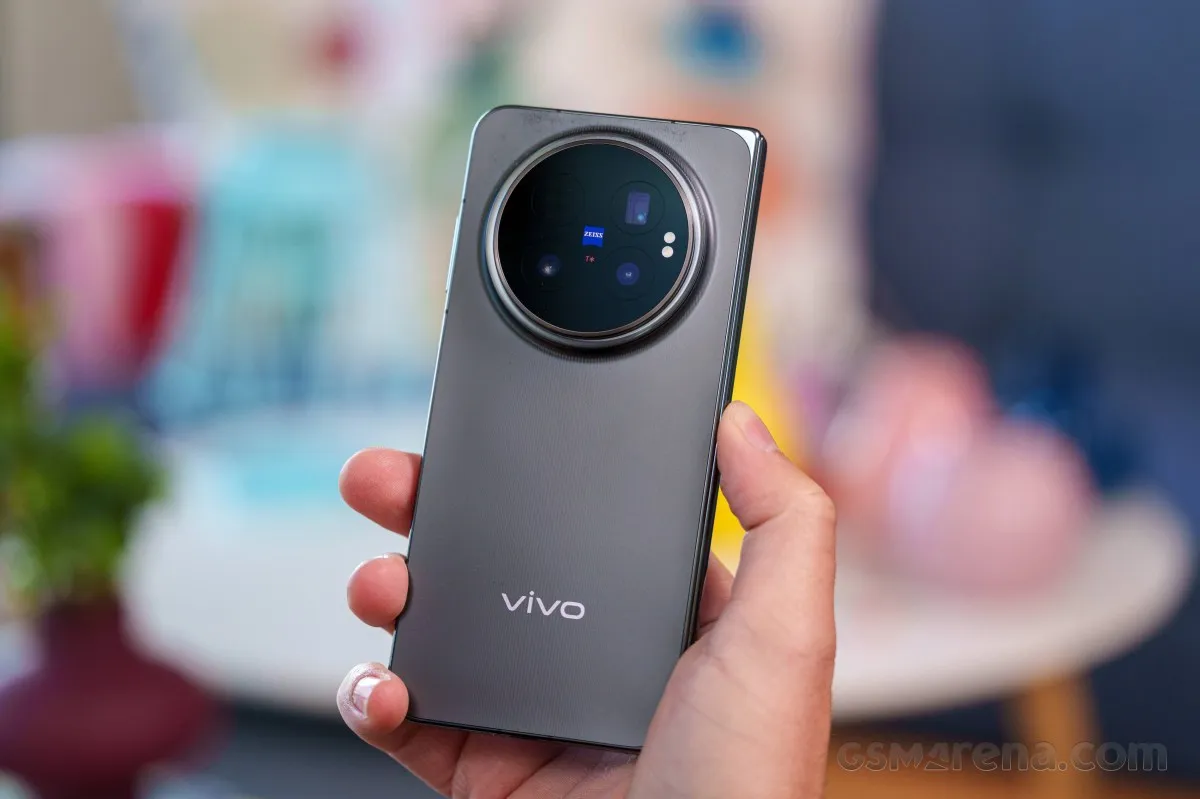
vivo has opted for an evolutionary rather than revolutionary approach to the X Fold6's design, maintaining a visual language very similar to the previous generation. The most striking element remains the massive circular camera housing on the rear. While it creates a significant protrusion, it is a necessary trade-off for housing a professional-grade camera system, including the largest sensor periscope telephoto lens currently available in a foldable device.
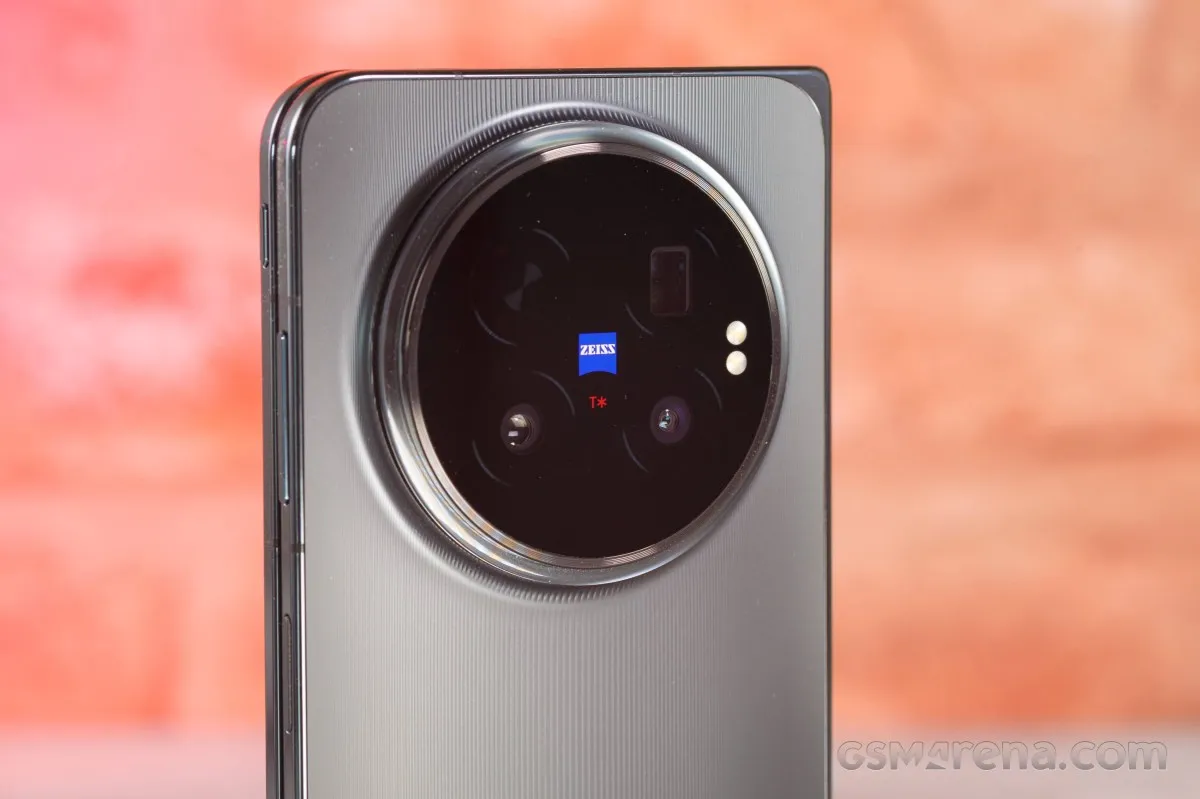
Close inspection reveals that vivo has refined the camera module. The layout has been tweaked to include two LEDs, and the island now features more pronounced chamfers. To maintain a cohesive look, the camera ring is perfectly color-matched to the chassis.
The overall silhouette of the X Fold6 has shifted toward a "rounder" aesthetic. Both the internal and external displays now feature more aggressive corner radii compared to last year's model. This aligns with modern smartphone trends, blending a flat-edge frame with deeply curved screen corners.
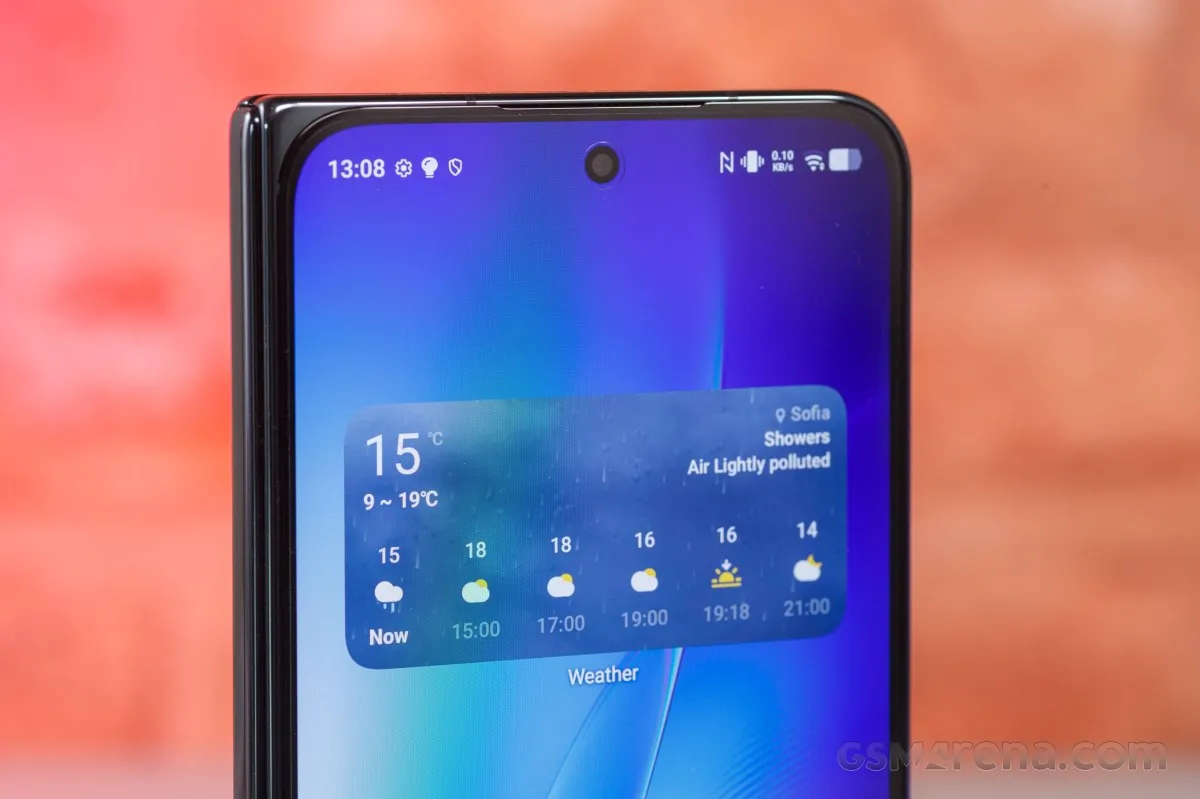
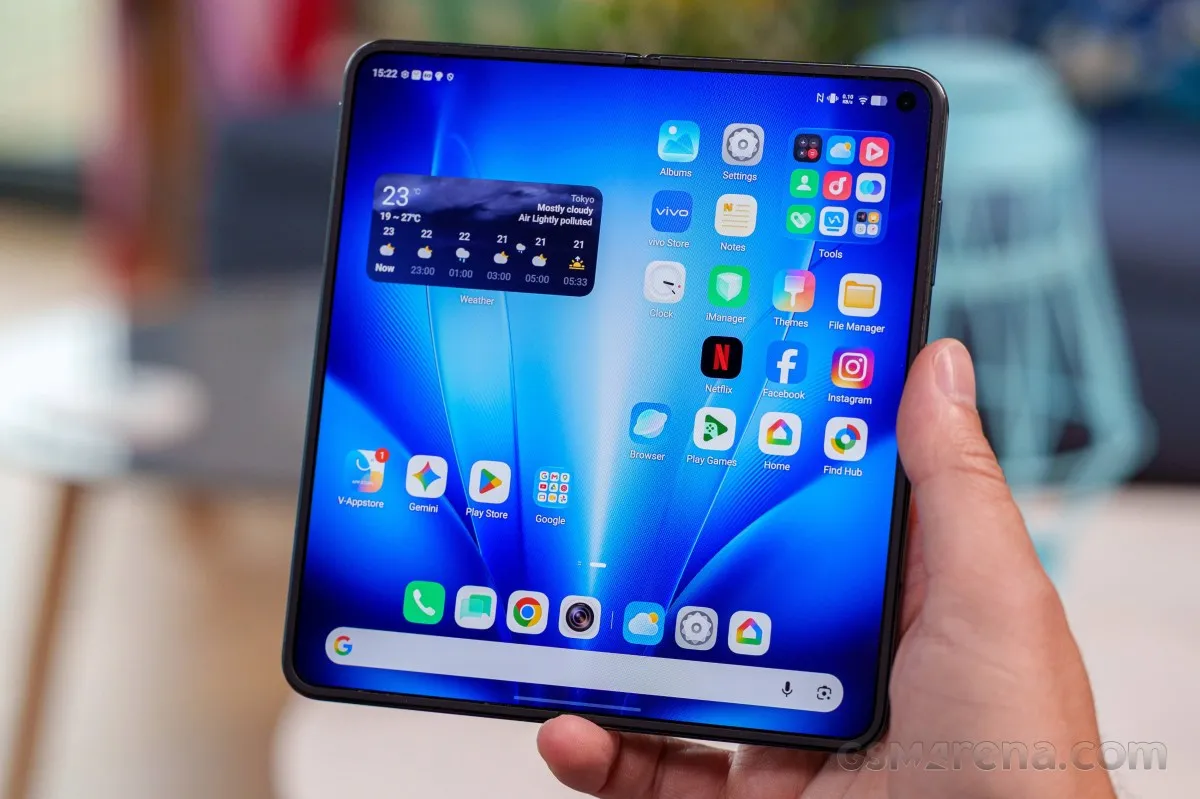
The display specifications have also seen subtle adjustments. The internal foldable screen now measures 8.02 inches diagonally—slightly smaller than before—yet the new proportions actually increase the total surface area to 206.8 cm2.
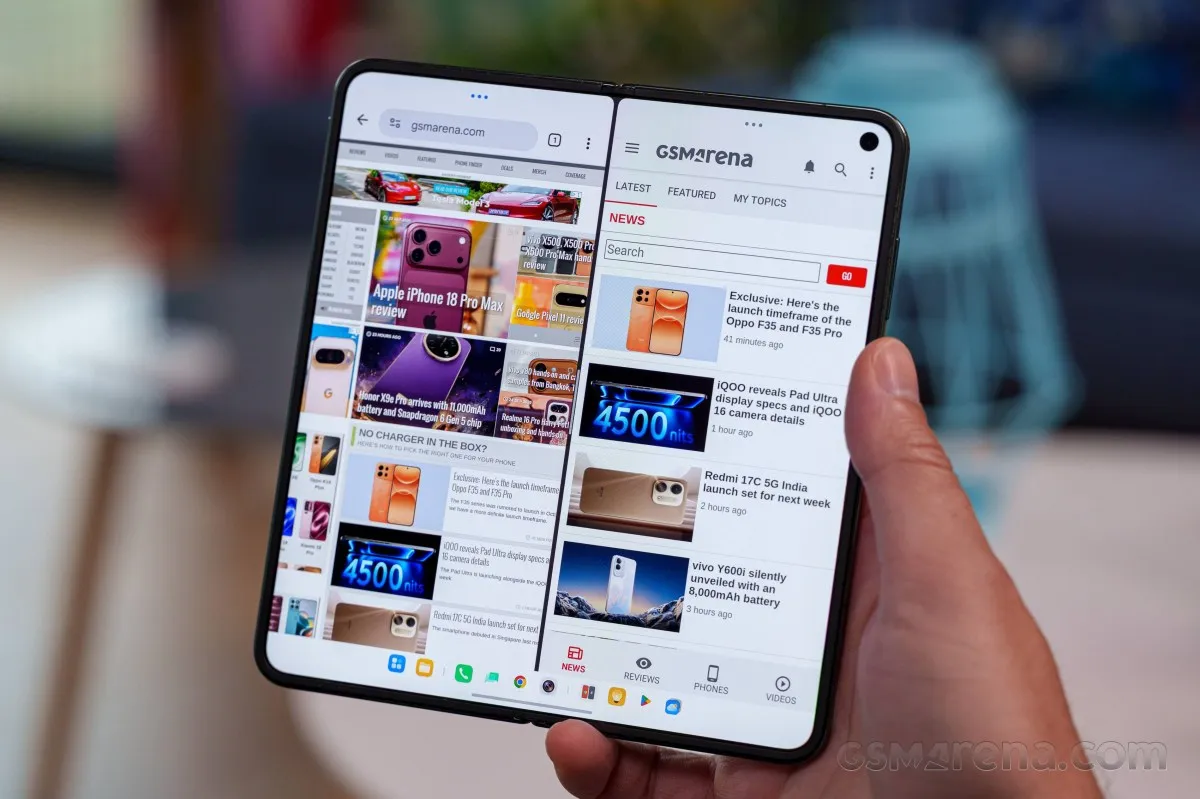
With a resolution of 2312 x 2504 pixels, the X Fold6 is technically sharper at 425 ppi, edging out the X Fold5's 2200 x 2480 resolution and 413 ppi. In practical terms, however, this density increase is virtually imperceptible to the human eye.
The more significant change is the shift in aspect ratio. The X Fold6 moves from a 1:1.13 ratio to 1:1.08, bringing the device closer to a perfect square.
While this doesn't drastically alter the experience—usable screen real estate for 4:3 and 16:9 media only fluctuates by about 1%—the X Fold6 does offer roughly 5% more horizontal pixels. This can be a boon for split-screen multitasking, sidebars, or desktop-style web layouts, though actual usability remains heavily dependent on the OS scaling and DPI settings.
Ultimately, the user experience remains consistent: the square-ish form factor is a productivity win, but it means 16:9 video content only utilizes approximately 61% of the available screen area.
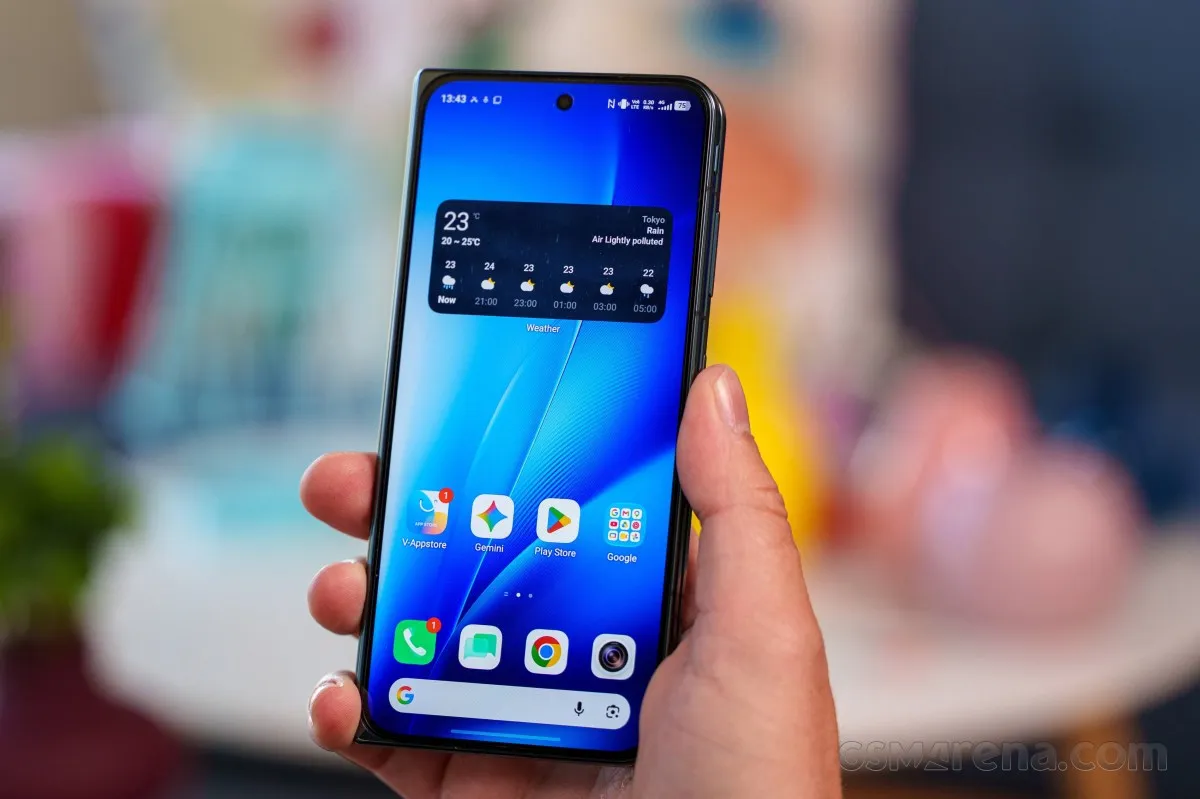
The evolution of the cover display is perhaps more nuanced. On paper, it looks like a downgrade: the diagonal has shrunk to 6.51 inches with a lower resolution of 1120 x 2528 pixels. However, this is the result of transitioning from an ultra-tall 21:9 ratio to a more standard 20:9 aspect.
While widescreen cinematic content may feel slightly more constrained, the new dimensions are superior for almost every other task. The screen is 1.9mm wider and only 1.4mm shorter than the previous model. This results in a 6% increase in actual image area for both 4:3 and 16:9 content. Furthermore, the extra width improves web browsing by allowing wider text columns and a less cramped UI.
As with the main screen, the slight dip in pixel density compared to the older panel is not noticeable during real-world use.
Regarding the bezel design, vivo touts "industry-leading ultra-narrow bezels" on both panels. Notably, the main display features symmetrical bezels—a rarity in the foldable market. While aesthetically pleasing and technically impressive, it doesn't fundamentally change the daily user experience.
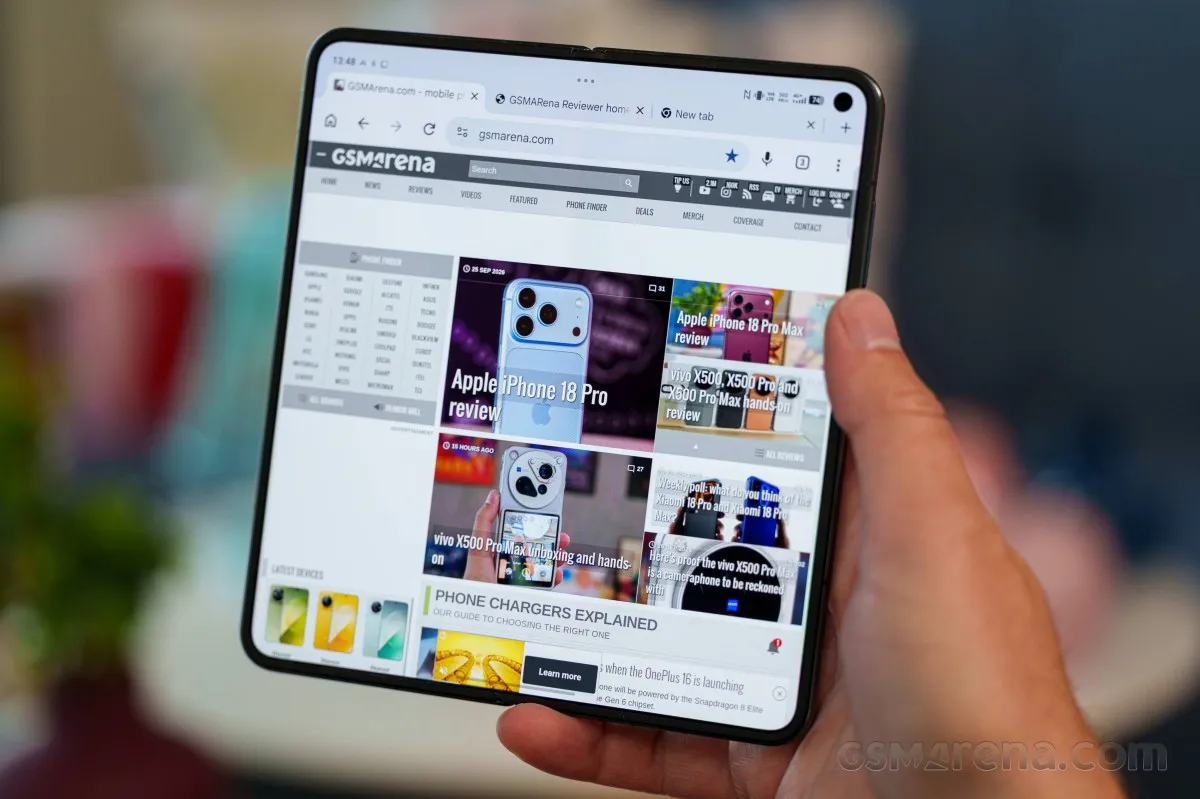
The internal crease has been further minimized and is now among the shallowest in the industry. While not entirely invisible, it is remarkably discreet right out of the box.
Weight-wise, the X Fold6 has gained about 10 grams over its predecessor, tipping the scales at 228 grams. Despite not being a lightweight device, it is exceptionally well-balanced. The "2.5D flat-edge metal frame" and rounded corners help the device feel natural and ergonomic in the hand, effectively offsetting the bulk of the massive camera hardware.
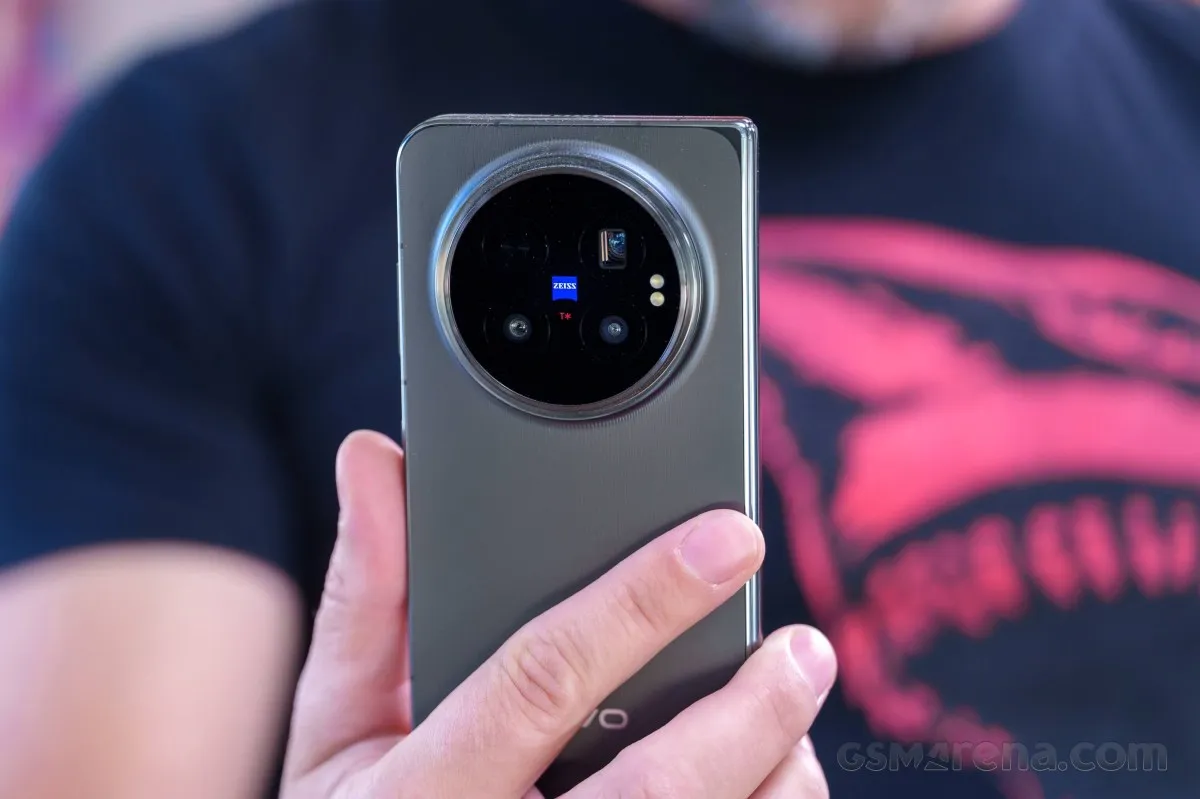
Vivo has stuck with a familiar material palette for this iteration, utilizing a glass front, an aluminum chassis, and a glass-reinforced plastic rear. While the overall construction remains undeniably high-end, a closer look at the specifications reveals some curious discrepancies or potential regressions. For instance, the X Fold5 boasted an IP58/IP59+ rating, suggesting it could withstand submersion up to 3 meters for half an hour. In contrast, the X Fold6 carries an IP58/IP59 rating, limiting its freshwater resistance to 1 meter for 30 minutes. Furthermore, while the X Fold5 explicitly featured Armor Glass (2nd gen), Vivo has remained silent regarding the specific surface protection used on the X Fold6. On a positive note, the new model is now officially rated for operation in extreme cold, down to -20 C.
As for the hinge, the experience remains consistent: it is robust, fluid, and provides a tactile snap when fully opened or closed, with balanced tension throughout the arc. Vivo highlights a capability for "underwater folding"—a feat that sounds technically impressive, though its practical utility in real-world scenarios is questionable.
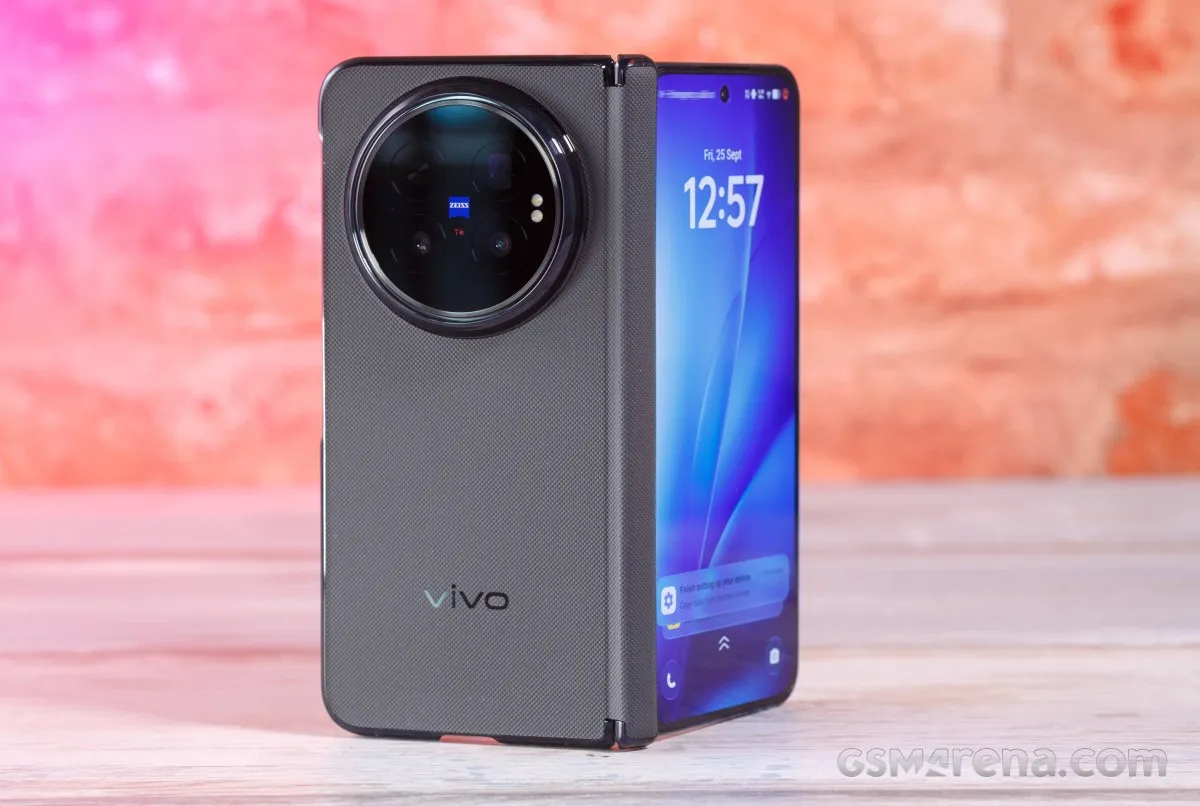
Regarding aesthetics, the Chinese market saw the X Fold6 in Azure, White, and Gray. However, international buyers will find it in more muted, professional tones: Prism Black and Horizon Blue, both of which offer a discreet look suitable for any setting.
Examining the physical interface, the device retains the specialized button on the top right (which shifts to the left frame when the device is unfolded). First introduced with the X Fold5, this toggle manages Ring and Vibration modes and can also trigger the flashlight. Meanwhile, the power key and volume rocker remain stationed on the right edge.
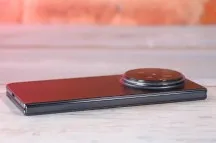
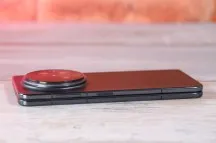
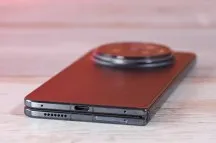

To achieve such a slim profile, the buttons are exceptionally thin—perhaps slightly too much so, bordering on uncomfortable. This is a common compromise in the pursuit of making foldable hardware as thin as possible.
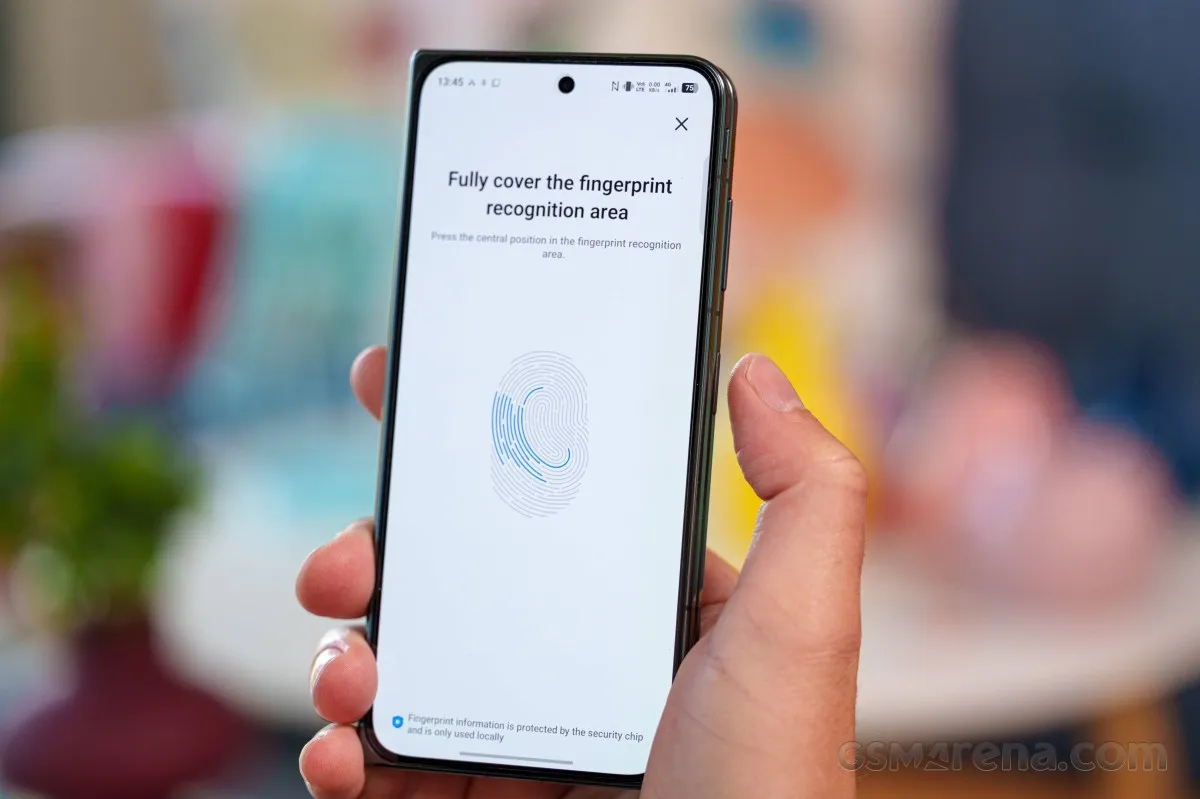
Despite the slimness of the frame, the power button is sufficiently sized to house a capacitive fingerprint scanner. The sensor is responsive and precise, and its placement is intuitive. However, this feels like a step back from the X Fold3 Pro, which featured dual under-display sensors—a solution that felt significantly more sophisticated, even if the convenience gain was marginal.
Our lab tests - display, battery life, charging speed, speaker
Display
Having already analyzed how the revised dimensions and aspect ratios impact the user experience, we believe vivo's adjustments are a step in the right direction. Now, let's dive into the technical specifications of the panels.
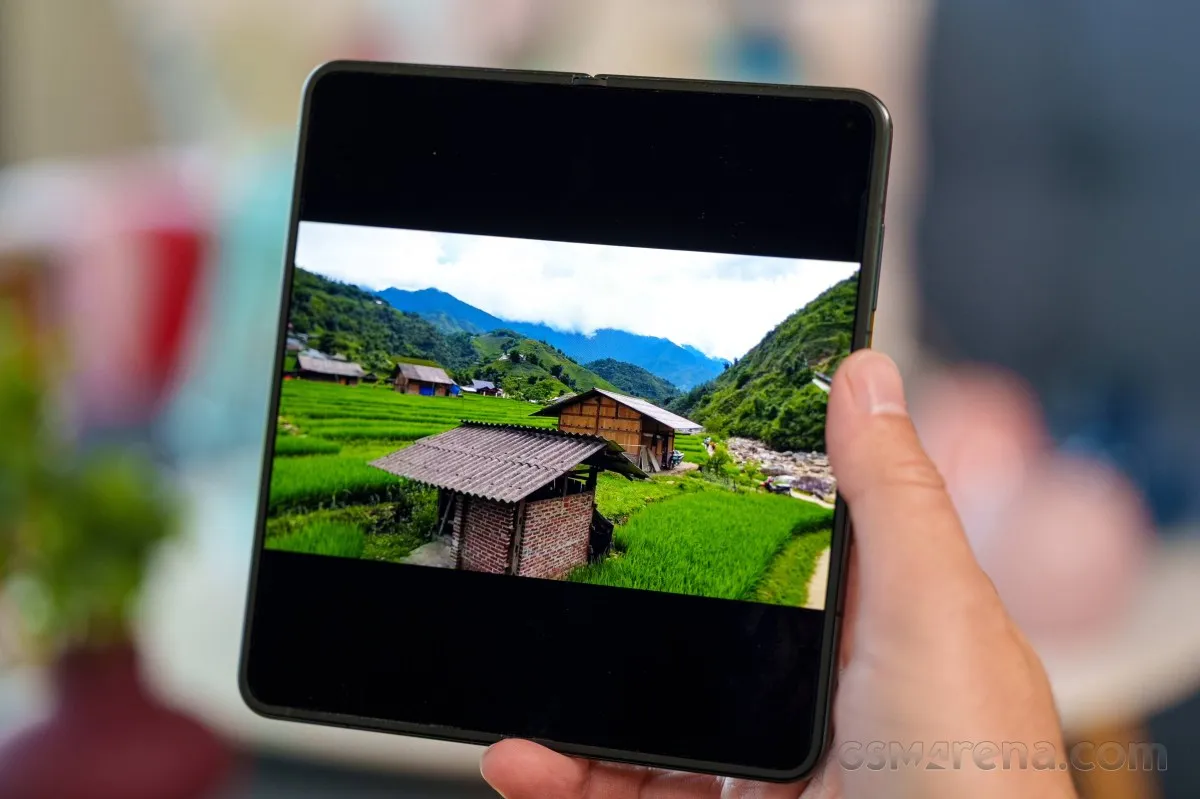
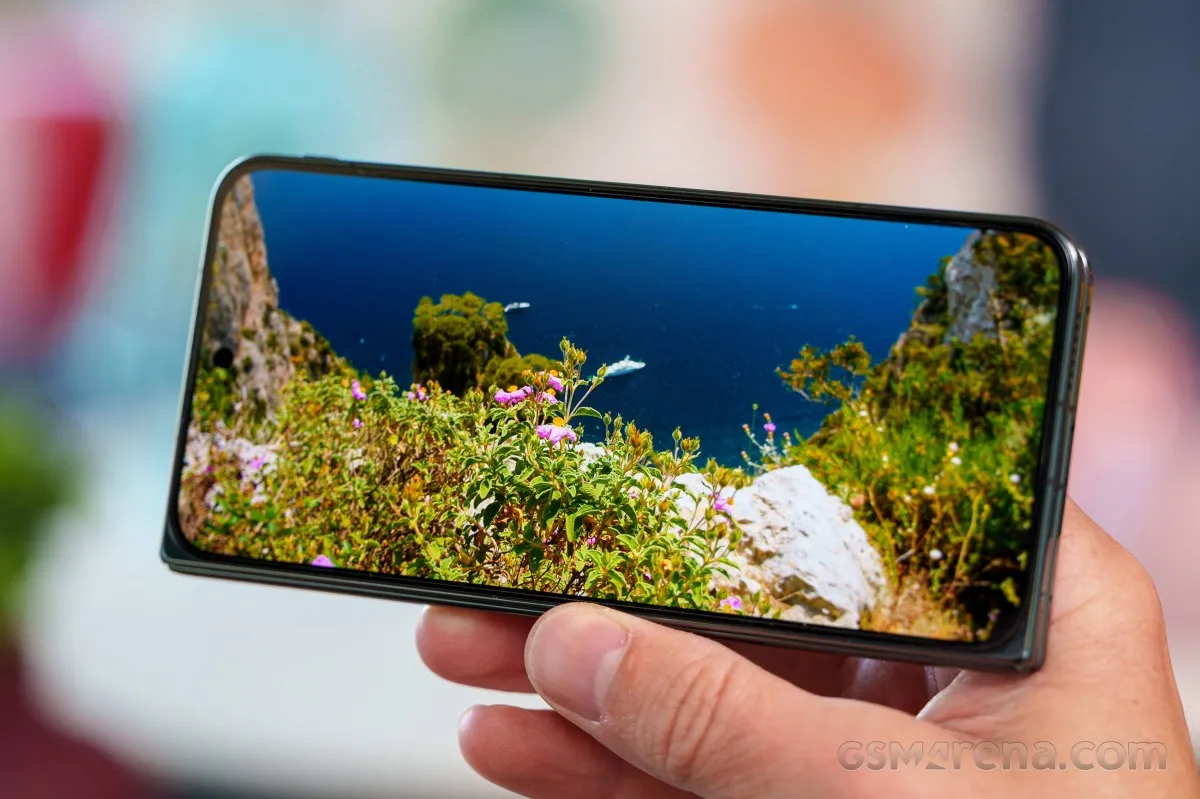
The primary internal foldable screen measures 8.02 inches with a resolution of 2504 x 2312 pixels, resulting in a pixel density of approximately 424 ppi. While vivo markets a peak brightness of 5,000 nits—a marginal increase over the 4,500 nits found in the previous model—we wanted to see how this performed in real-world standardized testing.
Max display brightness test
White test pattern (nits)
- Manual (75% fill)
- Auto (75% fill)
- Peak Auto (10% fill)
 vivo X Fold3 Pro
 vivo X Fold5
 Galaxy Z Fold6
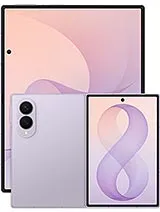 Galaxy Z Fold8
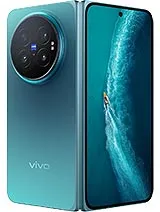 vivo X Fold6
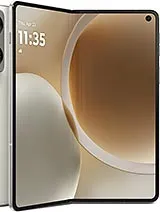 Motorola Razr Fold
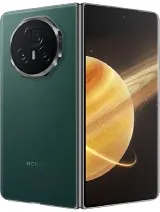 Honor Magic V3
 Oppo Find N6
Interestingly, our 75% window test showed that the X Fold6 actually produces slightly lower brightness than the X Fold5. Nevertheless, with a measurement exceeding 1,500 nits, the device remains perfectly legible under direct sunlight, though some rivals manage higher figures. When testing a 10% window, we recorded a peak of over 2,400 nits, while the minimum brightness at point white dropped to a mere 0.9 nits. The internal panel utilizes Samsung Display's M14 OLED technology (2024), the same grade found in the Samsung Galaxy Ultra and iPhone Pro lineups.
The cover screen has been updated to a 6.51-inch diagonal with a 20:9 aspect ratio, shifting away from the previous 21:9 design. vivo claims this external panel also hits 5,000 nits; curiously, this is a downgrade from the 5,500 nits advertised for the X Fold5's cover display.
Max display brightness test
White test pattern (nits)
- Manual (75% fill)
- Auto (75% fill)
- Peak Auto (10% fill)
 Pixel 9 Pro Fold (Cover display)
vivo X Fold5 (Cover display)
Motorola Razr Fold (cover)
Galaxy Z Fold8 (cover)
vivo X Fold6 (Cover display)
 Galaxy Z Fold8 Ultra (cover)
Oppo Find N6 (cover)
 Huawei Mate X6 (Cover display)
Our lab results for the outer screen mirrored those of the inner panel. While the X Fold6 is slightly dimmer than its predecessor, this is likely a result of software tuning. On the plus side, the brightness levels between the two screens are very consistent, ensuring a seamless transition when unfolding the device.
High refresh rate handling
Both displays exhibit nearly identical refresh rate behavior, utilizing dynamic switching that can drop as low as 1Hz during static content to conserve energy.
Users can select from three distinct modes in the settings: Standard, High, and Smart Switch. Both the High and Smart Switch options can reach 120Hz, though the High setting tends to maintain that maximum rate more aggressively.
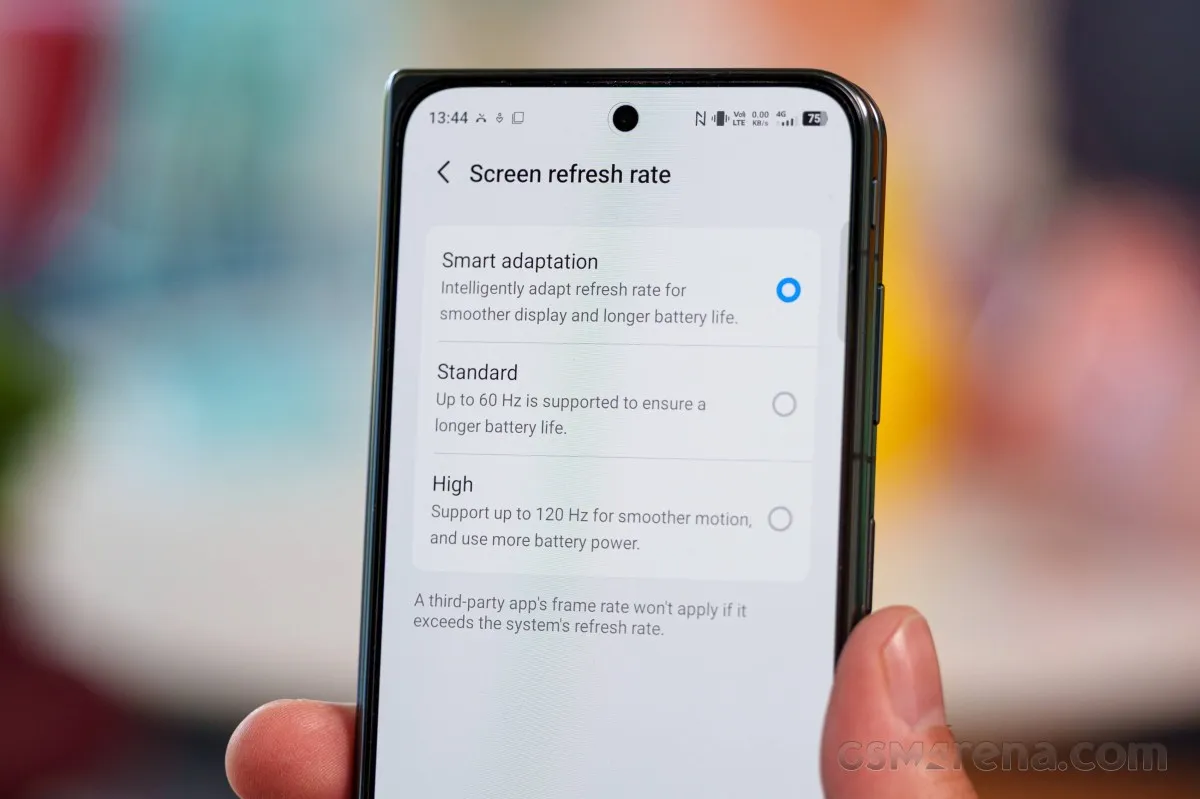
This fluidity is powered by an LTPO backplane, specifically the "8T" (or 8T1C) variety. By utilizing eight thin-film transistors and one capacitor per pixel circuit—more than the six or seven found in some other panels—vivo achieves more stable voltage. This translates to a cleaner 1Hz operation, reducing brightness flickering and improving grayscale accuracy at low light levels. Additionally, this architecture facilitates smoother transitions between refresh rates and can potentially reduce overall power draw.
HDR
Consistent with the previous generation, the X Fold6 supports Dolby Vision and HDR10+ across both screens. It also carries HDR Vivid certification, though this is primarily relevant for users of Chinese streaming platforms.
The device's software reports full decoder support for HLG, HDR10, HDR10+, and Dolby Vision, and it is equipped with the top-tier Widevine L1 DRM certification for high-definition streaming.
Battery life
Battery capacities differ by region: the Chinese variant of the X Fold6 features a 7,000 mAh cell, while the global model is slightly smaller at 6,900 mAh. Both utilize a dual-cell parallel configuration.
The 6,900 mAh total is split between two cells of 3997 mAh and 2903 mAh. To achieve this, vivo employed 5th-generation silicon anode technology to increase energy density and extend the battery's lifespan. This "Blue Volt" setup is a 3rd-gen semi-solid-state battery, specifically engineered to maintain stable discharge performance even in freezing temperatures.
According to vivo's internal data, this new battery architecture should provide a 23% to 47% improvement in longevity compared to the X Fold5.
Our standardized endurance tests confirmed that the X Fold6 is a definite improvement over its predecessor. While the results are impressive, it doesn't quite claim the crown for the highest Active Use Score among current foldable devices.
The results remain consistent when the device is used in its folded state. While the X Fold6 comfortably outperforms the previous generation, it fails to claim the top spot in the market despite having a larger battery capacity.
Regarding battery longevity and maintenance, the X Fold6 provides a comprehensive set of tools. Users can define specific charging limits—choosing between 80%, 85%, 90%, 95%, or a full 100% charge. This can be paired with an intelligent charging mode that adapts the power intake based on the user's sleep patterns. For those who prefer a gentler approach, fast charging can be toggled off, and the device also offers a bypass charging option for power users.
Charging speed
Equipped with 80W FlashCharge technology, the X Fold6 relies on a system that is essentially USB Power Delivery with PPS. While a standard Type-C to Type-C cable will function, an eMarked cable is necessary to achieve maximum speeds. Given that the included cable is rated for 9.2A, we recommend sticking with the original pairing to ensure peak performance. For our testing, we utilized the bundled cable and the 100W vivo FlashCharge power brick.
Our analysis of the charging curve reveals that the X Fold6 hits a peak of approximately 63W, though only for a brief window at the lowest battery levels. For the bulk of the cycle, the speed stabilizes around 40W before gradually descending to 35W and finally 32W as the battery nears capacity.
In the current landscape of foldables, the X Fold6 sits on the slower end of the spectrum. However, the gap is narrow: it reaches a 32% charge in 15 minutes, hits 62% at the half-hour mark, and completes a full 0-100% cycle in roughly one hour.
Charging speed
- in 15 min
- in 30 min
- Time to full charge (from 0%)
Oppo Find N6
vivo X Fold5
Motorola Razr Fold
Galaxy Z Fold8
vivo X Fold6
 Galaxy Z Fold7
Galaxy Z Fold6
Pixel 9 Pro Fold
Speakers - loudness and quality
The audio hardware on the X Fold6 consists of a dual-speaker arrangement located entirely within the cover screen section. One driver outputs sound via a perforated grille at the bottom, while the second is positioned in the top frame, doubling as the earpiece via a dedicated slit above the display.
The device employs a stereo configuration where the top speaker handles the left channel in portrait orientation, with the software automatically swapping channels when the phone is rotated to landscape. This architecture remains unchanged from the X Fold3 and X Fold5.
Despite the tight internal constraints of a foldable chassis, the X Fold6 achieves a "Very Good" loudness rating, which is an impressive feat.
From a fidelity standpoint, the performance is acceptable, though the low-end response is nearly nonexistent and the treble can become distorted at higher volumes.
Use the Playback controls to listen to the phone sample recordings (best use headphones). We measure the average loudness of the speakers in LUFS. A lower absolute value means a louder sound. A look at the frequency response chart will tell you how far off the ideal "0db" flat line is the reproduction of the bass, treble, and mid frequencies. You can add more phones to compare how they differ. The scores and ratings are not comparable with our older loudspeaker test. Learn more about how we test here.
Connectivity
The vivo X Fold6 is fully 5G-ready, supporting simultaneous SA/NSA Sub-6 connectivity across two physical Nano-SIM slots. Alternatively, users can swap one physical slot for an eSIM. For navigation, the device integrates a wide array of services, including A-GPS, GPS, GLONASS, Galileo, BeiDou, NavIC, and QZSS.
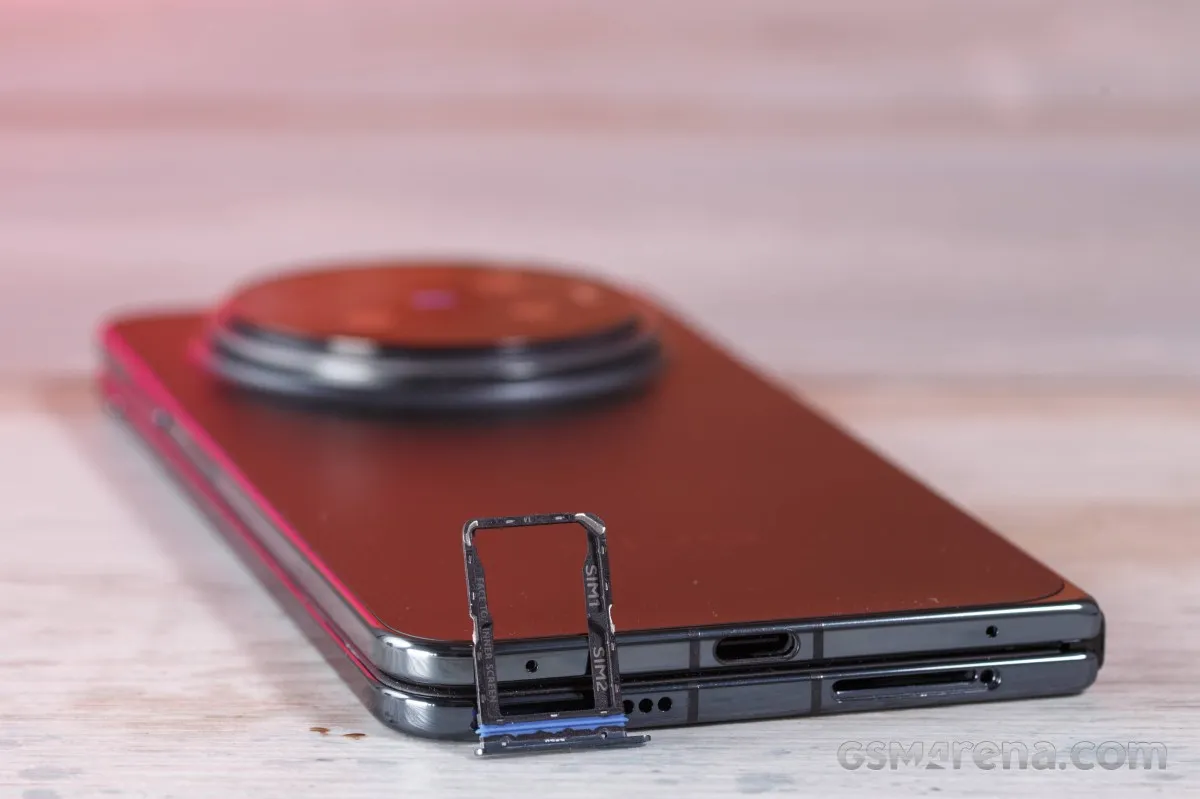
Wireless options include Wi-Fi 7, available in dual-band or tri-band configurations depending on the region. Our UK-market unit features tri-band Wi-Fi, allowing it to utilize the high-speed 6 GHz band. Bluetooth 6.0 is present, supporting LE, LHDC 5, and aptX HD. The device also includes NFC with full card emulation and reader/writer capabilities. Additionally, a discreet IR blaster is integrated into the rear camera island for remote control functionality. As expected for a modern flagship, there is no FM radio or 3.5mm headphone jack.
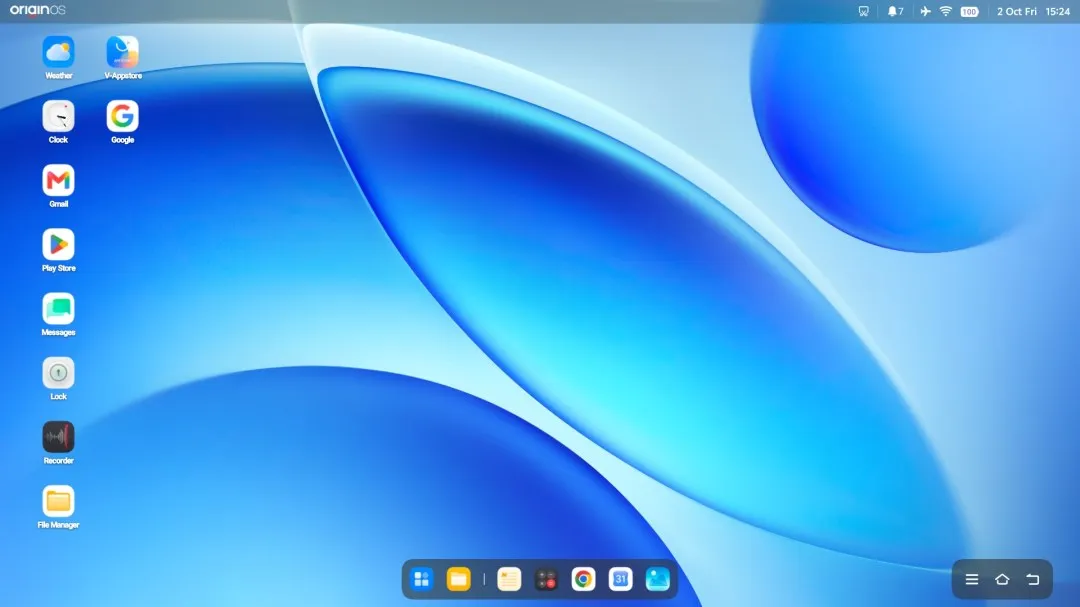
Connectivity on the X Fold6 is anchored by a USB Type-C port utilizing the USB 3.2 Gen2 standard, enabling rapid data transfer speeds reaching 10 Gbps. Beyond standard OTG and Host functionality, the port supports DisplayPort video output, allowing the device to power an external monitor. While wireless screen mirroring is an option, vivo provides a sophisticated, polished desktop environment that rivals Samsung DeX, featuring intuitive floating windows and robust multitasking tools for a true PC-like experience.
Under the hood, the X Fold6 employs a comprehensive array of sensors, including the lsm6dsvq for gyroscope and accelerometer duties and the qst qmc6309 for compass and magnetometer functions. The device features a pair of light sensors—one for each display—though their specific hardware identity remains obscured by software abstraction. For proximity detection on the cover screen, vivo integrated an AMS TCS3743 unit, while atmospheric pressure is monitored via an LPS22DF barometer. Rounding out the sensor suite are a hall sensor, a flicker sensor, and dedicated color temperature sensors for both the front and rear of the device.
Software and performance
The Software Experience: Origin OS 7 Fold and Android 17
When comparing the global X Fold6 (model V2559) to its Chinese counterpart (model V2545A), the most striking divergence is the software. While the Chinese variant debuted with Android 16 and OriginOS 6 Fold—and has notably lacked an OTA update to the latest version—the global model arrives ahead of the curve, shipping with Android 17 and OriginOS 7 Fold right out of the box.
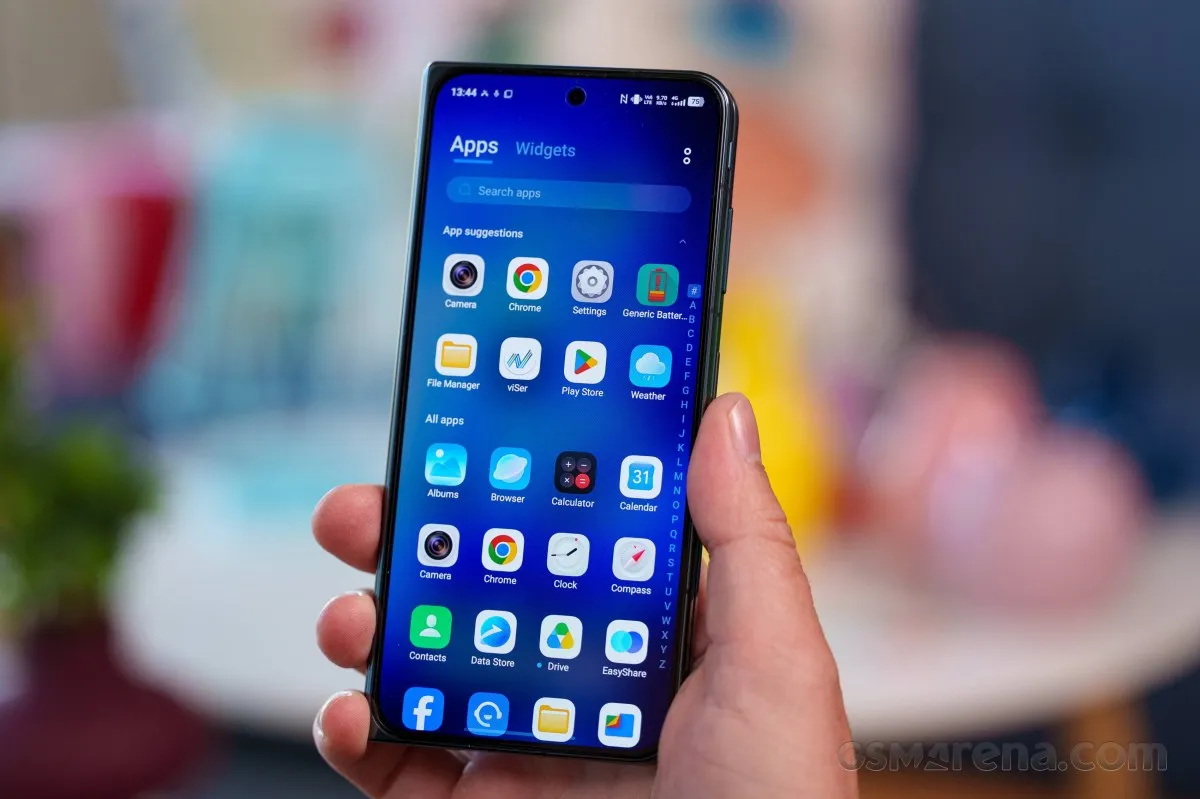
Naturally, the global iteration is fully equipped for international users, featuring the complete Google app suite and integrated Google Play services.
vivo is backing the global X Fold6 with a solid long-term support commitment: five major Android OS upgrades and seven years of security maintenance. Although it doesn't set a new industry record, it is a highly competitive window. It's also worth noting that vivo didn't take the common shortcut of launching with an older OS to inflate their update count; they delivered the latest software from day one.
Visually, Origin OS 7 follows a familiar path. It employs the current "liquid glass" design trend, characterized by semi-transparent elements and a sleek, airy feel. While the aesthetic is polished, it does feel somewhat derivative of other modern interfaces.
However, the software shines in its foldable-specific optimizations. A great example of vivo's attention to detail is the notification shade and quick settings menu; these intelligently deploy from the left, right, or center of the expansive main display depending on where the user initiates the swipe.
The "Fold" designation in Origin OS 7 Fold isn't just branding; it represents a dedicated software branch engineered specifically to leverage the foldable form factor. This specialized version includes a suite of tools designed to maximize productivity and screen real estate.

Chief among these is a powerhouse multitasking system. The Multi-Split Screen feature allows users to run up to four applications simultaneously. These apps remain fully functional and active—meaning a video will continue to play while you work in other windows—and the split boundaries can be adjusted fluidly. Fortunately, the vast majority of apps integrate seamlessly with this layout.


The Origin Workbench offers a distinct approach to productivity. After activating it in the settings menu, the interface is summoned via an inward swipe from the bottom-right corner. This layout features one primary active application flanked by up to four secondary apps. While these side apps aren't fully active—meaning you cannot, for example, keep a video streaming in the background—they allow for near-instantaneous switching between tasks, which significantly streamlines the workflow.

Navigating between Origin Workbench and the Multi-Split Screen mode is seamless; users can toggle between the two by either slightly folding the device or using a three-finger upward swipe. While the logic requires a brief learning curve, the potential for power-user efficiency is evident once mastered.
For those who prefer a more direct route, swiping up from the home screen allows for the selection of up to four apps to launch immediately into Multi-Split Screen. Both multitasking environments support the recall of previous app configurations via the home screen's quick launch bar. Furthermore, a "Fan-Shaped App Launcher" tracks recent app combinations, and users can create dedicated shortcuts for their most-used productivity pairings.
More multi-tasking
It is clear that vivo has meticulously engineered the multitasking experience. System-wide productivity tools allow for the effortless dragging of images or text from one application directly into another's input field. The OS is intelligent enough to perform OCR on text within images, automatically placing it into a field and translating it on the fly—a feature currently supporting 16 different languages. Additionally, the system can recognize business card details, allowing users to export contact information directly to the dialer or address book.
Productivity extends beyond the handset via the vivo Office Kit, which bridges the phone with a Mac, Windows PC, or iPad. Although the initial installation and setup of the Office Kit app can be somewhat tedious, the resulting ecosystem is highly capable. It enables bidirectional collaboration, including remote control of the PC or phone, seamless file transfers, display casting and extension, and the ability to control multiple devices with a single keyboard and mouse. Users can even synchronize their clipboards and notes, or repurpose the phone's high-quality cameras as a USB webcam for their computer.

Perhaps the most impressive—and slightly daunting—feature is the multi-device AI integration. Once the Office Kit is active on a PC, it introduces a desktop version of the vivo Jovi AI assistant. With the proper permissions, Jovi can execute complex OS-level tasks, such as scanning for specific file fragments, aggregating data from multiple sources, and drafting an email with the compiled results.
The true brilliance lies in the cross-device handoff. A user can initiate a task via voice dictation on their phone, and even if the necessary files are stored exclusively on the PC, the mobile Jovi assistant will coordinate with the PC's Jovi (provided they share the same account) to complete the operation and report the results back to the handset. The system even supports scheduling one-time or recurring tasks with progress updates. The depth of this integration is surprising for a complimentary feature.
Beyond the native Jovi ecosystem, the device allows users to integrate third-party AI models, supported by generous free-tier quotas.

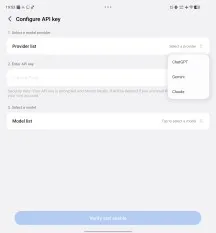
Beyond its native tools, the device comes pre-loaded with Google Gemini, while the "Circle to Search" functionality is baked directly into the operating system.

The AI toolkit extends heavily into photo editing, but one of the standout utilities is vivo's AI-powered OCR. This system claims impressive recognition rates, boasting over 85% accuracy for printed text and 95% for handwriting. Integrated within the Notes app, this feature is designed to maintain the rich-text formatting and the original layout of the scanned document.
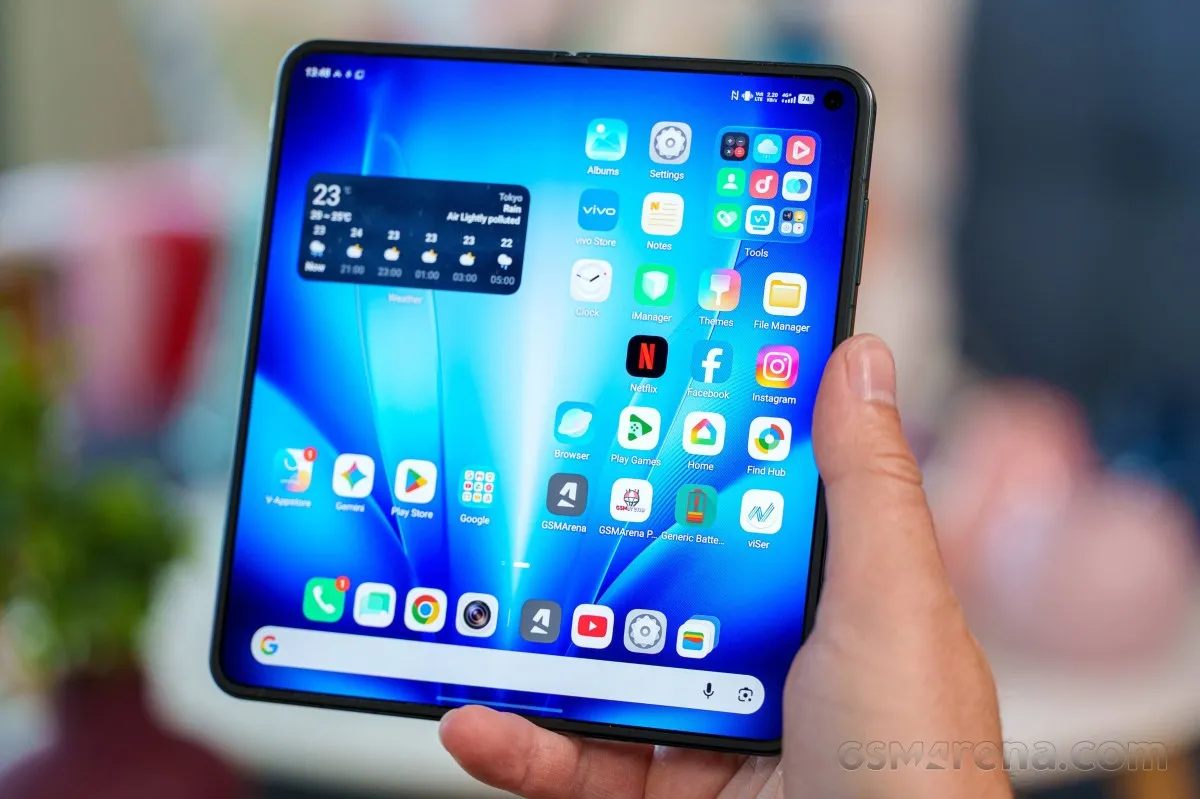
Interestingly, Origin OS 7 is designed to coexist harmoniously with the Apple ecosystem. While the Office Kit allows for a fluid connection between the X6 Fold and an iPad, the phone also offers deep support for Apple AirPods, featuring one-tap pairing, battery status indicators, and compatibility with vivo Spatial Audio. Apple Watch users are well-catered to as well; the X Fold6 can sync heart rate, sleep data, steps, and workouts into vivo Health, while managing notifications, calls, and even controlling the phone's music and camera. To top it off, the File Manager includes native iCloud integration.
Benchmarks and performance
While the X Fold5 and X Fold3 Pro both relied on the Snapdragon 8 Gen 3, vivo has pivoted to a different silicon strategy for the X Fold6. The device is powered by the MediaTek Dimensity 9500 Super. It is worth noting that this isn't MediaTek's absolute latest offering, as a newer successor debuted before the X Fold6's international launch.
Despite not being the newest chip on the market, the Dimensity 9500 remains a powerhouse. But what exactly does the "Super" designation signify?
From a hardware perspective, it appears identical to the standard model. Built on TSMC's 3 nm (N3P) process, the CPU architecture features a prime ARM C1-Ultra core hitting 4.21 GHz, three C1-Premium cores reaching 3.5 GHz, and four C1-Pro cores topping out at 2.7 GHz. The graphics are handled by a Mali-G1 Ultra MC12—the full 12-core version, distinguishing it from the 11-core MediaTek 9500M. Additional hardware includes the MediaTek NPU 990 and the Imagiq 1190 ISP, which supports high-end video capture including 4K@120 with HDR or 8K@60.
Memory is handled by quad-channel LPDDR5X RAM clocked at 5333 MHz. For the global market, the X6 Fold is streamlined into a single configuration: 12GB of RAM paired with 512GB of UFS 4.1 storage.
In synthetic benchmarks, the Dimensity 9500 Super generally slots in between the Snapdragon 8 Elite and the Snapdragon 8 Elite Gen 5 for both multi-core and single-core tasks. We typically avoid using "performance boost" modes during testing due to their erratic nature—a trend we noticed with the X Fold6 and AnTuTu 11 specifically. However, for those chasing peak numbers, the "Boost" mode does provide a measurable increase in GPU and CPU scores.
On a side note, we encountered a bizarre stability issue with AnTuTu 12; the app consistently caused the phone to crash into a black screen (requiring a hard reboot) when run on the main display. The test only succeeded after three reinstalls and an initial run on the cover screen. Given this instability, we are treating those specific results with skepticism.
GeekBench 6
- Single-core
- Multi-core
Galaxy Z Fold8 Ultra
Galaxy Z Fold8
vivo X Fold6 (Boost)
vivo X Fold6 (cover)
vivo X Fold6
 Honor Magic V5
Huawei Mate X6 (cover)
AnTuTu
- v10
- v11
vivo X Fold6
vivo X Fold6 (Boost)
vivo X Fold6 (cover)
Oppo Find N6 (unfolded)
Huawei Mate X6
Pixel 9 Pro Fold (Cover display)
Pixel 9 Pro Fold
3DMark
- Wild Life Extreme (Highest)
- Wild Life Extreme (Lowest)
- Solar Bay (Ray Tracing)
Oppo Find N6 (unfolded)
vivo X Fold6 (Boost)
Galaxy Z Fold8 Ultra
Motorola Razr Fold
vivo X Fold6
vivo X Fold6 (cover)
Honor Magic V3
Huawei Mate X6
Thermal-throttling
Given the X Fold6's slim foldable chassis and high-performance internals, aggressive thermal throttling is almost inevitable under heavy stress. While the device does throttle, the performance dip is less severe than anticipated, even surpassing the thermal management of some traditional slab smartphones.
When operating under the standard "balanced" performance setting, 3DMark benchmarks reveal that the X Fold6 experiences a performance dip of roughly 30%. To maintain consistency across our testing suite, these results were captured with the device fully unfolded in a climate-controlled environment. Switching to "Boost" mode, however, accelerates thermal buildup and creates a more erratic performance curve, leading to a steeper decline of nearly 50%—a result comparable to the Snapdragon 8 Elite Gen 5. Furthermore, folding the device restricts its thermal dissipation capabilities, as the expansive display surface plays a key role in cooling; consequently, this leads to a performance drop of approximately 40%.
During these intensive stress tests, the X Fold6 generates significant heat, particularly concentrated along the metallic center frame. While these extreme scenarios rarely mirror everyday usage, it is worth noting that the device remained comfortable to handle throughout the process.
Camera - photo and video quality
A Targeted Hardware Boost for a Superior Camera Experience
With the vivo X Fold6, the manufacturer has opted for a strategic evolution of its imaging array. While the fundamental architecture remains consistent with its predecessor, a key hardware pivot elevates the device's capabilities. The rear triple-camera system now features a significantly more powerful primary sensor, flanked by a familiar ultrawide and a 3x telephoto lens, while a pair of identical, standard-issue selfie cameras handle the front-facing duties.
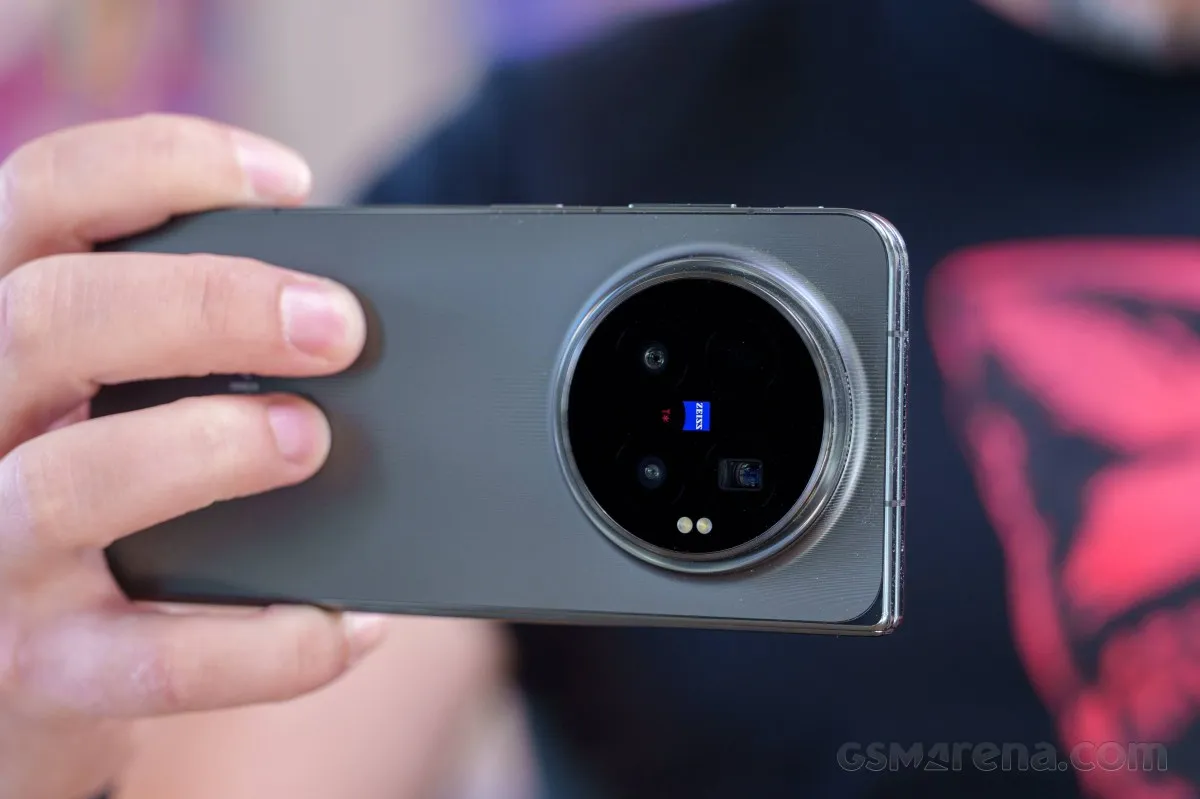
The most notable leap is found in the primary sensor. vivo has swapped the 50MP 1/1.56" unit found in the X Fold5 for a high-end 200MP 1/1.4" imager. This is a customized HPB variant of the Samsung HP9—a sensor we hold in high regard. The HPB has previously appeared in the X300 Pro's telephoto lens, while the X500 Pro Max utilizes a closely related HP0 for its main camera (which also reportedly powers the X300 Ultra's telephoto). This transition represents a substantial upgrade for the foldable line, although it is worth noting that the 2024 X Fold3 Pro actually boasted a slightly larger 1/1.3" main sensor.
Regarding the telephoto lens, the specifications appear static on paper, but the hardware may have shifted slightly. It retains the 3x optical zoom (70mm equivalent) and a 50MP 1/1.95" Sony sensor. However, the "generic" Lytia 600 (IMX 882) from the previous generation has been replaced by a vivo-specific Lytia 602 (IMX 885). Whether this SKU change results in a tangible performance difference is a detail that remains ambiguous.
The ultrawide lens is the only component that is truly unchanged. It utilizes a Samsung JN1 sensor paired with a lens that hardware apps identify as 15.4mm, though EXIF data fluctuates between 15mm (at 50MP) and 16mm (at 12.5MP). While it isn't the widest lens in its class, the inclusion of autofocus remains a welcome feature.
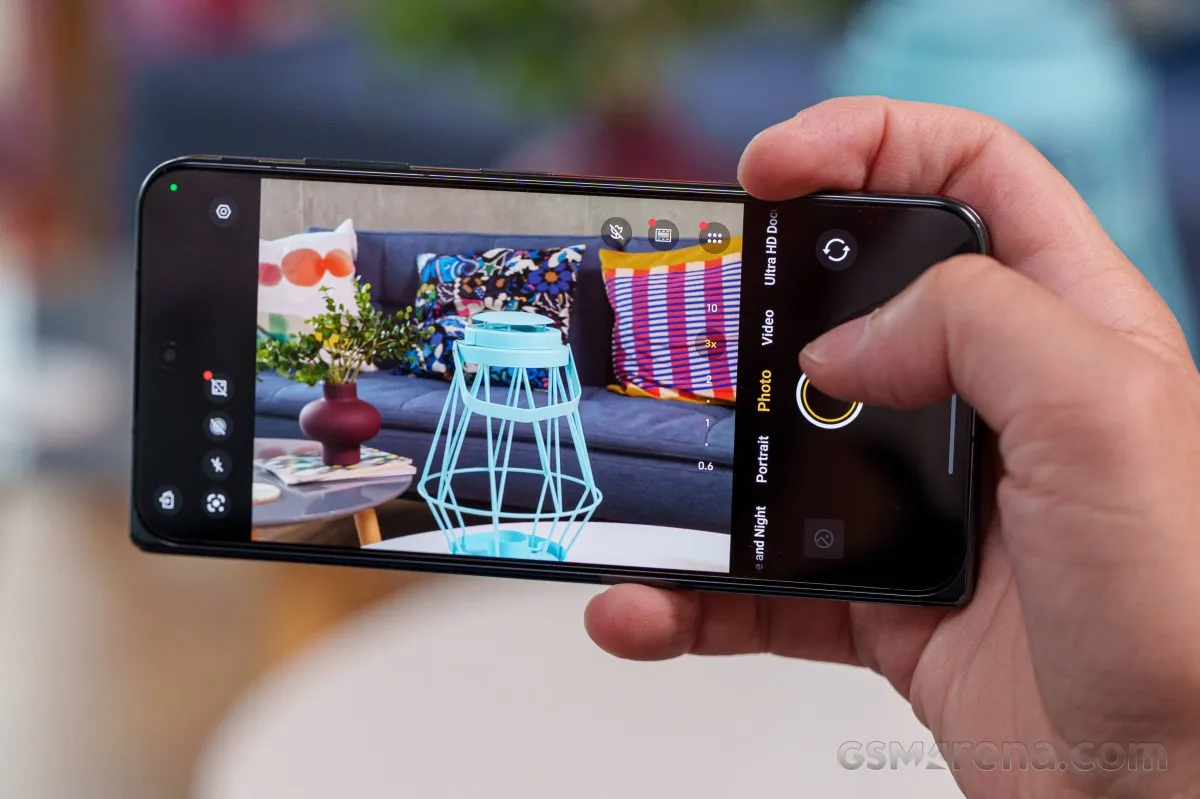
For selfies, both the internal and cover displays feature a punch-hole cutout. While officially marketed as 20MP cameras, they actually house 32MP OmniVision sensors. This discrepancy is a recurring theme in vivo's strategy, mirroring the X Fold5 and the Oppo Find N6 (though the latter uses a slightly larger sensor). Both front-facing cameras utilize wide-angle, fixed-focus optics.
- Wide (main): 200MP Samsung ISOCELL HPB (HP9, 1/1.4", 0.56µm-2.24µm); 23mm, f/1.68, OIS, multi-directional PDAF (11cm - ∞); 8K30/4K120 video recording.
- Telephoto: 50MP Sony Lytia 602 (IMX 885, 1/1.95", 0.8µm-1.6µm); 70mm (3x zoom), f/2.57, OIS, multi-directional PDAF (14.5cm - ∞); 4K60.
- Ultrawide: 50MP Samsung ISOCELL JN1 (1/2.76", 0.64µm-1.28µm); 15mm, f/2.05, PDAF; 4K60.
- Cover/Internal camera: 20MP effective, 32MP OmniVision OV32D (1/3.6", 0.61µm-1.22µm); 21mm, f/2.4, fixed focus; 1080p30.
Daylight Imaging Performance
Primary Camera Analysis
At 1x magnification, the X Fold6 produces images that are technically impressive yet aesthetically puzzling. The level of detail is superb; vivo has clearly optimized the binning and downscaling process for this high-resolution sensor, resulting in sharp, finely rendered textures. While the white balance is accurate and colors are generally well-managed, the overall processing feels slightly off. The interplay between the tone curve, exposure, and dynamic range results in a look that feels flat and somewhat desaturated, with highlights that aren't always tightly controlled, leading to an overexposed appearance.
These characteristics are tied to the "Refined" default color profile. While vivo presents this as the ideal standard, we find it lacks universal appeal. Although users can customize their experience via various presets, a more vibrant default would have been a better choice. Consequently, we switched to the "Vivid" profile for the majority of our testing (with the exception of a few 1x low-light shots to provide a complete comparison).




True to its name, the 'Vivid' mode delivers the punchy, high-impact saturation we've come to expect from vivo's flagship imaging pipeline. It manages highlights effectively, preventing blowout, while maintaining a polished look. While there is a noticeable increase in artificial sharpening across certain textures, the overall detail remains impressive and avoids looking overly processed. For most users, this would be the ideal primary color profile.












When photographing people, the Vivid profile excels by producing energetic, lifelike skin tones that avoid an overly warm or orange cast. The level of facial clarity is superb. In terms of depth of field, the 23mm Portrait mode applies a gentle, understated background blur, whereas switching to the 35mm focal length results in a more pronounced bokeh effect.












Switching to the 50MP output yields images with impressive clarity and fine detail. While the dynamic range isn't quite as expansive as the 12.5MP versions—particularly when dealing with challenging backlit environments—the 50MP setting remains the superior choice for those looking to maximize the raw data and resolution of the primary sensor.




Conversely, the 200MP mode fails to deliver a meaningful boost in actual resolved detail. In practice, fine textures often take on a synthetic, digital appearance and lack the definition found in lower-resolution modes.




Switching to standard resolution 2x crops, the results remain impressively crisp. The level of detail is high, and the overall image rendering is pleasingly natural, avoiding the pitfalls of over-processed sharpening.








When capturing headshots at 2x, there is a slight, noticeable dip in fine detail, though the quality remains high. Those using Portrait mode will find the images even softer, but they still hold up as very capable shots.








Telephoto performance
The telephoto lens on the X Fold6 remains a strong point, producing crisp 3x zoom images with impressive clarity. We found the dynamic range to be substantial and the contrast levels excellent. As for the color palette, it is perfectly tuned—assuming you appreciate the punchy, saturated look provided by the Vivid mode.
















The 3x telephoto lens is a powerhouse for portraiture, delivering impressive detail and pleasing color reproduction. Its native 70mm focal length is particularly well-suited for classic head-and-shoulder compositions.
In typical vivo fashion, the 70mm option is unavailable in Portrait mode. Instead, the software provides 85mm and 100mm presets for users who prefer a tighter crop or need to maintain more distance from their subject. However, be aware that switching from the standard 70mm Photo mode to these Portrait zoom levels often results in a noticeable drop in sharpness, an effect that becomes more pronounced in low-light environments.












When utilizing the 50MP setting at 3x zoom, the results are acceptable under bright sunlight, though performance dips noticeably in low-light indoor environments. Even under perfect lighting, the jump in raw detail compared to the standard binned images is marginal at best.




Users can reach the 6x zoom level by simply tapping the 3x shortcut. This mode generally delivers more impressive results, often surpassing the 3x 50MP shots with superior per-pixel detail and more punchy contrast.












Once you push the zoom to 10x, the device pivots from traditional photography toward a more generative image approach. While the results are generally convincing, the quality remains dependent on the specific subject. Interestingly, linear edges often appear sharper at 10x than they do at 6x; however, a closer inspection reveals artificial, mesh-like textures where the software has synthesized detail. These artifacts are most prominent when the "Super telephoto enhancement" is set to its default "Extreme" mode—a setting for which vivo provides a disclaimer, noting that some images may appear unnatural.










Ultrawide camera
The ultrawide lens delivers impressive performance, producing images with a high level of clarity and detail. This quality may be bolstered by the 15mm focal length, which is slightly more conservative than some extreme ultrawides. Regardless, the results are consistently sharp, boasting vibrant color reproduction and a robust dynamic range. Furthermore, the inclusion of autofocus ensures that close-up subjects remain crisp and well-defined.










However, the full-resolution captures lack sharpness, exhibiting a soft, almost ethereal quality that makes them impractical for serious use.




Macro and Close-up Performance
The ultrawide lens also serves as a fallback for close-up photography. When shooting at 1x, the X Fold6 will automatically transition to a digitally cropped ultrawide view if the subject is too near for the primary sensor to maintain focus. While this approach is reasonably effective compared to similar systems, the X Fold6 offers far more capable alternatives for detailed close-ups.




One viable approach for close-ups is utilizing a 2x crop from the primary sensor.




However, the telephoto lens with its close-focusing capability is a superior choice. It not only provides a larger reproduction ratio than the main camera's 2x zoom but also delivers significantly sharper detail—which is impressively high in its own right.




Pushing the zoom to 6x enhances the magnification effect, though this comes at the cost of some pixel-level clarity.




Finally, we have the 10x zoom. At this magnification, the device blends captured data with AI-generated details. Depending on the subject, this can produce startling results; for instance, the rendition of a yellow pencil tip here is one of the most convincing examples we've seen, regardless of whether the detail is authentic or synthesized.




Low-light photography performance
Primary sensor
When the lights go down, the main camera delivers outstanding results. We found the auto white balance to be highly accurate, and the colors are punchy—perhaps slightly over-saturated when utilizing Vivid mode, though this is a look most users will likely prefer. The sensor handles exposure with precision and maintains an impressive dynamic range, all while preserving a high level of fine detail.










Switching to the dedicated Night mode provides negligible improvements over the standard low-light processing.




When it comes to fine detail, the default Refined color profile actually holds a slight edge, delivering a more organic and subtle look similar to what we encountered in daylight photography. This mode offers a more restrained approach to saturation and contrast, which will likely appeal to purists. That said, for those who prefer a punchier, more dramatic aesthetic, the Vivid mode remains our top recommendation.




Switching to the 2x zoom, the results are impressive, although the device clearly performs better in well-illuminated environments. In particularly dim or gloomy settings, we noticed a visible drop in sharpness, especially within the shadows. Fortunately, the overall image consistency and global properties remain stable.








Telephoto camera
The 3x zoom capabilities are equally strong, though the X Fold6 tends to over-sharpen images when lighting conditions deteriorate. While it isn't the worst in its class, there are certainly competitors that produce a more natural look. On the plus side, the wide dynamic range and vivid color reproduction are highly impressive.












While engaging the dedicated Night mode can provide a slight edge in sharpening for images that otherwise look a bit soft, the overall impact is minimal. We didn't observe any significant improvements in dynamic range, though the baseline performance was already quite acceptable.




Pushing the zoom to 6x reveals some compromises when viewed at 1:1 scale; you'll notice a dip in clarity, heavy-handed sharpening, and occasional artificial textures—such as the mesh-like patterns appearing on the concrete wall in the third example. However, from a normal viewing distance, the images remain visually appealing and consistent.








Pushing the zoom to 10x makes noise patterns more apparent across various scenes. While the AI-driven detail enhancement can occasionally produce some artificial-looking textures on brickwork, it does manage to make certain linear edges appear sharper than they do at 6x.






Ultrawide camera
The ultrawide lens is equally impressive, delivering a punchy visual style characterized by high contrast and saturated colors. It handles extreme lighting transitions effectively thanks to a solid dynamic range. While shadow detail can be somewhat inconsistent and the image processing leans heavily on sharpening—even in optimal light—the overall performance is more than satisfactory, especially when compared to the typical ultrawide offerings in the foldable market.










Switching to the dedicated Night mode offers negligible benefits; the device effectively manages low-light optimization automatically within the standard Photo mode.




Selfie Performance
The vivo X Fold6 features two identical under-display selfie cameras that produce virtually the same image quality. However, the user experience differs significantly: the cover screen camera is far more intuitive for quick snapshots and casual use. Conversely, capturing a photo with the internal camera is cumbersome and difficult to manage with one hand, suggesting its primary purpose is likely limited to video conferencing.








For those seeking the absolute best self-portraits, the rear camera array is the way to go. While it requires a few extra motions—unfolding the chassis and toggling the interface to use the cover display as a viewfinder—the payoff is a level of image quality that is truly exceptional, mirroring the high standards we've already noted in the primary camera performance.








Additionally, the device allows for ultrawide selfies. Although the 16mm focal length isn't aggressively wide, it provides ample room for group photos and capturing more of the background. The output here remains impressive, comfortably outclassing the results from several of its primary rivals.




Photography Final Verdict
While the hardware evolution from the previous generation is modest—with vivo focusing its upgrades primarily on the main sensor—the actual impact on image quality is substantial. The X Fold6 represents a major leap forward; where the X Fold5 delivered mediocre results across the board, this new model produces high-caliber imagery from every lens.
The primary sensor is outstanding, performing flawlessly in both bright daylight and challenging low-light environments, and it maintains impressive quality at 2x crop. The ultrawide lens is a strong performer in good lighting and remains reliable after dark. Similarly, the telephoto lens holds its own, delivering respectable shots at 6x and decent results at 10x, though the latter likely relies heavily on AI enhancement. From high-quality portraits and sharp close-ups to professional-grade rear-camera selfies, the versatility is evident. While the two internal selfie cameras are underwhelming, they serve their basic purpose sufficiently.
The only significant drawback is vivo's questionable choice of default color tuning. The "Refined" profile is the factory standard, and while purists might appreciate its natural look, it lacks broad appeal. For most users, switching to the "Vivid" profile is an immediate necessity.
Video Performance
In terms of raw capabilities, the X Fold6's main camera can capture video at up to 8K30 or 4K120, while the ultrawide and telephoto lenses top out at 4K60. The cover and internal cameras are more limited, capped at 1080p30. Dolby Vision is supported across almost all configurations, excluding 8K30 and 4K120. For those needing PAL standards, 25fps and 100fps options are available via the settings menu.
Switching to Pro video mode unlocks 24fps for a cinematic look and 50fps for PAL users. Interestingly, Pro mode strips away Dolby Vision, and there are no dedicated Log or HDR options available. However, it offers a significant boost in data rates: 4K30 jumps from 38Mbps in standard mode to 72Mbps (Standard) or 120Mbps (High). Pro mode also provides essential tools like focus peaking and zebra stripes for exposure monitoring, though it lacks a waveform or histogram.
Electronic stabilization is active by default. For more intense movement, "Ultra stabilization" is available, supporting up to 2.8K60 on the main sensor and 2.8K30 on the telephoto lens.
To explore the video capabilities, click '> play' below and use the '>| next' button to cycle through the clips, or visit the complete YouTube playlist.
Daylight footage is visually striking from a distance, characterized by rich contrast, a broad dynamic range, and colors that are vivid without appearing artificial. However, the fine detail is a mixed bag; the telephoto lens is quite capable, but the main camera suffers from aggressive over-sharpening and mediocre resolution, while the ultrawide lens feels underwhelming in comparison to its peers.



When the sun goes down, the primary sensor holds its own, delivering reliable exposure, impressive dynamic range, and commendable sharpness despite challenging lighting. The telephoto lens maintains a level of crispness, though it struggles with noticeable noise. Meanwhile, the ultrawide lens produces softer results and lacks cleanliness, though its bright exposure makes the footage palatable, even if it falls short of technical perfection.





Stabilization is a highlight here, leaving very little room for improvement. Whether shooting from a fixed position—where the footage feels almost tripod-steady—or executing smooth pans without jarring starts or stops, the device performs admirably. Even the erratic movement of walking is effectively neutralized.
Video quality verdict
While the X Fold6's video capabilities don't quite reach the heights of its stellar photography, they remain respectable. On paper, the hardware is versatile, supporting 4K60 across all rear lenses with Dolby Vision, and pushing the main sensor to 4K120 and 8K30. However, power users might find the Pro mode restrictive, as it lacks both Log recording and Dolby Vision support.
In practice, daylight recording is strong across the board, though a slight boost in sharpness would be welcome. The stabilization is a standout feature. Low-light performance is a mixed bag: the main camera is dependable, while the telephoto and ultrawide are merely acceptable. Ultimately, the video package is a neutral element—neither a primary selling point nor a significant drawback.
Final words, our verdict, pros and cons
Market Rivalry
Launching globally in a solitary configuration of 12GB RAM and 512GB storage, the vivo X Fold6 arrives in a striking Horizon Blue finish. With a price tag of €2,200, it positions itself competitively within the premium foldable segment.
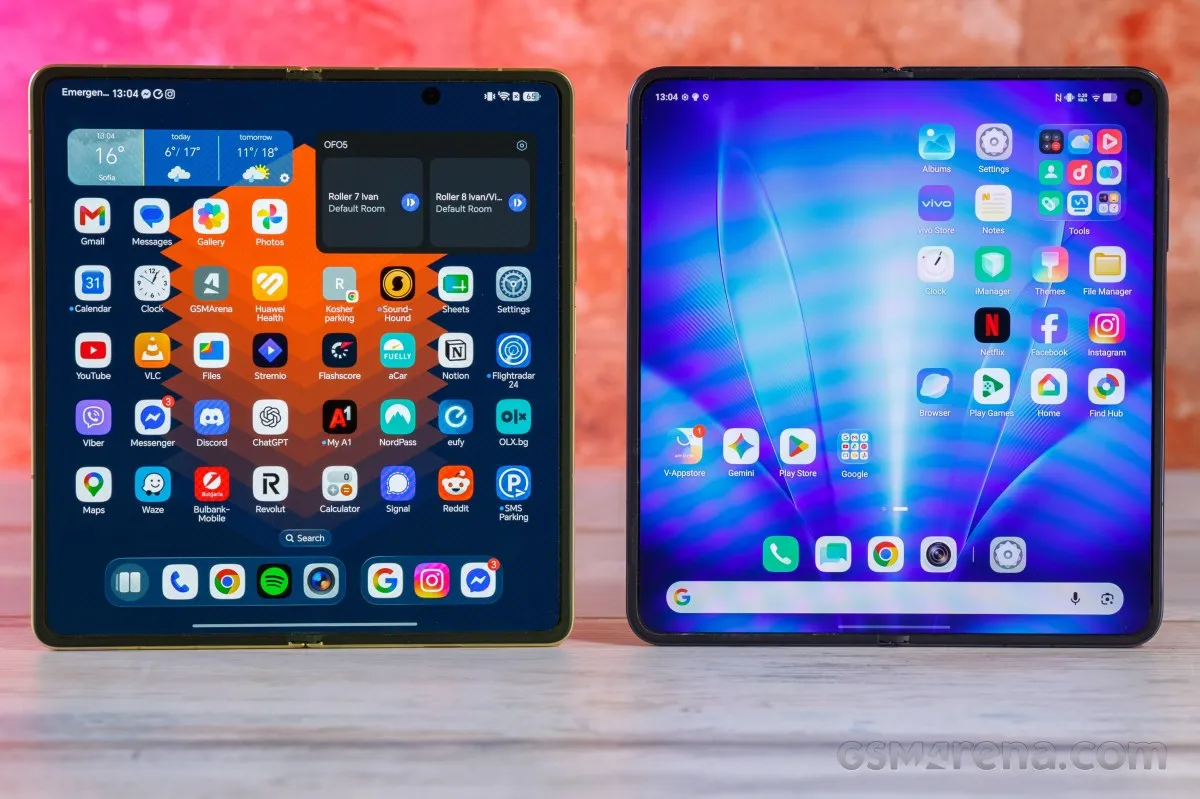 Left: Honor Magic V6 • Right: vivo X Fold6
The most prominent mainstream rival is undoubtedly the Samsung Galaxy Z Fold8 Ultra. However, in terms of raw hardware, the Samsung lags behind the vivo. While Samsung maintains a slight lead in processing power, it cannot match the X Fold6's superior camera system or battery longevity. Furthermore, vivo has aggressively closed the software experience gap. Samsung does offer an impressive commitment of seven major OS updates, but it is debatable whether the typical high-end foldable enthusiast—who usually craves the latest tech—actually intends to hold onto a single device for seven years.

The Honor Magic V6 is perhaps the most direct competitor, standing as the most accessible alternative to the Galaxy series. The Magic V6 is a masterclass in balance, featuring stunning displays, the flagship Snapdragon 8 Elite Gen 5 chipset, and a 6,600 mAh Si-C battery. Interestingly, despite having a smaller cell than the vivo, the Honor actually outperformed it in our battery endurance tests. Nevertheless, users prioritizing multitasking and photography will find the vivo more appealing.
Left: Honor Magic V6 • Right: vivo X Fold6The Oppo Find N6 is another strong contender, mirroring many of the Honor's hardware strengths. It utilizes a slightly smaller 6,000 mAh battery, which still delivers an impressive runtime, though its camera array doesn't quite reach the heights of vivo's implementation.
Left: Honor Magic V6 • Right: vivo X Fold6Finally, the Motorola Razr Fold serves as the endurance champion of the group. It is significantly more affordable—roughly $200/€600 cheaper—and offers double the storage capacity. While its more modest chipset and basic camera setup make it a value-driven choice rather than a spec-leader, it remains a formidable option.
Final Verdict
The vivo X Fold6 is a powerhouse of a device and arguably the most comprehensive large-format foldable available today. While it may not claim the absolute top spot in every single metric, it consistently ranks among the elite in every category that matters.
The device excels in build quality; the hinge is rock-solid, the screen crease is nearly invisible, and the overall ergonomics are impressive. Despite weighing 228g and featuring a massive camera bump, the phone feels balanced and comfortable. Additionally, the slightly wider cover screen is a smart design choice, making the device feel more like a standard smartphone when closed.
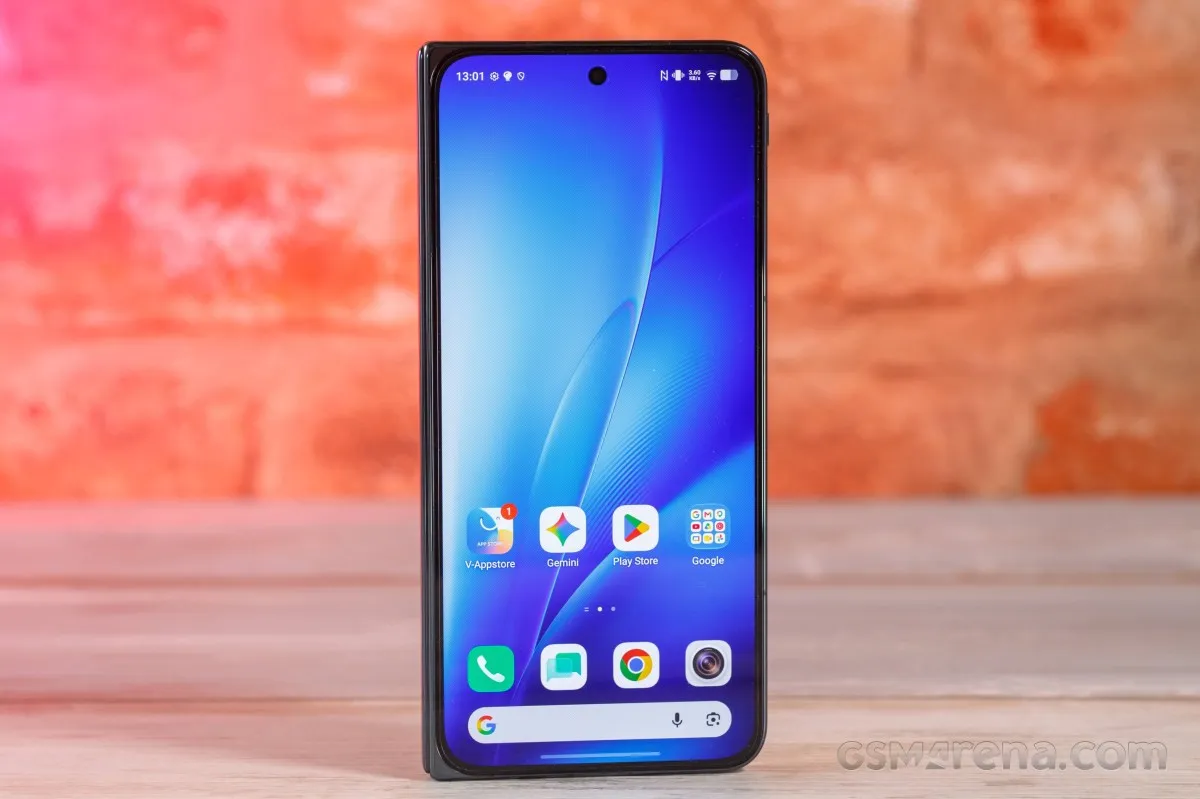
Under the hood, performance is top-tier. The Dimensity 9500 Super might not have the same marketing prestige as the latest Snapdragon, but in real-world usage, it is incredibly fast and maintains stability under heavy loads—a feat for foldable devices. Speed is never an issue here.
The 6,900mAh battery is a technical marvel. While its actual endurance is very strong and a clear upgrade over its predecessor, it doesn't quite dominate the charts as its massive capacity suggests, as some rivals achieve more with less. Charging is solid, though taking an hour for a full top-up isn't industry-leading. That said, the inclusion of 40W wireless charging and intelligent battery-health tools adds significant value.
One of the X Fold6's most compelling assets is undoubtedly OriginOS 7 Fold. It is evident that vivo has invested heavily in optimizing the expansive inner canvas; features like Origin Workbench, Multi-Split Screen, and intuitive cross-app drag-and-drop—alongside seamless Mac and PC integration and a surprisingly robust desktop mode—ensure the device feels purpose-built for its foldable nature. While Samsung may still lead in terms of ecosystem maturity and long-term software support, vivo is rapidly closing the gap, and may even be surpassing the competition in terms of practical foldable utility.
The photography suite is equally impressive. The upgraded 200MP primary sensor marks a significant leap forward, delivering top-tier imagery in both bright daylight and challenging low-light environments. Because the ultrawide and telephoto lenses also perform admirably, the X Fold6 avoids the common "foldable compromise" where camera quality is sacrificed for form factor. Users will find the zoom range versatile, the macro capabilities strong, and the rear-camera selfies superb. While the punch-hole front cameras are unremarkable, they are largely irrelevant given the ability to use the superior rear sensors for self-portraits. One caveat: vivo's default "Refined" color profile is polarizing and likely something most users will want to change immediately. Video performance is dependable, characterized by superb stabilization and a wide array of recording settings, even if it doesn't quite reach "exceptional" status.
The device isn't without its flaws. The massive camera housing is an unavoidable visual element, and at 228g, the X Fold6 is certainly not a lightweight contender, though it remains reasonable for the category.
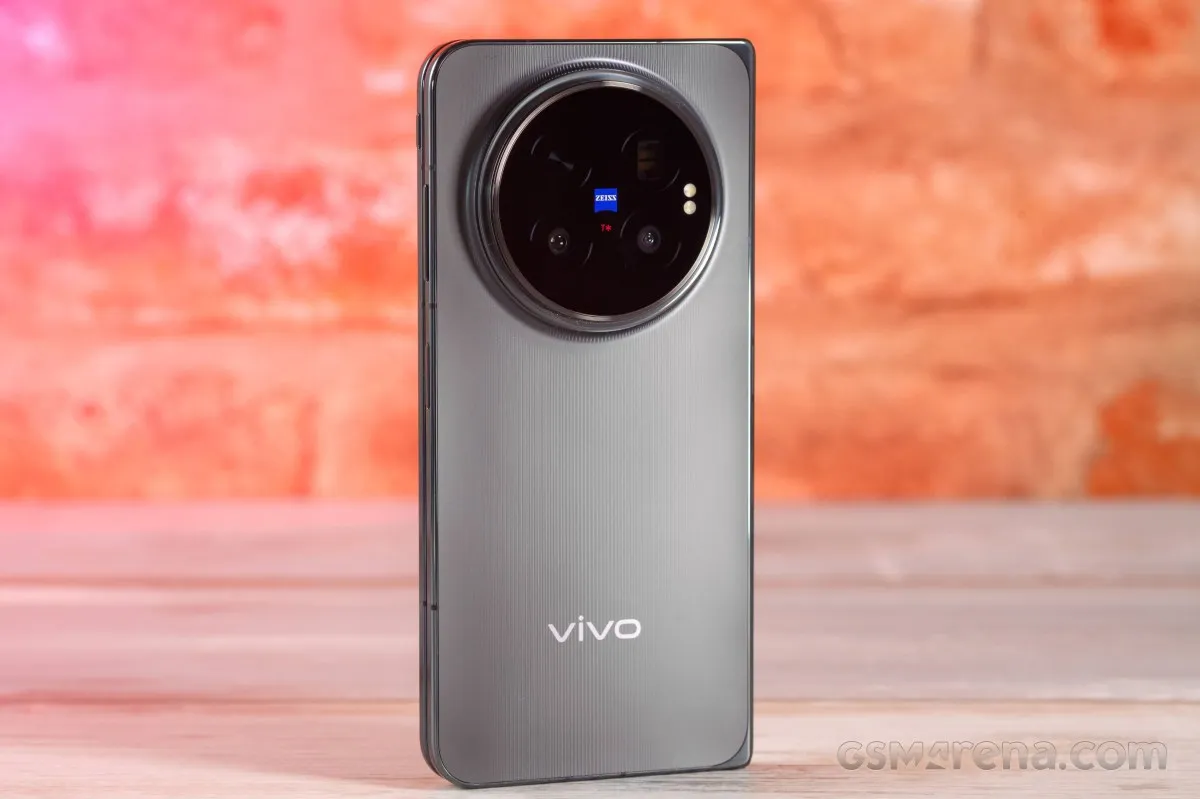
Ultimately, the X Fold6 is a masterclass in engineering. vivo has successfully packed a high-capacity battery, a professional-grade camera array, and flagship-tier processing power into a slim chassis without making the user feel like they've compromised on any single front. More importantly, the software has evolved to ensure that the extra screen space provides genuine value.
For those seeking one of the most comprehensive foldable packages on the market—and who have the budget to accommodate its premium price tag—the X Fold6 is a top-tier candidate.
Pros
- Highly functional cover screen paired with a vast internal display.
- High-end construction featuring a sturdy hinge and a subtle crease.
- Top-of-the-line flagship performance.
- Superb photo quality across the entire triple-camera rear array.
- Outstanding primary sensor, telephoto zoom, and macro shots.
- Multitasking software that is both feature-dense and practical.
- Impressive desktop mode and versatile cross-platform connectivity.
- Massive 6,900mAh cell providing strong battery life.
- 40W wireless charging and smart battery-health tools.
- Commitment to five major Android OS updates and seven years of security patches.
- Strong loudspeaker volume.
Cons
- Hefty price point.
- Real-world battery life doesn't fully maximize the 6,900mAh capacity.
- Charging speeds lag behind other devices in this segment.
- Front-facing cameras on both displays are mediocre.
- The "Refined" default color mode is questionable.
- Prominent camera bump and a noticeable overall weight.
- Audio lacks low-end depth and can be piercing at high frequencies.