iPhone Duo Debuts: How It Stacks Up Against Galaxy Z Fold8, Motorola Razr Fold and Rivals

Apple's foray into the foldable market has officially arrived, with the iPhone Duo beginning shipments this Friday. However, prospective buyers should prepare for a challenge; Apple has already signaled that retail stock will be scarce and digital orders are currently plagued by significant lead times. While the company is aggressively scaling production, it will be some time before supply catches up with demand.
Entering the premium tier, Apple's debut foldable carries a steep price tag, starting at $2,000 for the entry-level 256GB configuration and peaking at $3,200 for the massive 2TB variant. To put this in perspective, the iPhone 18 Pro Max (256GB) remains a more budget-friendly flagship, costing $700 less than the Duo's base model. For those prioritizing a compact footprint, the iPhone 18 Pro is available for an additional $100 discount over the Pro Max.


Apple iPhone 18 Pro Max
Read our review
Apple iPhone 18 Pro
Read our reviewWhen compared to its primary rival, the Samsung Galaxy Z Fold8—the only other major wide-format foldable in the US—the iPhone Duo faces a steep uphill battle on value. Thanks to a $200 discount and a more aggressive base price, the Galaxy is $300 cheaper than the iPhone. Samsung also holds a clear lead in ergonomics; the Z Fold8 is notably slimmer at 9.7mm (compared to the Duo's 11.3mm) and significantly lighter at 201g versus 254g. Visually, the two are closely matched, with the Galaxy featuring a 5.5” cover display against the Duo's 5.4”, while both boast identical 7.6” internal screens with nearly the same aspect ratios.
Battery longevity will likely come down to processor optimization, as the two devices feature nearly matching capacities: 4,800mAh for the Galaxy and 4,883mAh for the Duo. Under the hood, the Galaxy is powered by the Snapdragon 8 Elite Gen 5, while the Duo relies on the Apple A20 Pro. Photography enthusiasts should note that neither handset includes a dedicated telephoto lens, opting instead for dual 50MP and dual 48MP camera arrays, respectively.

For those seeking more screen real estate, Samsung offers the Galaxy Z Fold8 Ultra. This premium variant boasts a tall, narrow 21:9 cover display measuring 6.5” and a massive 8.0” internal screen. Despite the increased size, it remains impressively portable, weighing just 215g (39g lighter than the Duo) with a thickness of 8.9mm. The Ultra significantly upgrades the optics with a 200MP 1/1.3” primary sensor and adds a 10MP 3x/69mm telephoto lens. For a detailed breakdown of how it differs from the standard model, check out our comprehensive comparison.

If you're hunting for a bargain, the previous-generation Galaxy Z Fold7 is currently available for $1,350 at Amazon, though Walmart has undercut that price at $1,300. It is worth noting that the direct successor to the Z Fold7 is actually the Z Fold8 Ultra, rather than the base Z Fold8. The "Ultra" branding is justified by substantial leaps in processing power, battery endurance, charging speeds, and an enhanced inner display—all of which we explore in our versus analysis.

With Google's foldable pricing remaining stubbornly high, the Motorola Razr Fold emerges as a compelling alternative. While it is bulkier and heavier—weighing 243g with a 10.1mm profile—it dominates in power delivery. It features a massive 6,000mAh battery supporting 80W wired and 50W wireless charging, comfortably beating the Z Fold8 Ultra's 5,000mAh capacity and 45W/20W speeds. It runs on the standard Snapdragon 8 Gen 5 chipset and matches Samsung's software commitment with 7 guaranteed OS updates. The camera setup is equally robust, featuring a 50MP main sensor (1/1.28”), a high-res 50MP 3x/71mm telephoto, and a 50MP ultra-wide lens.

If you're hunting for a foldable, the Samsung Galaxy Z Flip8 is currently priced at $1,050. While it's a solid deal, we've seen this model dip below the $1,000 mark previously, which we consider the ideal buy-in price.

Alternatively, the Motorola Razr Ultra 2025 from last year has seen a price drop back to $700. Despite utilizing the now-older Snapdragon 8 Elite chipset, it presents a compelling value proposition over the Z Flip8 by offering superior RAM and storage capacities, alongside a larger battery and quicker charging speeds.

Motorola Razr Ultra 2025
Check out our full reviewOver at Samsung.com, you can snag the latest Galaxy Tab S12+ and Tab S12 Ultra for $100 less by applying the promo code PYPL100. These powerhouses feature 120Hz OLED displays measuring 12.6” and 14.6” respectively, powered by 10,600mAh and 11,600mAh batteries. Both tablets are driven by the Dimensity 9500 processor and come with full Samsung DeX integration.
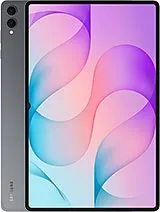
Samsung Galaxy Tab S12 Ultra
Save $100 using promo code PYPL100Trade-in credits available up to $550
Check out our full review
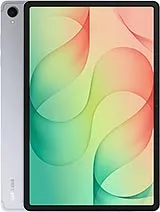
A provocative question recently surfaced in our community polls: does it make financial sense to invest in a Galaxy Tab S12 Ultra when a MacBook is available for a similar price? Interestingly, the 13-inch MacBook Air often undercuts the Ultra tablet's cost, provided you aren't utilizing a Samsung trade-in deal. This specific MacBook Air is driven by the Apple M5 chip (debuting in March, just prior to the M6 launch). While the entry-level 16GB RAM/512GB storage configuration originally hit the market at $1,100, a subsequent $200 price increase has since shifted that baseline.

Apple MacBook Air 2026 13"
Powered by Apple M5Discount: $150 off
For those prioritizing a stationary workstation, the newest Mac mini offers a more budget-friendly path. By stripping away the integrated display, keyboard, and battery, it lowers the price point while boosting performance via the M6 chipset. It also provides a superior array of connectivity options, featuring three Thunderbolt 4 ports (one more than the Air), a dedicated full-size HDMI port, and 2.5Gb Ethernet support.

Apple Mac mini 2026
Powered by Apple M6Save $120 to $150
In other news, Apple has debuted a refreshed version of the Apple TV 4K. This 4th generation iteration arrives with a significant price jump, costing twice as much as the 3rd gen model did at its debut (despite the previous model also seeing price increases). Under the hood, it utilizes the Apple A19 chipset from last year, which delivers a GPU that is twice as fast as the A15 found in the predecessor. The new unit also features a standard 128GB of internal storage and a gigabit Ethernet port.
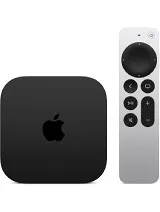
Apple TV 4K (4th gen)
128GB, 1Gb Ethernet, available November 13We may get a commission from qualifying sales.