Oppo Find X10 Pro Max Review: Is It the Ultimate Flagship?
Verdict
Oppo Find X10 Pro Max: Comprehensive Review
Introduction and unboxing
Hardware Overview and Technical Specifications
Oppo has restructured its flagship lineup this year, introducing the Find X10 series in three distinct flavors: the Find X10 E, the standard Find X10, and the top-tier Find X10 Pro Max. Notably absent is the traditional "Pro" model; instead, the Find X10 Pro Max steps in as the direct evolutionary successor to last year's Find X9 Pro, mirroring its physical footprint and high-end positioning.
Under the hood, the Find X10 Pro Max receives a significant performance boost via the new Dimensity 9600 Pro chipset. While it maintains the 6.78-inch screen size of its predecessor, the display technology has been overhauled. The new OLED panel now supports a fluid 144Hz refresh rate and delivers significantly higher peak brightness levels.
Quick Specs: Oppo Find X10 Pro Max
- Build: 161.3x76.6x8.4mm; 233g; Crystal Guard glass front, glass rear, aluminum frame; IP68/IP69 rated (dust-tight, water-resistant up to 1.5m for 30 mins, and resistant to high-pressure jets).
- Display: 6.78" LTPO AMOLED, 1B colors, 144Hz, 3840Hz PWM, Dolby Vision, HDR10+, HDR Vivid, BT.2020, 800 nits (typical), 2000 nits (HBM), 3600 nits (peak), 1272x2772px, 19.61:9 ratio, 450ppi; Ultra HDR support.
- Processor: Mediatek Dimensity 9600 Pro (2 nm).
- Storage/RAM: 256GB/12GB, 512GB/12GB, 512GB/16GB, 1TB/16GB; UFS 4.1.
- Software: ColorOS 17 based on Android 17.
- Rear Camera Array: Main (Wide): 200 MP, f/1.5, 24mm, 1/1.3", 0.6µm, PDAF, OIS; Telephoto: 200 MP, f/2.1, 70mm, 1/1.56", 0.5µm, PDAF (10cm - ∞), OIS, 3x optical zoom; Ultra-wide: 200 MP, f/2.2, 13mm, 1/1.56", 0.5µm, PDAF.
- Front Camera: 50 MP, f/2.0, 18mm (ultrawide), 1/2.76", 0.64µm, PDAF.
- Video Capabilities: Rear: 8K@30fps, 4K@30/60/120fps, 1080p@30/60/240fps; gyro-EIS; HDR, 10-bit, Dolby Vision, LOG; Front: 4K@30/60fps, 1080p@30/60fps, gyro-EIS, HDR.
- Battery & Power: 8000mAh; 80W wired, 44/80W UFCS, 55W PPS, 13.5W PD, 50W wireless, 10W reverse wireless.
- Connectivity: 5G, eSIM, Wi-Fi 7, BT 6.2 (aptX HD, LHDC 5), NFC, Infrared port.
- Extras: Ultrasonic under-display fingerprint sensor; stereo speakers; Satellite connectivity (exclusive to 1TB/16GB RAM variant).
The most striking innovation is the camera system. The Find X10 Pro Max makes history as the first device to feature a triple 200MP array. However, these sensors are not identical; while the ultra-wide and telephoto lenses utilize the proven Samsung ISOCELL HP5, the primary wide sensor is the advanced ISOCELL HPC. Additionally, the front-facing camera now features a wider 18mm focal length, allowing for more expansive group selfies.
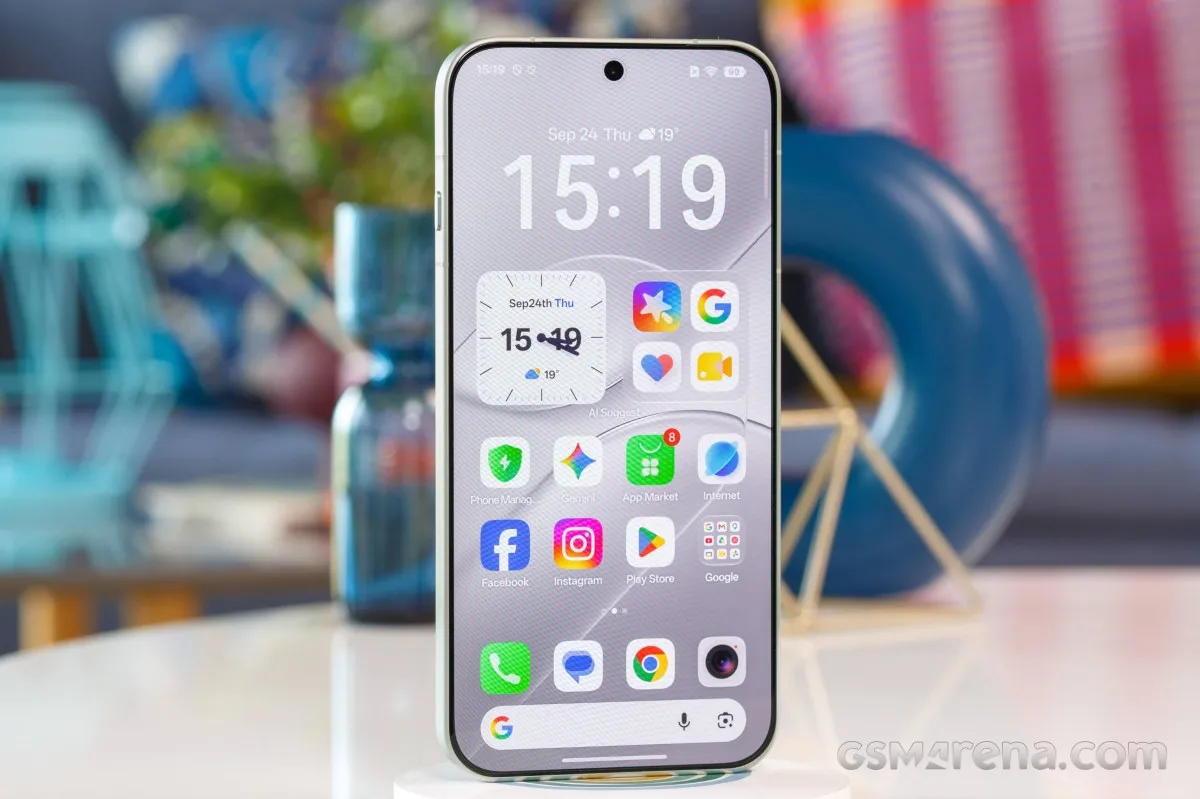
Battery capacity varies by region. Global markets receive a massive 8,000 mAh cell, whereas European models are limited to 7,150 mAh due to aviation safety regulations regarding battery transport. Interestingly, this is a slight decrease for European users compared to the universal 7,500 mAh battery found in last year's model, though global users see a clear upgrade.
Despite the capacity split, overall endurance may still improve thanks to the energy-efficiency gains of the 2nm Dimensity 9600 Pro SoC and the updated display. For the purpose of our testing, we are utilizing the 8,000 mAh global variant.
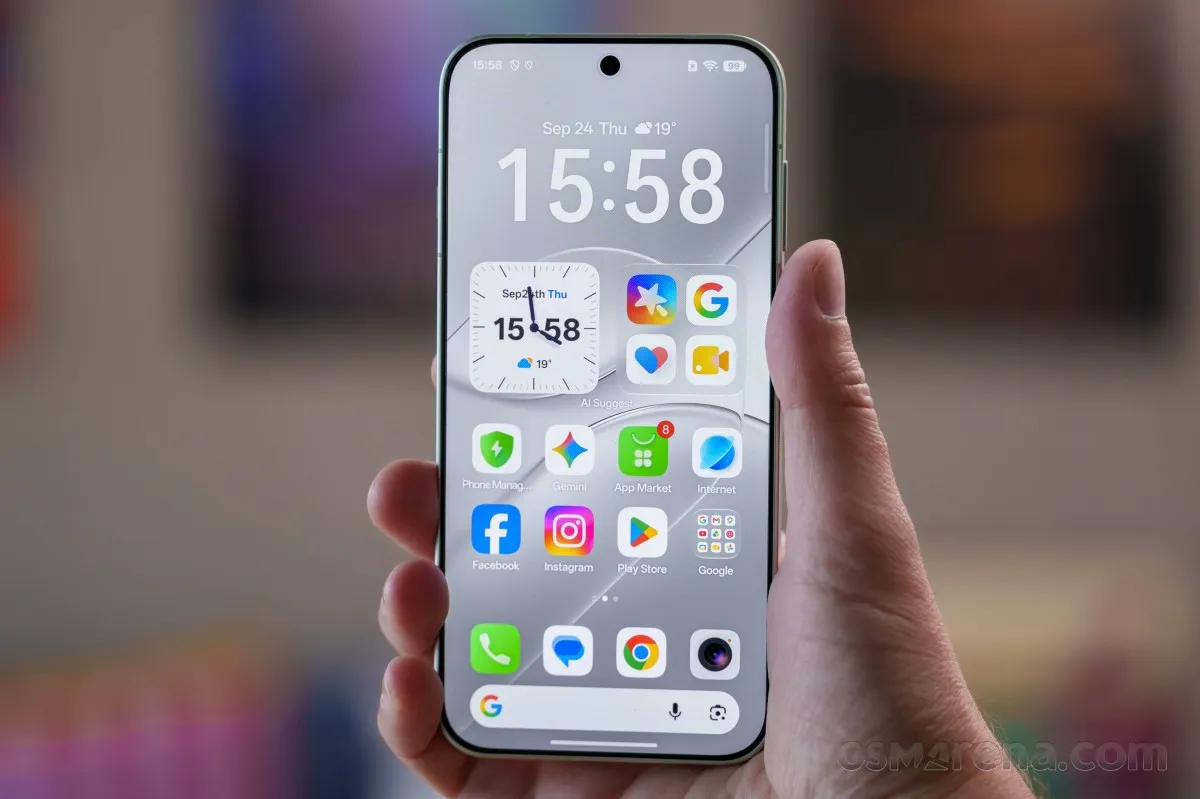
Charging speeds remain consistent with previous iterations. The device continues to support 80W wired charging via SuperVOOC and 50W wireless charging through the AirVOOC standard.
On the software side, the Find X10 Pro Max serves as the launch platform for ColorOS 17, running on Android 17, which introduces several system-wide optimizations and fresh features.
Unboxing Experience
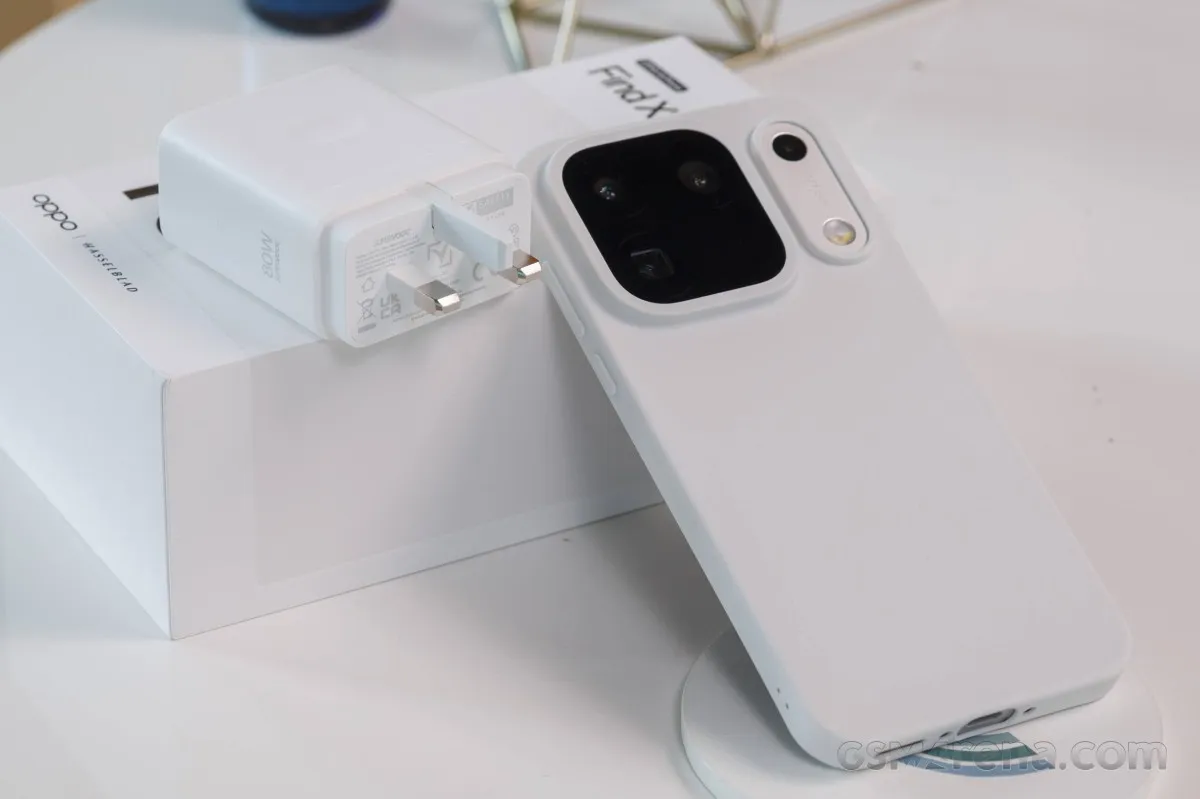
The retail packaging is straightforward, containing the smartphone, essential documentation, a USB-C to USB-A cable for charging and data, and a color-matched silicone protective case.
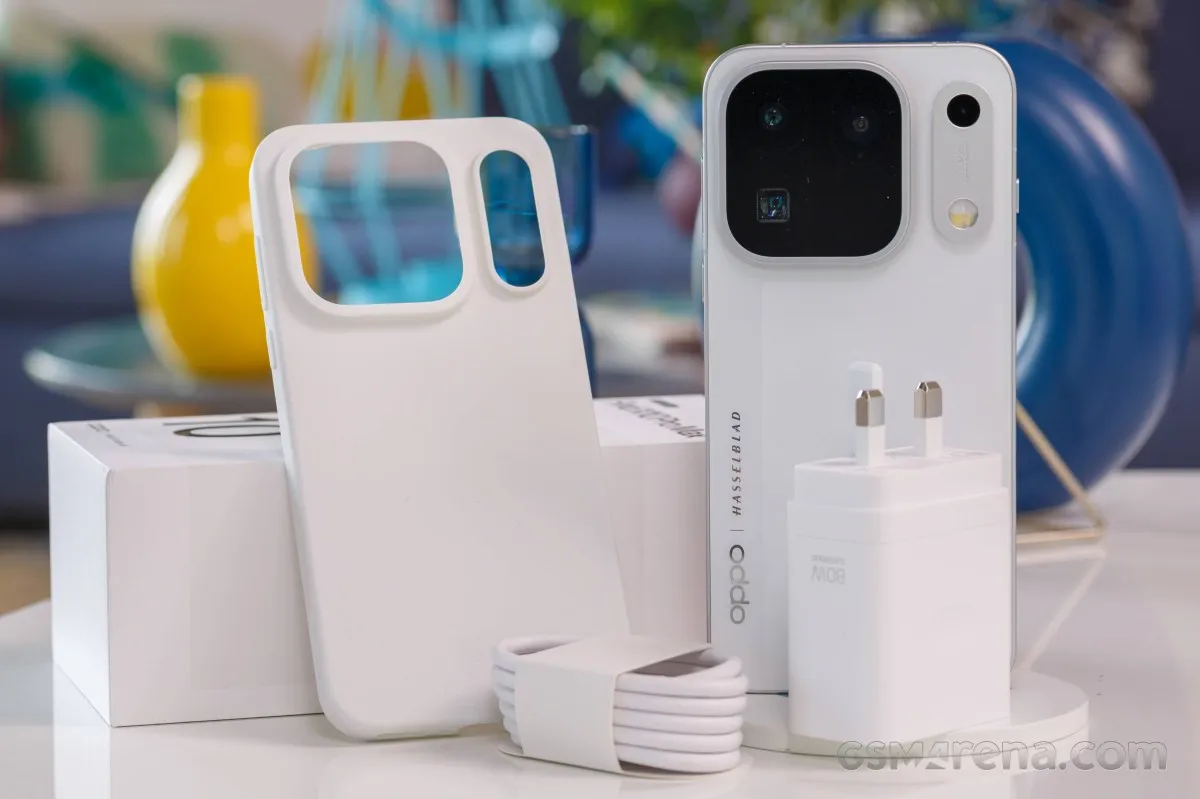
While European shipments omit the power brick, our global unit arrived complete with the 80W SuperVOOC charging adapter.
While it isn't included in the standard retail box, Oppo provides an optional Hasselblad Teleconverter Kit. Our review unit featured this accessory, which boosts the 3x telephoto lens with an additional 3.28x optical zoom, effectively delivering a genuine 10x optical reach. To ensure a secure setup, the kit includes a dedicated case, a specialized mounting system for attaching the lens, and a safety lanyard for peace of mind during transport.


For those seeking protection and functionality, Oppo has launched the Quicksand Shimmer Magnetic Case series. We tested these in White and Titanium (a light purple hue). These cases are essential for utilizing magnetic peripherals, such as the Oppo UltraSlim Magnetic Power Bank, which packs a 5,000mAh capacity and supports 22.5W charging. Although the device contains internal magnets, they lack the necessary strength for a secure hold, making a magnetic case a prerequisite for anyone planning to use magnetic accessories.



Design and build
Aesthetics, Construction, and Ergonomics
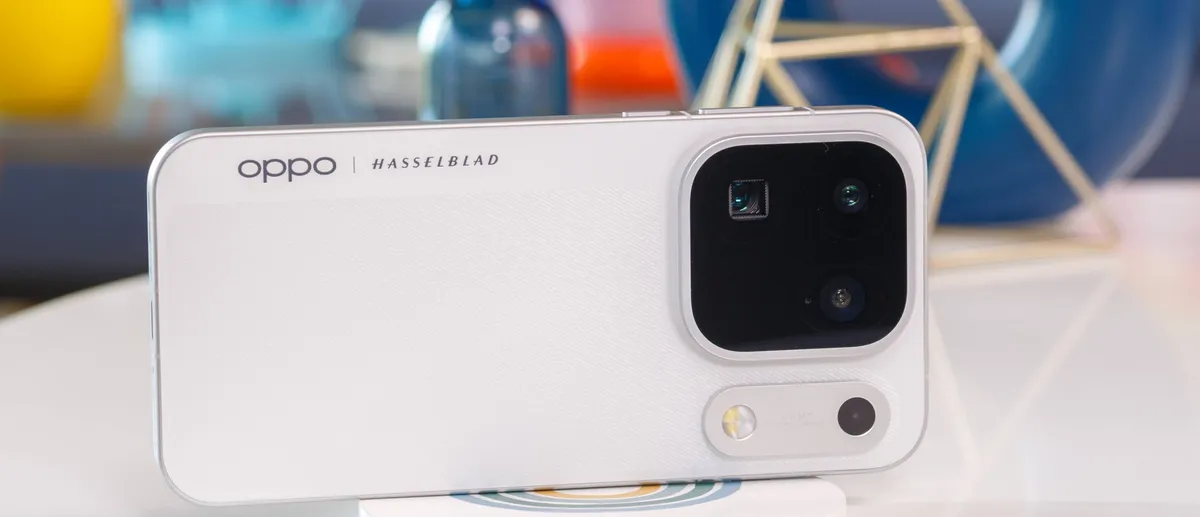
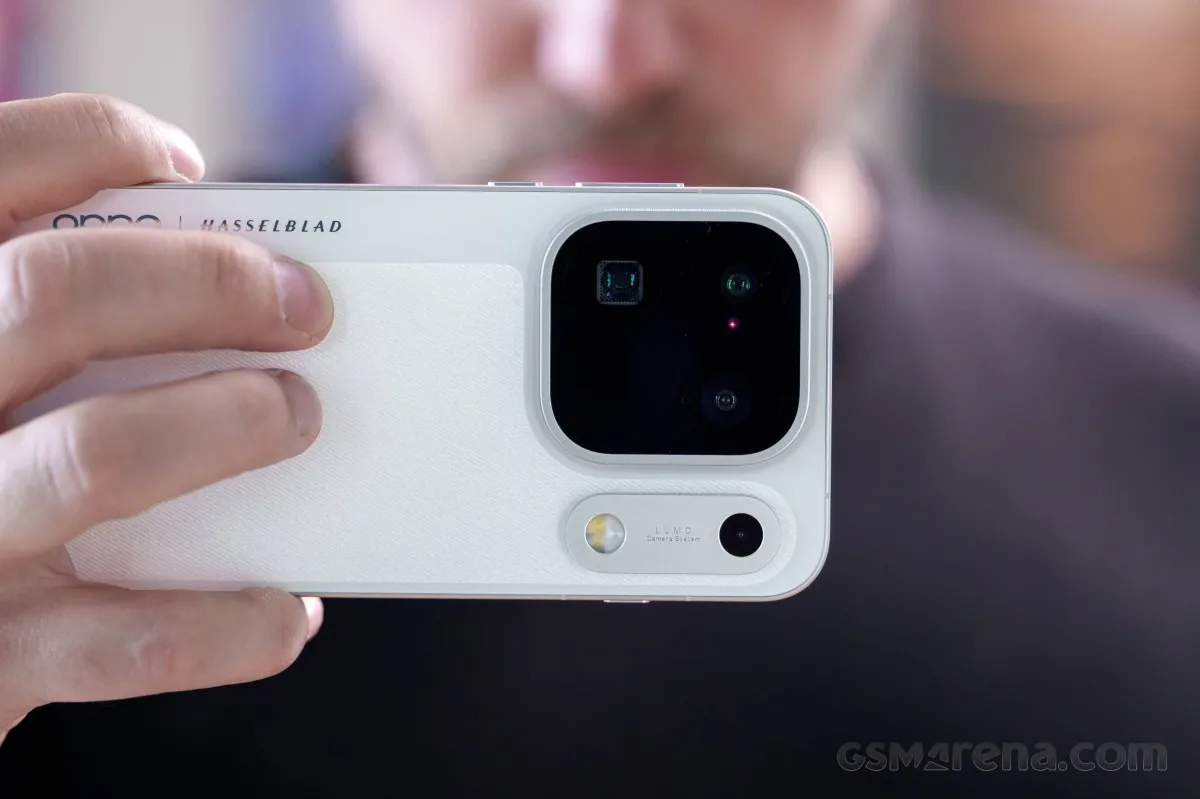
While the Find X10 Pro Max shares a strong DNA with last year's Find X9 Pro, Oppo has introduced a distinctive modification. The device now features a secondary aluminum module dubbed the "Lumo Camera Island," which serves as the dedicated housing for the LED flash and the True Color Camera.
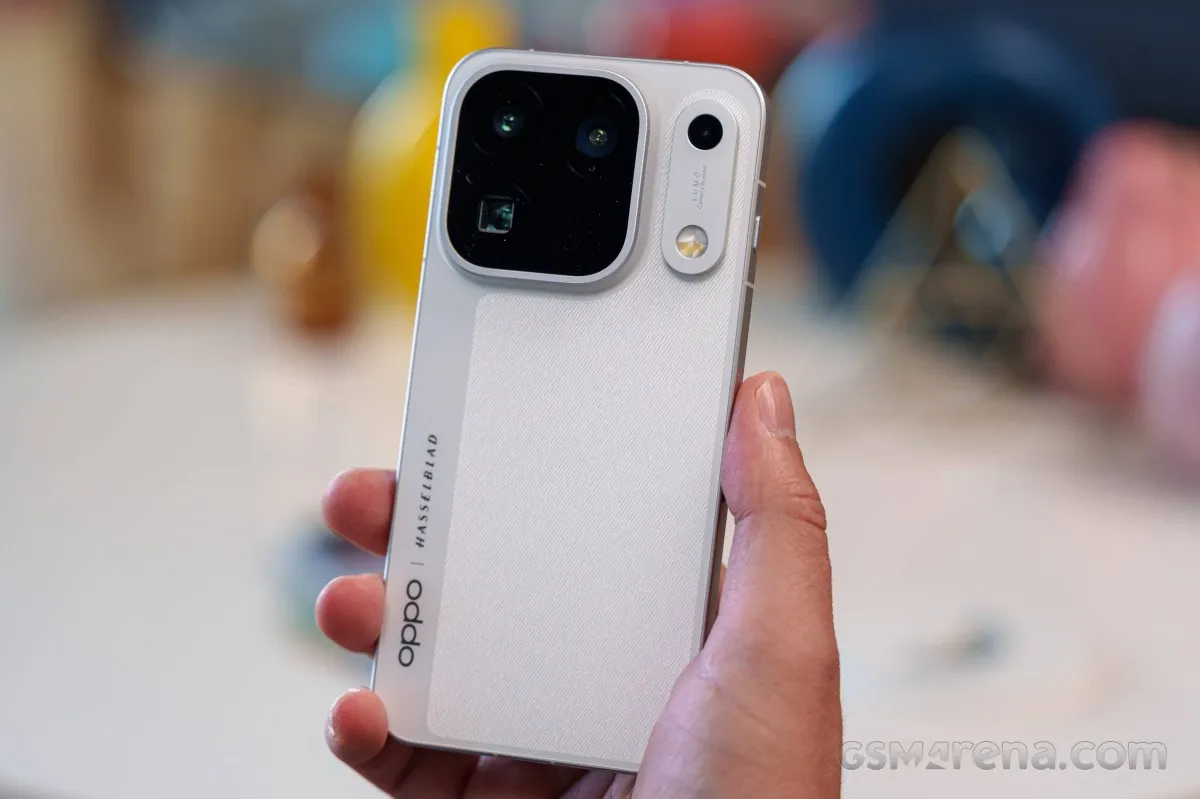
The primary camera housing bears a striking resemblance to the iQOO 15, though it is distinguished by subtle knurling and a signature orange ring—a stylistic nod to the classic Hasselblad camera aesthetic.

In terms of build quality, the device is undeniably high-end. Anodized aluminum forms the flat perimeter frame, which features slightly rounded edges to enhance ergonomics and grip. The combination of this metallic frame and the matte glass rear gives the X10 Pro Max a sophisticated feel, although the smooth surfaces do make it somewhat prone to slipping.
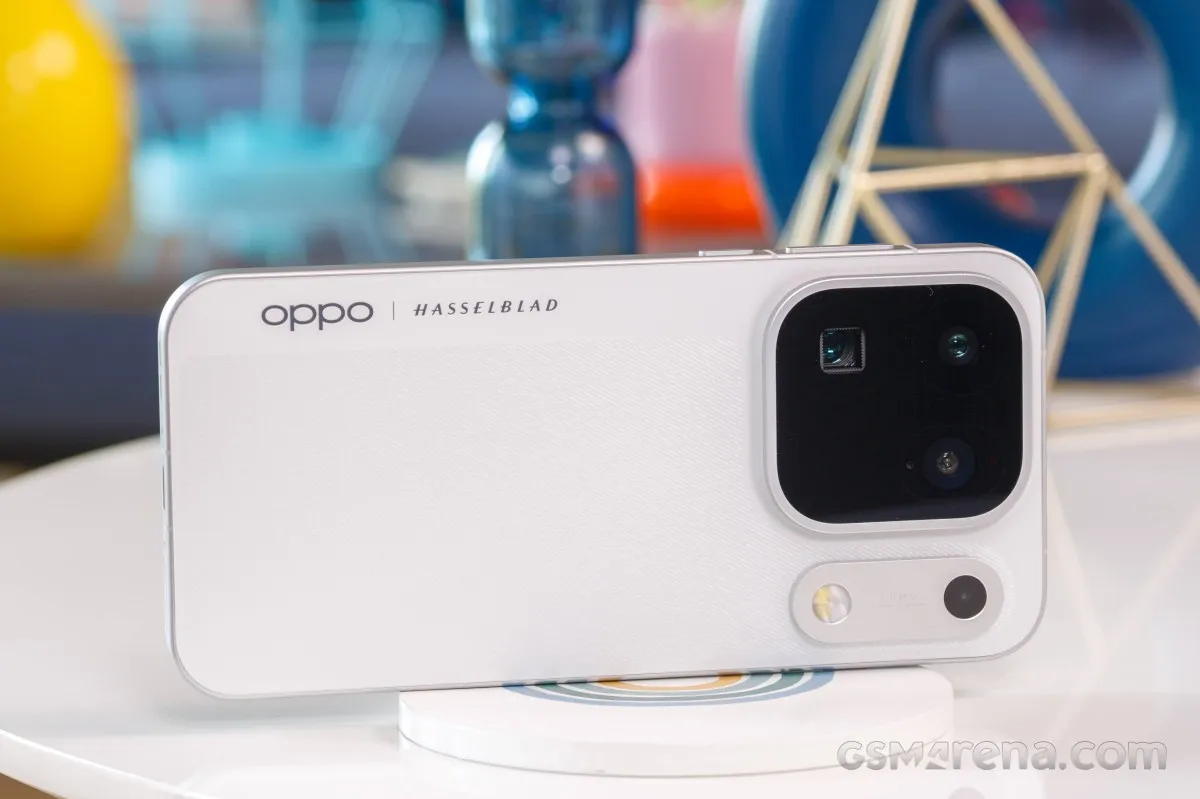
Global customers can choose between Luna White and Titanium Grey. An Orange variant exists, but it is exclusive to the Chinese domestic market and will not be available internationally.
Our review unit is the Luna White model, which showcases prominent Hasselblad and Oppo branding alongside a delicate striped motif. Interestingly, this pattern is integrated beneath the glass, meaning the back remains perfectly smooth to the touch.
Durability is a priority here, with both the front and rear panels shielded by Oppo Crystal Guard Glass, a material co-engineered with Corning. Furthermore, the device boasts a comprehensive suite of ingress protection, meeting IP66, IP68, and IP69 standards for dust and water resistance.
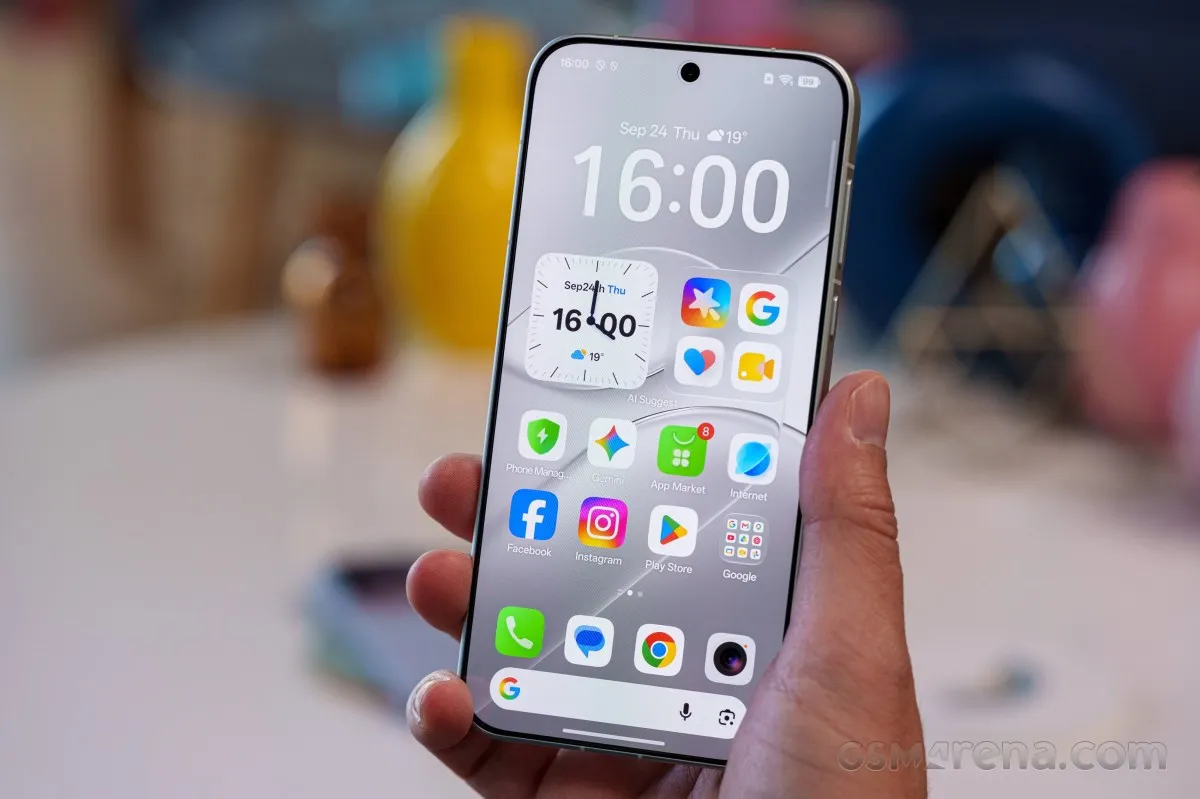
The side rails follow a standard layout: the power button and volume keys occupy the right side, while the left side features a programmable "Snap Key."
One notable regression is the disappearance of the dedicated hardware Quick Button for the camera. This feature was present on both the X9 Pro and X9 Ultra, but has been excised here—a trend we've noticed across several flagship camera phones, including recent Vivo models.
The base of the chassis houses the SIM tray, which accommodates two physical nano-SIMs. While eSIM support is integrated, the device is limited to two active SIMs simultaneously.
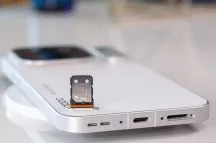


Biometric security is handled by a fast and reliable ultrasonic fingerprint scanner. This sensor is paired with "Splash Touch" technology, ensuring the display remains responsive even when covered in water droplets or used with wet fingers.

Ultimately, the design is a winner. The Find X10 Pro Max successfully integrates massive, powerful camera sensors into a visually appealing architecture, blending a modern flat-edge silhouette with a sophisticated camera layout.
Lab tests - display, battery life, charging speed, speakers
A Refined 6.78-inch LTPO OLED Panel
While the Oppo Find X10 Pro Max shares the same 6.78-inch LTPO OLED foundation and 1,272 x 2,772px resolution as its predecessor, the Find X9 Pro, it introduces several key enhancements. Most notably, the refresh rate has been bumped from 120Hz to 144Hz, and the panel boasts improved peak brightness. To accommodate users with flicker sensitivity, Oppo has increased the PWM frequency to 3840Hz, ensuring a more comfortable viewing experience.
In a departure from the Gorilla Glass Victus 2 found on the Find X9 Pro and Ultra, the X10 Pro Max utilizes Oppo's proprietary Crystal Guard Glass. Although direct durability comparisons are scarce, Oppo notes that this glass was co-developed with Corning, the industry leader behind the Gorilla Glass brand.

Multimedia performance remains a strong suit; the display fully supports HDR10+, Dolby Vision, and HDR Vivid, ensuring high-fidelity streaming across all major platforms.
Visually, the device is striking due to its ultra-slim bezels. Measuring a mere 1.15mm, they rank among the narrowest in the current smartphone market.
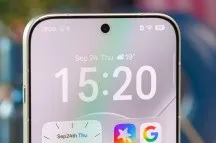

Our laboratory benchmarks confirm a brightness edge over the X9 Pro. In auto mode with a 75% white patch, the X10 Pro Max hit 2337 nits. Peak brightness (measured via a 10% patch) remains consistent with the previous generation, topping out at approximately 3,500 nits.
It is important to note that these maximums were achieved using Oppo's native gallery app, one of the few triggers for "high-brightness mode." Standard web browsing typically caps output at just over 1,000 nits—sufficient for direct sunlight, but far below the hardware's ceiling. However, YouTube playback performed significantly better, easily exceeding 2,200 nits.
For those using their device in total darkness, the minimum brightness drops to a comfortable 1 nit.
Max display brightness test
White test pattern (nits)
- Manual (75% fill)
- Auto (75% fill)
- Peak Auto (10% fill)
 Oppo Find X10 Pro Max (Gallery)
 Pixel 10 Pro XL
 Oppo Find X9 Ultra (gallery)
 Oppo Find X9 Pro (gallery)
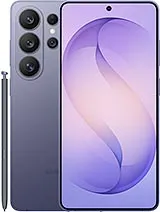 Galaxy S26 Ultra
 Xiaomi 17 Ultra
Oppo Find X10 Pro Max
Refresh Rate Dynamics
Thanks to the LTPO technology, the screen can dynamically scale its refresh rate from 1Hz up to 144Hz. In daily use, most applications operate within the 1-120Hz window. The full 144Hz capability is reserved for a curated list of high-performance titles, including PUBG Mobile, Call of Duty Mobile, Mobile Legends: Bang Bang, Free Fire/Free Fire Max, Brawl Stars, Clash Royale, Standoff 2, Real Racing 3, and Clash of Clans. This level of high-refresh-rate (HRR) gaming support is notably more comprehensive than what is typically offered by competitors.
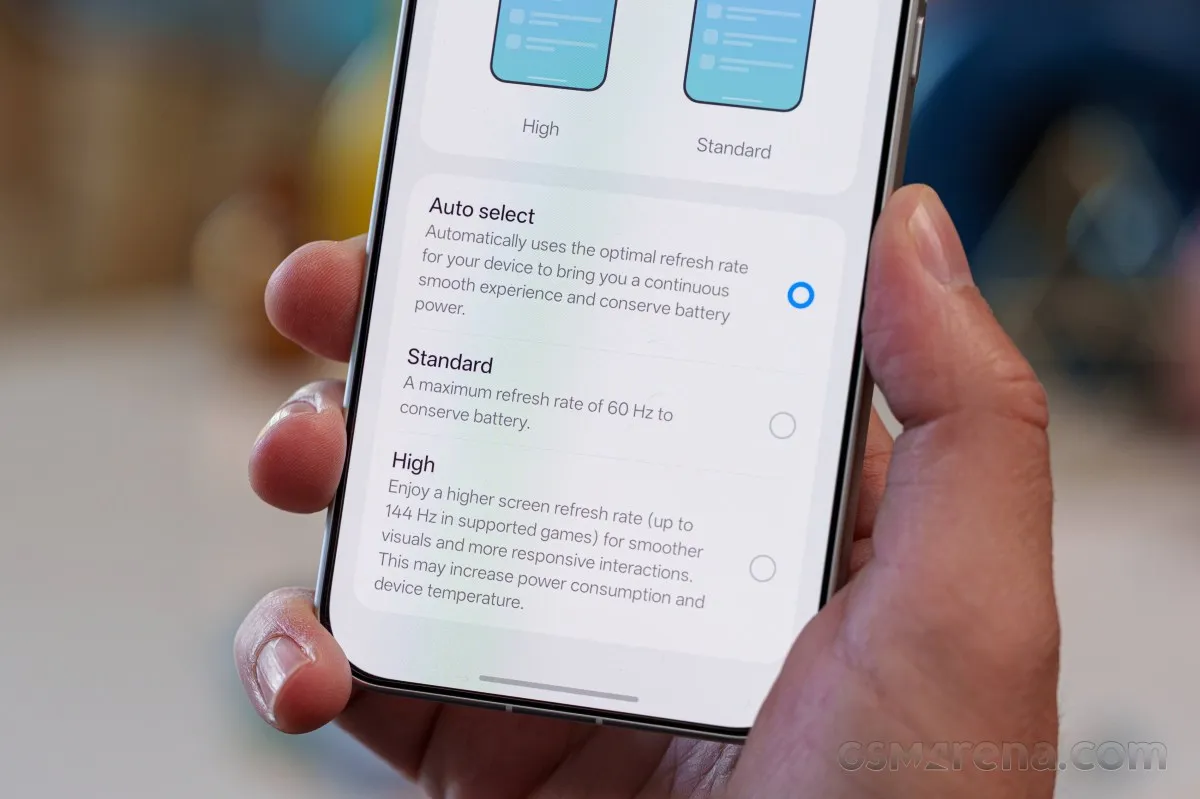
Certain apps, such as Google Chrome, may default to 90Hz. To override this, users can enable "High refresh rate mode" in the settings, which pushes the device toward 120Hz while maintaining adaptive behavior. Naturally, the panel drops to 1Hz when displaying static images or remaining idle.
Furthermore, the display intelligently synchronizes with video content. If you are streaming a 24fps, 30fps, or 60fps video on YouTube, the panel will match that specific frame rate (24Hz, 30Hz, or 60Hz) to ensure smooth playback.
Battery Endurance
The global variant of the Find X10 Pro Max is equipped with a massive 8,000 mAh battery, a significant jump from the 7,500 mAh cell found in last year's model. However, European customers face a discrepancy; the EU version is downgraded to only 7,150 mAh, which is actually a decrease compared to the X9 Pro.
Regardless of the region, the endurance is impressive, though the global 8,000 mAh model we tested is the clear winner. It achieved a remarkable Active Use Score of 25:24h. For a flagship device with a power-hungry chipset and a large screen, this is an elite result, placing it among the top battery performers in its class.
Charging speed
When it comes to replenishing power, the device offers a flexible array of options. Utilizing a compatible charger, users can access 80W wired speeds via the proprietary SuperVOOC system, while wireless charging is handled by 50W AirVOOC. For those using third-party hardware, the phone maintains strong compatibility with 55W Power Delivery chargers for efficient top-ups. Additionally, both wired and wireless reverse charging are capped at 10W.
Interestingly, Oppo has pivoted toward a more cautious charging strategy this year. The current speeds represent a slight dip compared to the Find X9 Pro and a more significant regression when compared to earlier iterations of the series.
A complete 0-100% charge now requires 1 hour and 10 minutes. In head-to-head comparisons at the 15- and 30-minute intervals, the Find X10 Pro Max is outpaced in percentage gains by the Samsung Galaxy S26 Ultra and the Google Pixel 11 Pro XL. While those devices feature smaller cells, the Find X10 Pro Max still lags behind the Galaxy S26 Ultra—and several other Chinese competitors—in the actual milliampere-hours (mAh) recovered after a half-hour of charging.
In short, the Find X10 Pro Max struggles both in total charging duration and in its raw capacity-per-minute recovery rate.
Charging speed
- in 15 min
- in 30 min
- Time to full charge (from 0%)
Galaxy S26 Ultra
 Pixel 11 Pro XL
Oppo Find X9 Ultra
Xiaomi 17 Ultra
 vivo X300 Ultra
Oppo Find X9 Pro
Oppo Find X10 Pro Max
The software suite for power management is fairly conventional, offering standard battery health and saver tools. A "Smart charging" feature is included, which analyzes user patterns to time the final charge cycle just before the device is typically unplugged. Users can also manually cap the maximum charge in 5% increments between 80% and 100%. Furthermore, there is an option to disable "Smart rapid charging" for those who prefer slower, potentially gentler charging cycles.
Speakers
Oppo markets the Find X10 Pro Max as having symmetrical stereo speakers for a balanced audio experience. However, in practice, the top speaker—which doubles as the earpiece—typically lacks the bass and volume of the bottom-firing unit.
Overall volume is underwhelming, with the device recording a score of -28.8 LUFS, landing it firmly in the "Average" category. Audio fidelity has also taken a hit; the sound quality is noticeably inferior to both the Find X9 Pro and the Find X9 Ultra, and it is easily outperformed by the Galaxy S26 Ultra.
The most glaring issue is the lack of sonic depth. Music sounds remarkably flat, as if the low-end frequencies have been filtered out, leaving the audio devoid of warmth and punch.
Use the Playback controls to listen to the phone sample recordings (best use headphones). We measure the average loudness of the speakers in LUFS. A lower absolute value means a louder sound. A look at the frequency response chart will tell you how far off the ideal "0db" flat line is the reproduction of the bass, treble, and mid frequencies. You can add more phones to compare how they differ. The scores and ratings are not comparable with our older loudspeaker test. Learn more about how we test here.
Software and performance
ColorOS 17: A Fresh Vision Powered by Android 17
Launching alongside the Oppo Find X10 series is the all-new ColorOS 17, built upon the Android 17 foundation. Oppo is backing the Find X10 and X10 Pro Max with a robust long-term support commitment, promising 5 major OS version upgrades and 6 years of critical security patches starting from the device's launch date.
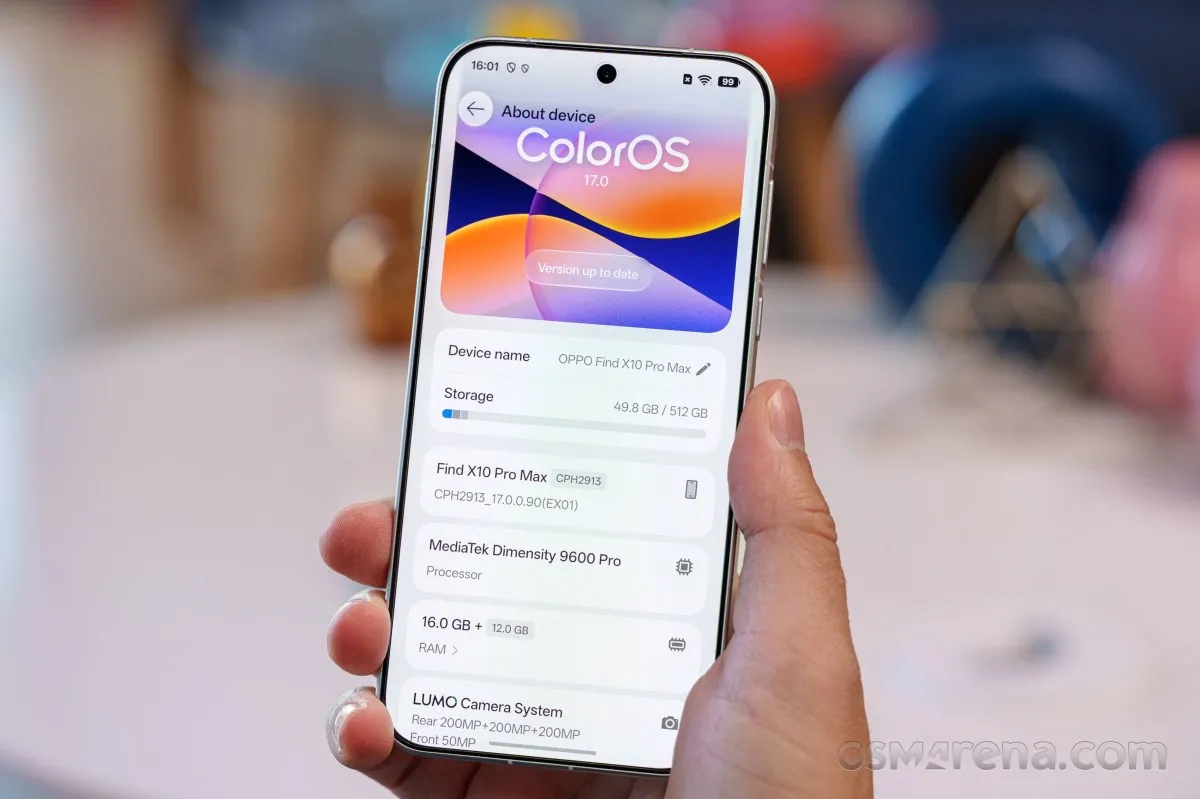
While many recent software skins have played it safe, ColorOS 17 introduces a striking visual overhaul. The centerpiece is the "Living Flow Design," which emphasizes heightened responsiveness, organic animations, and translucent interface elements that draw clear inspiration from the "Liquid Glass" aesthetic seen in iOS. This visual polish is paired with a comprehensive suite of new AI capabilities.
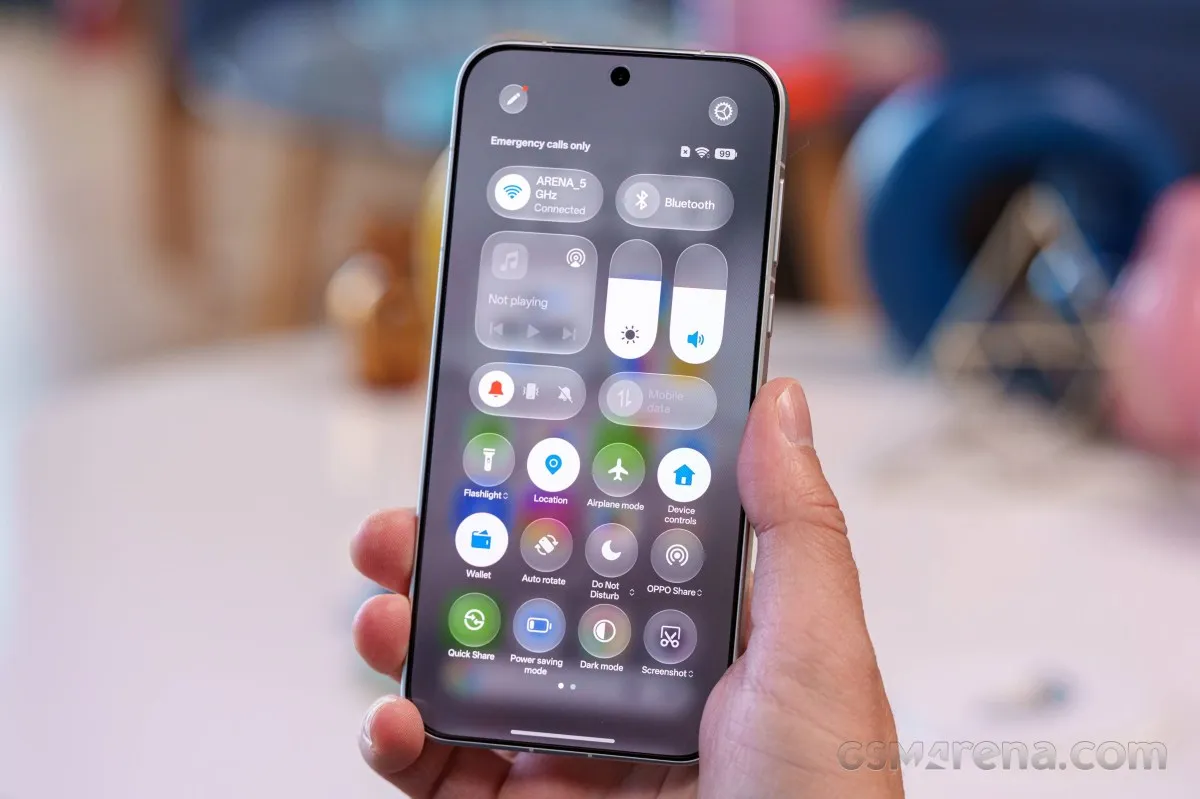
The core of this aesthetic shift lies in the Living Flow framework, utilizing "Fluid Motion," "Flexible Feedback," and "Luminous Effects." While the terminology is sophisticated, the practical result is a user interface that mirrors the sleek, glass-like fluidity of Apple's software design.
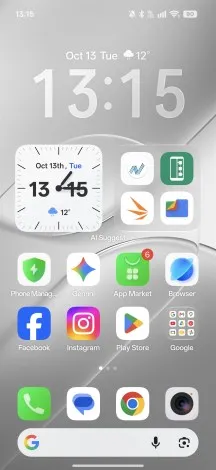
Customization is a priority for the lock screen, which now supports a variety of widgets and clock themes, including depth-effect wallpapers. The transition from the Always-On Display to the lock screen and finally to the home screen is seamless, further cementing the software's similarity to the iOS experience.
Users can now choose between two app drawer layouts: a traditional "All" view or a "Category" view, the latter of which closely mimics the organizational style found on iPhones.
On the intelligence front, while most tools reside in the Oppo AI menu, the standout addition is the AI Agent. This powerful tool integrates ChatGPT, Perplexity, and Gemini models, all linked to the "AI Mind Space"—a sophisticated smart clipboard for archiving text, media, screenshots, and notes. This ecosystem allows the AI to deliver highly personalized answers, structured data summaries, and tailored suggestions based on your saved content.

Beyond simple queries, the AI Agent can handle complex file management, including batch renaming and sorting of photos. It can also synthesize data from various apps and documents to automatically generate invitations, travel tips, and full itineraries.
Security is also enhanced via AI; the system can now detect AI-generated scams in real-time, analyzing both audio and video during calls to warn users if a voice or face is a synthetic fabrication.
Integrating Mind Pilot, the Photos app now leverages ChatGPT to transform how users manage their galleries. This AI-driven service allows for the creation, modification, and organization of images via simple text prompts, while also offering a sophisticated search capability to pinpoint specific shots within a library of thousands.
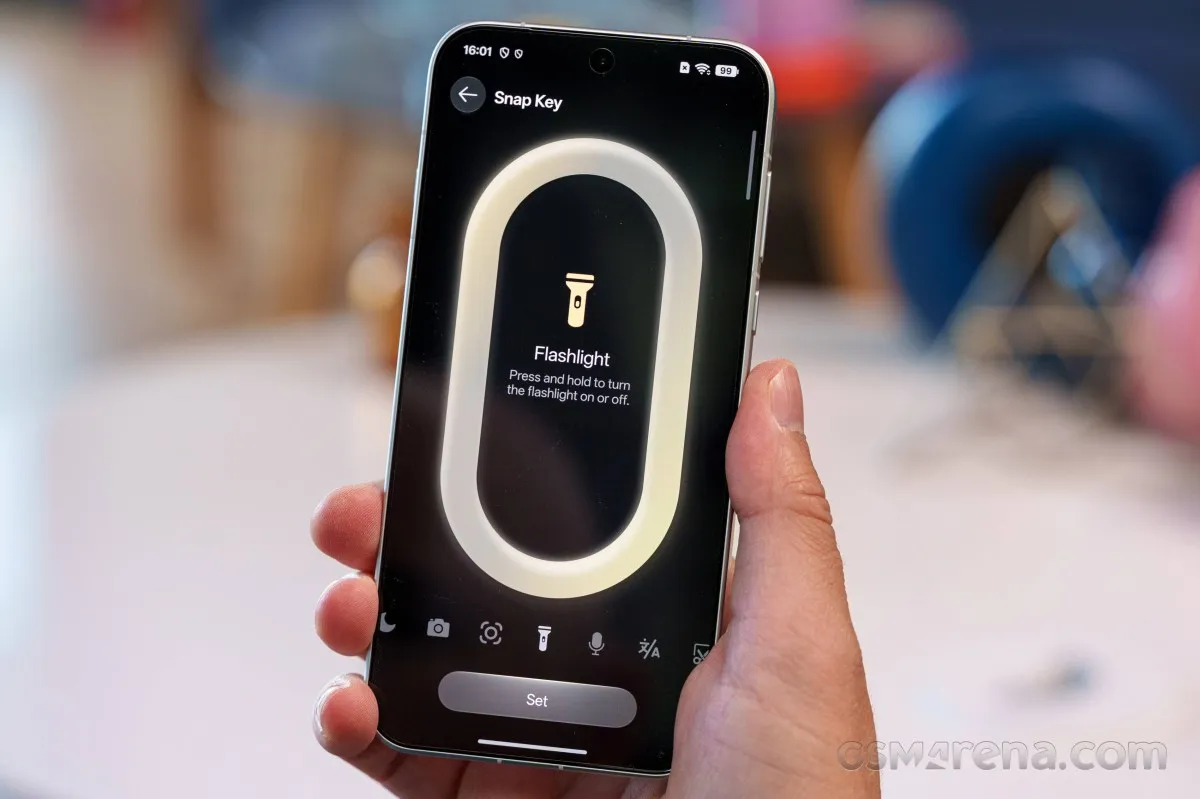
On the left edge, the device features the Snap Key. While not a new addition to the lineup, this physical button remains a useful tool; by default, it captures screenshots and archives them in Mind Space, though users can remap it to trigger other functions, such as the flashlight.
Benchmark performance
Under the hood, the Find X10 Pro Max debuts the MediaTek Dimensity 9600 Pro. Currently, this is the only variant available, marking a milestone as MediaTek's first 2nm silicon. The chipset integrates ARM's latest CPU and GPU architectures, specifically engineered to deliver superior power efficiency and enhanced AI processing capabilities.
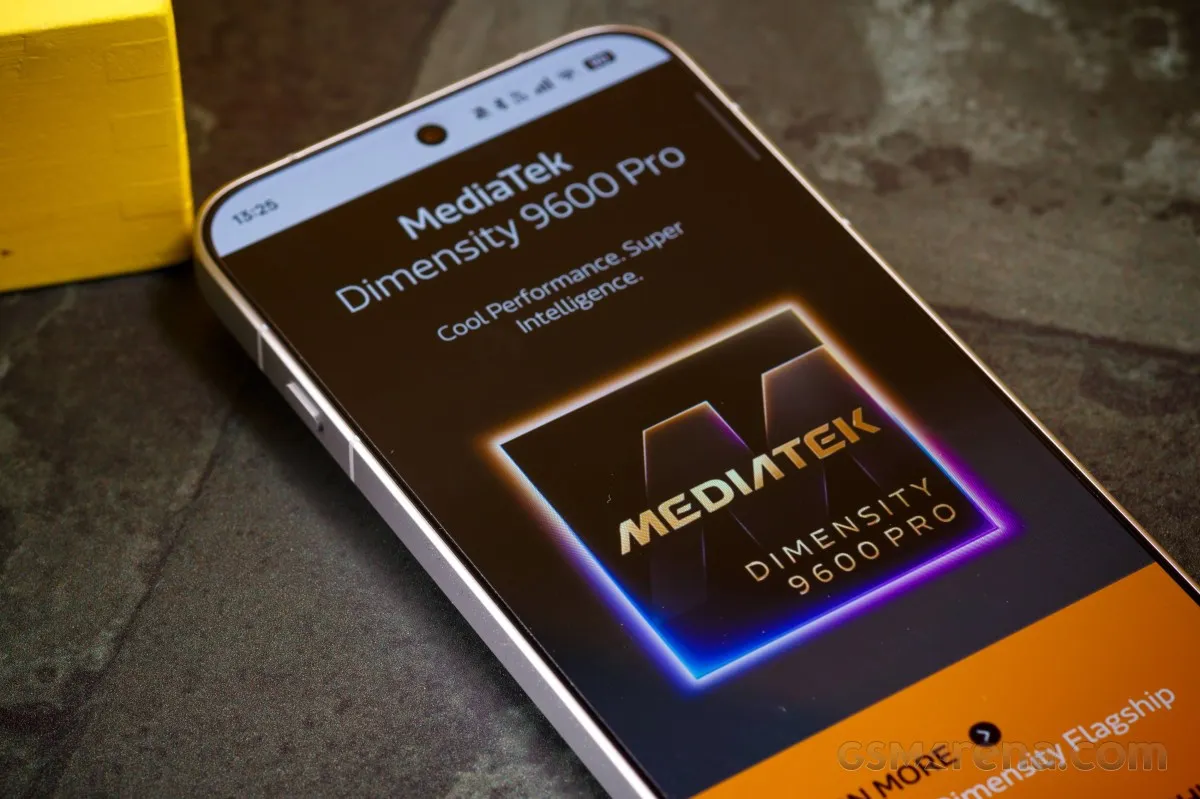
The processor's architecture is divided into three tiers: two C2-Ultra cores peaking at 4.55 GHz, three C2-Pro cores running at 4.35 GHz, and an additional three C2-Pro cores clocked at 3.1 GHz.
Graphics are handled by the Mali-G2 Ultra NX GPU, which is designed to sustain gaming frame rates of 185+ fps and boasts a 27% improvement in ray-tracing efficiency.
While the Dimensity 9600 Pro is technically compatible with UFS 5.0 storage and LPDDR6 RAM, the Find X10 Pro Max utilizes LPDDR5X and UFS 4.1 instead.
In terms of availability, the phone is sold globally with a fixed 512GB storage capacity, paired with either 12GB or 16GB of RAM. European markets, however, are limited to the 12GB/512GB model.
The chipset's NPU does more than just handle AI computations; it reportedly assists the ISP in refining image and video processing. Additionally, the video decoding engine has been upgraded to support native H.266.
GeekBench 6
- Single-core
- Multi-core
Galaxy S26 Ultra
vivo X300 Ultra
Xiaomi 17 Ultra
Oppo Find X9 Ultra
Oppo Find X10 Pro Max
Oppo Find X9 Pro
Pixel 11 Pro XL
GeekBench 7
- Single-core
- Multi-core
Galaxy S26 Ultra
vivo X300 Ultra
Oppo Find X10 Pro Max
AnTuTu
- v11
- v12
Oppo Find X10 Pro Max
Oppo Find X9 Ultra
vivo X300 Ultra
Galaxy S26 Ultra
Xiaomi 17 Ultra
Oppo Find X9 Pro
Pixel 11 Pro XL
3DMark
- Wild Life Extreme (Highest)
- Wild Life Extreme (Lowest)
- Solar Bay (Ray Tracing)
Galaxy S26 Ultra
Oppo Find X9 Ultra
Oppo Find X10 Pro Max
vivo X300 Ultra
Xiaomi 17 Ultra
Oppo Find X9 Pro
Pixel 11 Pro XL
The Dimensity 9600 Pro is a potent upgrade over the Dimensity 9500 found in last year's Find X9 Pro. It delivers superior CPU and GPU metrics, even eclipsing the Snapdragon 8 Elite Gen 5 in combined AnTuTu 11 benchmarks. MediaTek's strides in ray-tracing are particularly evident, as the chip dominates advanced graphics tests, placing it at the top of its class.
That said, the Snapdragon 8 Elite Gen 5 still maintains an edge over the Dimensity 9600 Pro when dealing with standard CPU-intensive tasks and non-advanced GPU workloads.
Sustained performance
When it comes to long-term stability, the Find X10 Pro Max delivers results that are typical for a flagship device—competent, but not groundbreaking.
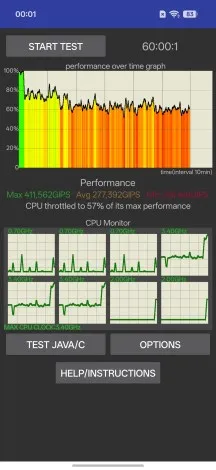
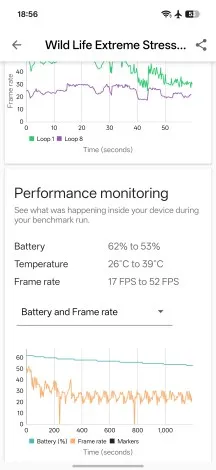
Thermal management reveals significant throttling; during our stress tests, both the CPU and GPU saw performance drop to approximately 50-60% of their peak capacity.
Camera - photo and video quality
A Triple-Threat: Three 200MP Sensors
Oppo is pushing boundaries with the Find X10 Pro Max, debuting what the company claims is the world's first triple 200MP camera array. While we've seen high-resolution setups before—such as the Find X9 Ultra's mix of two 200MP and two 50MP sensors, or various 2x200MP+1x50MP configurations—a full house of three 200MP imagers is entirely unprecedented.
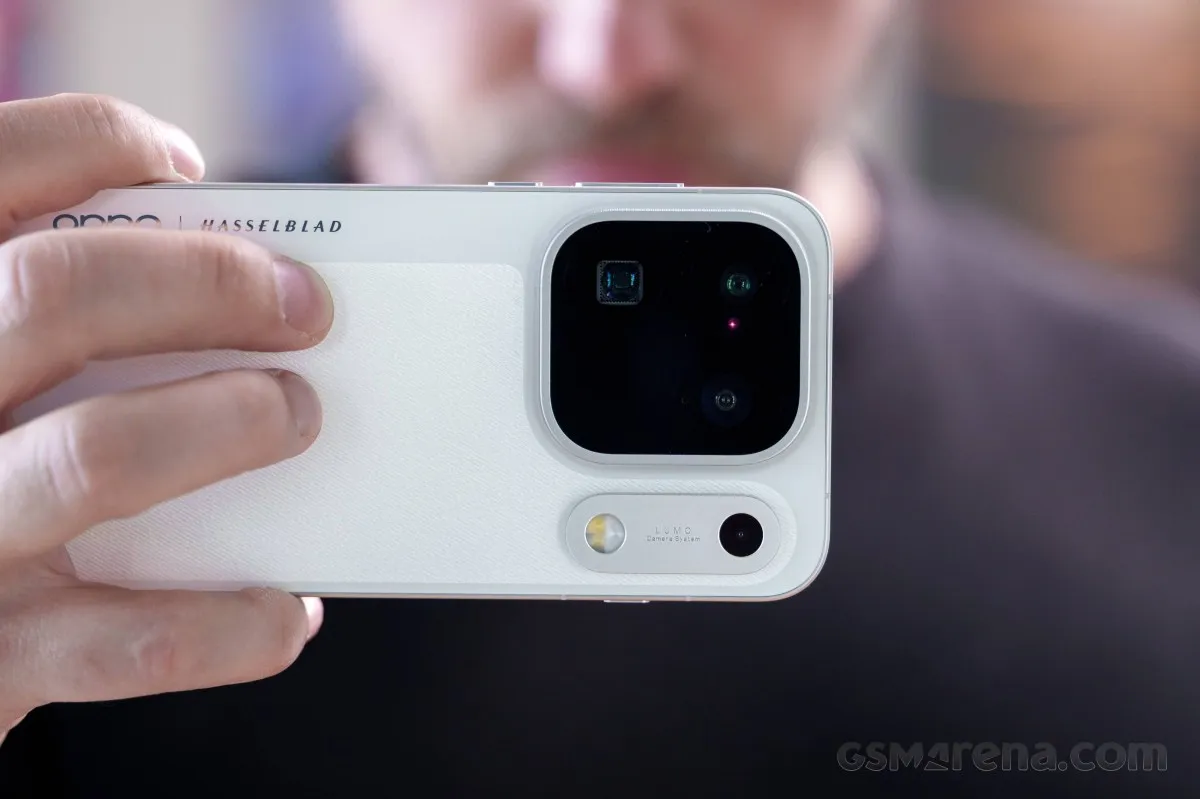
The real breakthrough here is the 200MP ultrawide lens. To achieve this, Oppo utilized a Samsung HP5 sensor with a 1/1.56" optical format, paired with a wide 13mm equivalent lens, ensuring high-resolution captures across a massive field of view.
The telephoto lens also leverages an HP5 sensor, though it's paired with a 70mm equivalent lens. This hardware is essentially a carry-over from the Find X9 Pro. It is worth noting, however, that the X9 Ultra still holds a slight edge in this department with a marginally larger 1/1.28" 200MP sensor for its 70mm focal length.
The primary wide-angle camera has also seen a significant bump. Oppo has replaced the 50MP sensor found in the X9 Pro with a 200MP powerhouse. On paper, the optical format has shifted slightly from 1/1.28" to 1/1.3", and resulting pixels have moved from 2.44µm to 2.40µm—a difference so minuscule it's unlikely to be perceptible in real-world use.
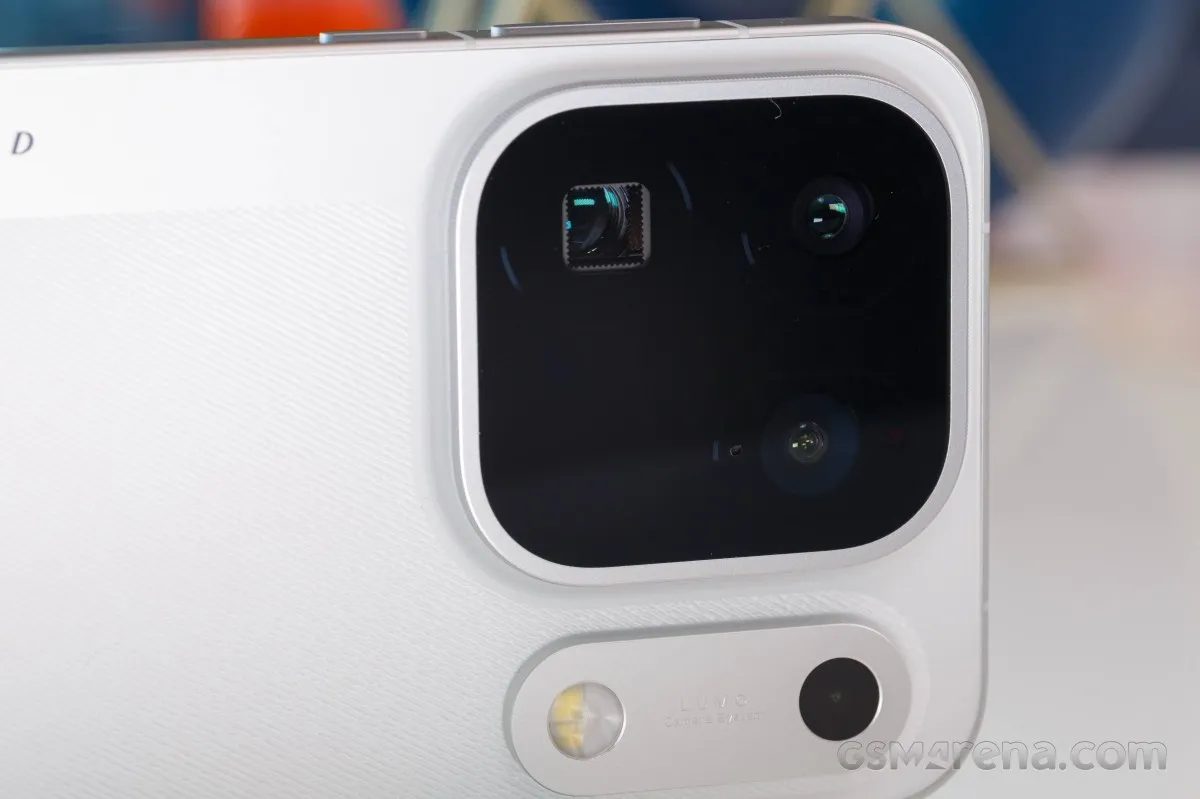
This new ISOCELL HPC sensor is a bespoke collaboration between Samsung and Oppo. It introduces "DeepPix" technology, which Oppo claims boosts the pixels' full well capacity (FWC) by 60% over previous designs that relied on FDTI (Front Deep Trench Isolation). This architectural shift aims to deliver a staggering 17 stops of dynamic range. For those interested in the technical blueprints, Samsung provides detailed diagrams on its HPC product page. Regardless of the jargon, the dynamic range is expected to be top-tier.
That said, the X9 Ultra remains the king of raw sensor scale, boasting a 1/1.12" imager with 2.8µm binned pixels.
Up front, the selfie camera is a refined version of a known quantity. While it still uses the 50MP Samsung JN5 sensor seen in the X9 Pro and Ultra, Oppo has swapped the 21mm lens for a wider 18mm optic, complete with autofocus capabilities.
- Wide (main): 200MP Samsung Isocell HPC (1/1.3", 0.6µm-2.4µm); 24mm, f/1.5, OIS, multi-directional PDAF (14cm - ∞); 8K30/4K120 video recording.
- Telephoto: 200MP Samsung Isocell HP5 (1/1.56", 0.5µm-2.0µm); 70mm (3x zoom), f/2.1, OIS, multi-directional PDAF (9cm - ∞); 8K30/4K120.
- Ultrawide: 200MP Samsung Isocell HP5 (1/1.56", 0.5µm-2.0µm); 13mm, f/2.2, multi-directional PDAF; 8K30/4K120.
- Front camera: 50MP Samsung ISOCELL JN5 (1/2.76", 0.64µm-1.28µm); 18mm, f/2.0, multi-directional PDAF; 4K60.
Beyond the standard lenses, the device includes a "True Color Camera." This is a 3.2MP multispectral sensor with 24 channels, offering 5.5 times the dynamic range of its predecessor. Its primary role is to analyze light temperature with extreme precision, feeding data into the "LUMO True Image Engine" to ensure colors remain accurate regardless of the lighting environment.
One disappointing change is the removal of the dedicated Quick Button for the camera. This feature was a staple of the X9 Pro and Ultra, but it has been excised here—a trend we're seeing across several flagship cameraphones, including recent vivo models. While the Snap Key is still present, its placement isn't ideal for photography, and it lacks the sophisticated swipe and press gestures that made the Quick Button so useful.
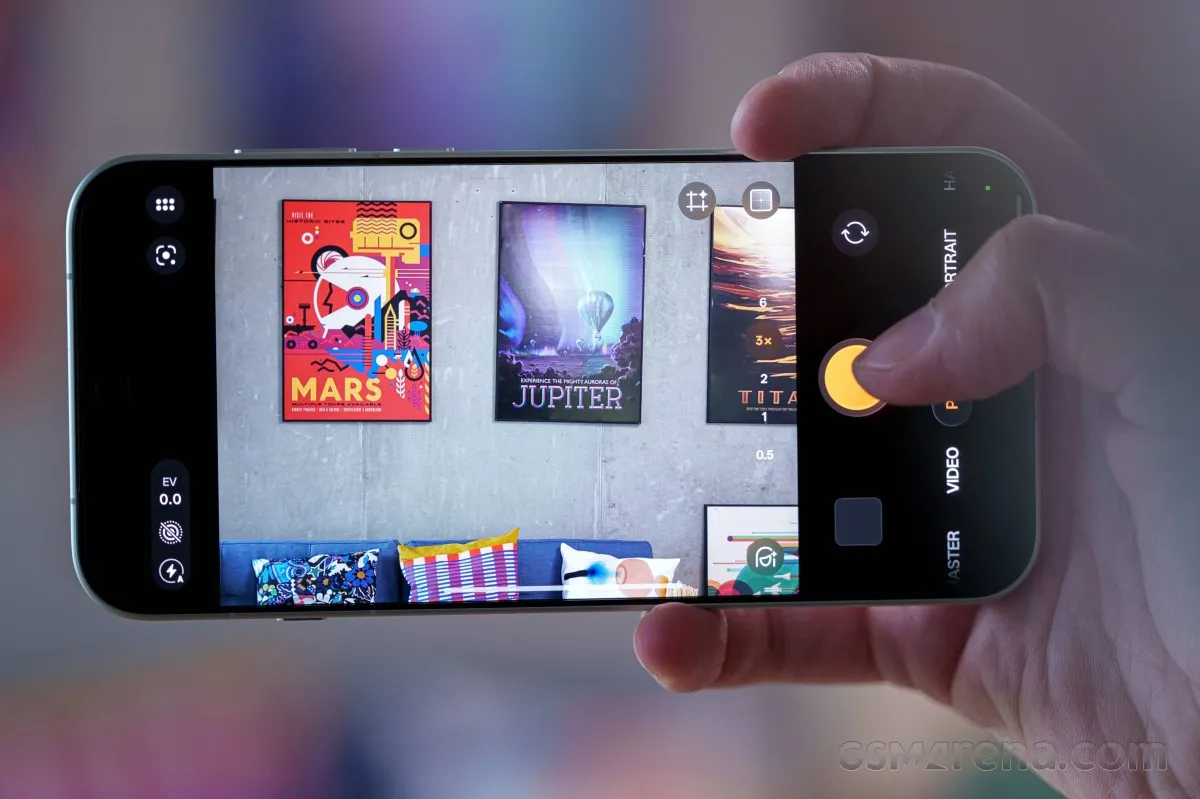
The influence of Hasselblad is woven throughout the camera experience. This partnership is most evident in the "Hasselblad Hi-Res" mode, which allows users to capture images at 50MP and 200MP resolutions. Photography enthusiasts will also appreciate the Xpan mode—a tribute to this iconic camera—which produces 22MP panoramic shots with a distinct 65:24 aspect ratio. Beyond the software, the Swedish brand's identity is reinforced by the signature orange accents punctuating the UI and the official logo emblazoned on the device's rear panel.
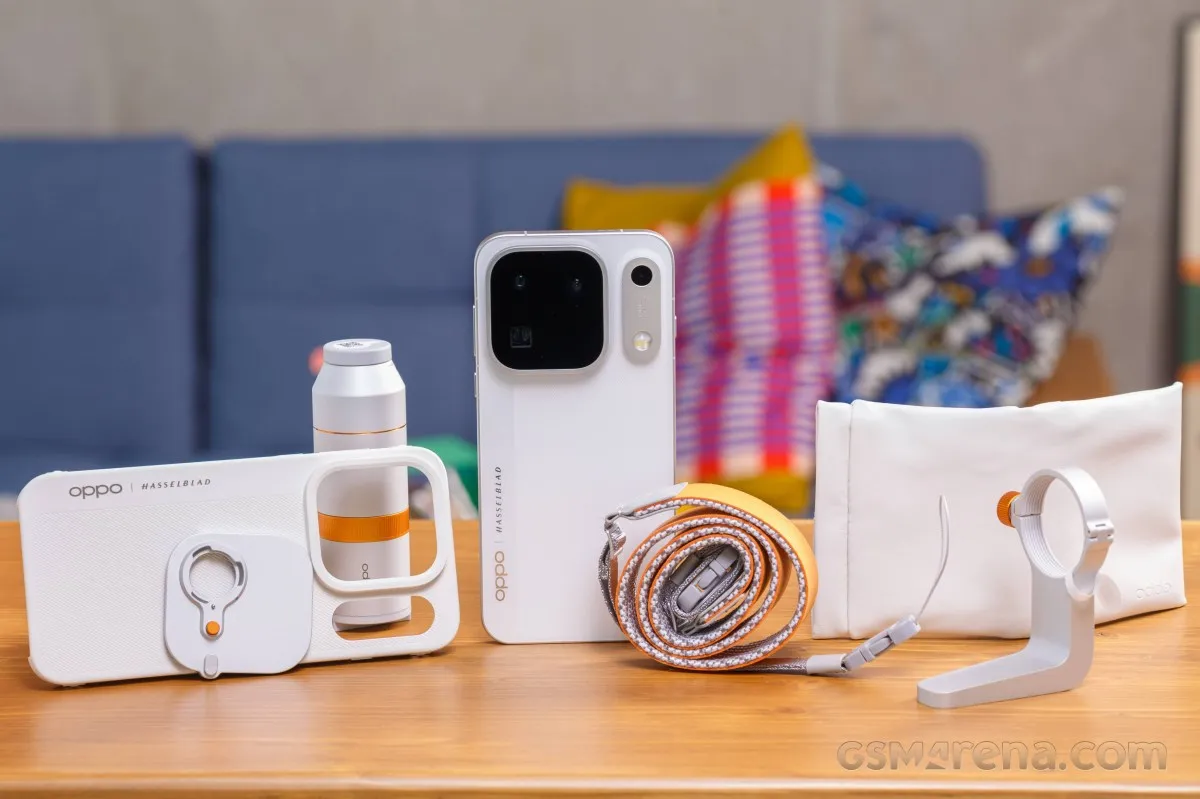
Further extending the Hasselblad collaboration is the Teleconverter bundle, an essential add-on for those seeking professional-grade zoom capabilities. This lens provides 3.28x magnification, pushing the total equivalent focal length to 230mm (roughly 10x magnification relative to the primary sensor). We have documented our experience with this accessory in a dedicated feature article.
Daylight photo quality
Main camera
When utilizing the primary sensor's default 26MP High resolution setting, the results are impressive across most standard metrics. However, the rendering of fine details is somewhat disappointing; elements like foliage, blades of grass, and small typography often appear soft and lack crisp definition. While we hoped for more, the pixel-level clarity is merely adequate—especially when compared to the Find X9 Ultra, which handles High resolution mode with significantly more precision.
From a broader compositional perspective, the performance is stellar. The device delivers superb dynamic range, ensuring that highlights are kept in check and shadows are richly detailed (though we didn't independently verify vivo's claim of 17 stops of dynamic range). The default color profile leans toward a warmer white balance, paired with a satisfying level of saturation that results in visually appealing images.








Interestingly, switching to the 12.6MP Standard resolution mode yields better results for fine textures. In this mode, grass appears more distinct and the linear edges of architectural elements are cleaner, although some aliasing (jaggies) remains present.




When utilizing the main sensor, the 50MP captures are impressive. Interestingly, if you manually downscale these images to 26MP—matching the resolution of the High Resolution mode—you'll often find superior detail reproduction, particularly in bright, outdoor environments.
We also experimented with the 200MP mode, though it didn't feel like a massive leap in practical detail. However, applying the same downscaling technique revealed a slight edge over the 50-to-26MP conversion in specific scenarios. The overarching takeaway here is that the standard 26MP out-of-the-box shots aren't fully exploiting the hardware's capabilities.
Portraits captured at 1x are visually appealing, boasting excellent dynamic range, well-balanced exposures, and natural skin tones. The only minor gripe is the absolute sharpness at the pixel level when using the default 26MP setting. In contrast, the dedicated Portrait mode—which outputs fixed 12.6MP images—delivers a punchier, more defined look with an aesthetically pleasing bokeh effect.








Switching to the 2x zoom, the 26MP images maintain a respectable level of detail, although they are somewhat susceptible to aliasing and "jaggies" in certain areas.








Switching to the 12.6MP output results in a cleaner image; aliasing is noticeably reduced, and the per-pixel detail appears more refined.




When capturing headshots at 2x zoom, the device retains the impressive color accuracy seen at 1x. While the 26MP mode delivers good detail, the 12.6MP option is superior. Additionally, the Portrait mode's background bokeh is quite effective, though it can feel slightly aggressive in some instances.








Telephoto camera
Performance from the 3x telephoto lens is outstanding. When utilizing High resolution mode, the level of detail actually surpasses that of the primary sensor, delivering images that are virtually pin-sharp in most lighting conditions, although some softness creeps in during low-light indoor shoots. Furthermore, the color reproduction is vibrant without being overdone, white balance remains consistent, and the dynamic range is top-tier.















Switching to 12.6MP output results in images with sharper definition, though they exhibit a more processed, digital quality to the fine details.




While the 50MP 3x captures show promise for those looking to pull out finer details, the standard 26MP output is already so capable that the gains from post-processing the 50MP files are marginal. It is certainly an avenue for power users to explore, but for most, the native 26MP shots are more than sufficient.
As for the 200MP mode, its practical utility remains elusive, though we have included several high-resolution samples below for those who wish to examine them.




Portraiture is a strong suit for the zoom lens. In 26MP mode, facial details are rendered with striking clarity—which may be overly sharp for some, though easily corrected in editing. In standard Photo mode, the lens produces a pleasing natural background blur. Furthermore, the dynamic range is impressive and skin tones are rendered beautifully, while the dedicated Portrait mode delivers a high-quality synthetic bokeh.








Even when pushed to 6x magnification, the telephoto lens maintains a strong performance in 26MP, keeping overall sharpness intact and ensuring that fine textures, such as foliage, remain well-defined.








Interestingly, when comparing the two, the 12.6MP output actually delivers superior per-pixel quality.




Ultrawide camera
Switching to the ultrawide lens, the standard 26MP captures are equally impressive. While ultrawide sensors often face more lenient scrutiny, these shots stand out with remarkable sharpness and a commendable level of detail. Furthermore, the overall image processing is top-tier, delivering dynamic range and color reproduction that are nearly flawless.








For those looking to optimize their device's storage, the 12.6MP output remains a highly viable option, delivering impressive results without the heavy file sizes.




Utilizing the 50MP mode is most beneficial when you intend to manually downscale images to a specific resolution. Interestingly, when we converted 50MP captures to 26MP via post-processing, we observed a more natural look with reduced artificial sharpening and slightly more refined detail compared to the native 26MP mode—though this depends on the minimal sharpening we applied during our edit.
To provide a complete overview of the hardware's capabilities, we have included a selection of 200MP captures below.




Close-ups
The Find X10 Pro Max offers an abundance of options for macro-style photography, with its entire rear array capable of focusing at relatively short distances. The most effective approach is utilizing the telephoto lens; while Oppo officially rates its minimum focus distance at 10cm, our testing revealed we could get as close as 9cm from the camera bump. Although we encountered a few focus misses while pushing for the maximum possible magnification, the overall image quality remains outstanding.




When pushing to 6x zoom, there is a slight dip in per-pixel sharpness, but the sheer level of detail captured usually compensates for this. Users should be mindful that the depth of field becomes incredibly shallow when the telephoto lens is used at its minimum focus limit, making precise framing essential to ensure the subject is sharp.




Alternatively, you can utilize the primary sensor at 2x zoom. However, since the main camera's minimum focusing distance is 14cm, it cannot provide the same level of magnification and detail as the dedicated telephoto module.




The device also features intelligent camera switching; if you attempt to shoot at 1x or 2x but are closer than 14cm to your subject, the phone automatically pivots to the ultrawide lens to maintain focus. While the results at 1x are acceptable, the image quality becomes noticeably soft at 2x.
Depending on the subject, using the ultrawide lens at its native focal length can be a great choice for close-range shots. It performs admirably in this role, although it isn't the ideal tool for capturing tiny, fast-moving insects like wasps.




Low-light photo quality
Main camera
Consistent with Oppo's design philosophy, the Find X10 Pro Max aggressively leverages its Night mode processing automatically. This removes the guesswork for the user, though it comes with a trade-off: the device will prioritize "Standard resolution" 12.6MP captures when lighting drops below a certain threshold. Even if you have manually selected "High resolution," the phone will override this setting to ensure better image quality in the dark.
The results from the primary sensor are, as expected, impressive. Night shots exhibit strong contrast, a broad dynamic range, and well-managed tonal extremes. We did notice some localized softness in brighter highlights—such as the pathways and patios seen in the fourth sample—which mirrors a tendency we've observed in Oppo's daylight processing. However, the auto white balance remained flawless throughout our testing, and the saturation levels produce vibrant, appealing images that remain grounded in reality. While the highlight softening exists, it is a rare occurrence and generally requires a close look to identify, as overall detail remains sharp.








When utilizing 2x zoom in extreme darkness, some images can suffer from overall softness (again, most evident in the fourth scene). This appears to be an exception rather than the rule. In scenarios with slightly more ambient light and distinct subjects, the X10 Pro Max delivers superb detail. Interestingly, it often outperforms the X9 Ultra in these conditions, and it consistently matches its predecessor's quality despite the older Ultra model featuring a physically larger sensor.








Telephoto Performance
When utilizing the 3x telephoto lens, the results are impressively sharp. The imagery is rich in detail and maintains a natural, albeit slightly textured, aesthetic that closely mirrors the performance of the Find X9 Ultra. We found the dynamic range and contrast to be superb; while the colors remain authentic, they inherit the vivid, high-energy palette of the primary sensor, often appearing more striking than the images produced by the Ultra.








Pushing the zoom to 6x leads to a noticeable drop in fine detail, a degradation that is more apparent in dim environments than in daylight. Despite this, the shots remain entirely viable—and even high-quality in better-lit scenes. However, the Ultra generally maintains a slight edge in overall clarity at this magnification.








Ultrawide Performance
When the lights go down, the updated ultrawide sensor continues to impress. It maintains a steady, albeit modest, lead over the X9 Ultra and nearly rivals the vivo X300 Ultra, an impressive feat considering the vivo utilizes a physically larger 1/1.28" sensor for its ultrawide lens. The results are undeniably strong, characterized by vibrant color reproduction, sharp detail, and a broad dynamic range.








Front-Facing Camera
The Find X10 Pro Max continues the tradition of high-quality selfies established by its predecessor, but it now offers a more generous field of view. By moving from a 21mm equivalent to an 18mm lens, the device manages to fit more of the scene into the shot without sacrificing clarity. The imaging pipeline delivers natural skin tones, punchy saturation, and a commendable level of dynamic range.








For those who miss the 21mm focal length found in previous iterations, simply hitting the 1x button in the viewfinder provides that perspective with minimal loss in detail. Conversely, the 2x zoom isn't particularly crisp, though it may serve a purpose for the rare occasion you need a selfie from a significant distance.
Photo quality verdict
Surpassing the Find X9 Pro was a tall order, yet Oppo has managed to push the X10 Pro Max further, even securing a few wins over the current Ultra. Our primary gripe is the main sensor's default 26MP daytime output; while the 50MP mode reveals far more potential through manual post-processing, the out-of-the-box tuning falls slightly short. Beyond that, the three rear lenses deliver consistently high-quality imagery across all lighting conditions, including impressive results at 2x and 6x digital crops. The telephoto's 26MP shots are polished right away, the ultrawide's 26MP images are nearly optimal, and the 12.6MP mode is reliably strong. Low-light capabilities remain elite. This excellence extends to the front camera, where selfies are superb and the expanded field of view doesn't compromise image quality.
Video quality
The Find X10 Pro Max boasts a comprehensive suite of video tools, offering a vast array of resolutions, frame rates, and a sophisticated Pro mode. Standard recording allows for 8K30 and 4K120 across all three rear cameras—a notable upgrade over the Find X9 Ultra, where the ultrawide was capped at 4K60. Dolby Vision is integrated by default across all settings, with the sole exception of 8K (though it remains available for 4K120).
Front-facing video is capped at 4K60, with optional Dolby Vision support.
Stabilization is active by default for all settings. For more intense movement, Ultra Steady mode is available up to 4K60 on the rear sensors and 1080p30 for the selfie camera. Within the Pro mode, users can choose between three distinct stabilization profiles: Off, OIS only, or Enhanced. Interestingly, the "Enhanced" setting provides a different stabilization crop and behavior compared to both the standard and Ultra Steady modes.
The Pro mode further expands the creative toolkit by introducing a 24fps cinema frame rate. In addition to Dolby Vision, creators can utilize O-Log2 recording, which includes four built-in live preview LUTs (applicable to the final export) and the ability to upload custom LUTs. Professional monitoring tools, including a substantial waveform display, focus peaking, and real-time audio level meters, round out the experience.
A standout feature of the X10 Pro Max is the introduction of open gate recording. This capability allows creators to capture video utilizing the entire sensor area, bypassing the traditional 16:9 or 2.39:1 crops and providing total flexibility for post-production framing. This mode is supported across all three rear cameras at their native focal lengths, topping out at 60fps and offering a choice between SDR, HDR, or O-Log2 formats.
Explore the video capabilities via the embedded player below using the 'next' button, or dive into the complete playlist on YouTube.
Under daylight conditions, the Find X10 Pro Max delivers impressive results. The trio of rear lenses produces a cohesive output characterized by vivid colors, a lack of unnatural color casts, and a commendable balance of contrast and dynamic range.
Regarding resolution and fine detail, the X10 Pro Max continues a recent trend of being competent but not groundbreaking. At 1x, the primary sensor performs between good and very good, though it falls slightly behind the X9 Ultra. The gap widens at 2x, where the Ultra remains vastly superior and the X10 Pro Max feels mediocre. When compared to the X9 Pro, the X10 Pro Max matches it for raw detail at 1x, but earns a victory by rendering that detail with a more natural, less over-processed aesthetic. However, it is noticeably softer at 2x than its predecessor.
The redesigned ultrawide lens holds its own in terms of clarity; it roughly matches the X9 Ultra and offers a slight improvement over the X9 Pro.
The 3x telephoto lens is highly capable at its native focal length. While it shares hardware with the X9 Pro and offers similar detail levels, the X10 Pro Max provides a more appealing visual rendition, though the X9 Ultra still maintains a slight advantage. Once you hit 6x zoom, all three flagship Oppo devices perform on a similar, solid level.

Low-light performance on the X10 Pro Max is consistently strong, maintaining reliable white balance, rich colors, and high dynamic range across all focal lengths. At 1x, the main camera's sharpness is excellent—matching the X9 Pro and actually surpassing the X9 Ultra. Performance dips at 2x, mirroring the Ultra's struggle and falling behind the X9 Pro. The telephoto lenses generally handle the dark well, with the X10 Pro Max potentially edging out the other two models.
The ultrawide performance presents an interesting case. Despite the X10 Pro Max featuring the largest sensor (1/1.56"), which results in slightly better sharpness than the X9 Ultra's 1/1.95" sensor, it is surprisingly matched in clarity by the X9 Pro's much smaller 1/2.76" sensor. However, the X10 Pro Max dominates in other areas; the older Pro model cannot compete in dynamic range and suffers from harsh highlights that the new X10 Pro Max successfully avoids, making the hardware upgrade clearly beneficial.





The stabilization performance here is a contradictory blend of excellence and inconsistency. When filming from a stationary position, the main and ultrawide lenses deliver rock-solid, tripod-like stability. The telephoto lens is slightly more susceptible to minor jitters in these scenarios, though it remains acceptable. The real issue arises during panning shots; all three lenses exhibit a certain jumpiness—particularly the main and ultrawide sensors. This mirrors our findings with the X9 Ultra, whereas the X9 Pro handled pans with much more fluidity.
As for managing walking vibrations on the primary sensor, the results are decent, though they fall short of perfection.
Video quality verdict
The Oppo Find X10 Pro Max boasts a powerhouse of video features, headlined by 4K120 recording across all rear lenses (complete with Dolby Vision support) and 8K30 capabilities. It also introduces an "open gate" recording mode, adding further versatility to an already robust Pro video suite. While everyday recording is generally impressive—offering high-quality daylight clips and exceptional low-light performance—the stabilization remains a variable experience.
Alternatives, pros and cons, verdict
Market Competition
The Oppo Find X10 Pro Max effectively operates as an "Ultra" device in disguise. By integrating a massive camera overhaul and a premium price point, this year's Pro Max model erases the traditional boundary between Pro and Ultra tiers. While most manufacturers reserve "Ultra" branding for photography-first powerhouses and "Pro" for balanced all-rounders, the Find X10 Pro Max enters the fray with a formidable triple 200MP camera array. However, this ambition comes with a steep cost; at €1,799, it is a significant investment, even with the inclusion of 512GB of base storage.
It is important to note that the X10 Pro Max isn't intended to supersede the Find X9 Ultra. Instead, it faces a direct clash with upcoming rivals like the vivo X500 Pro Max, the Xiaomi 18 Pro Max, and the Honor Magic9 Pro Max.
For those weighing their options at this price bracket, the market is crowded with Ultra-tier alternatives. Options include the Xiaomi 17 Ultra, the Samsung Galaxy S26 Ultra, and the previous-gen Oppo Find X9 Ultra. If you aren't waiting for the X500 Ultra, the vivo X300 Ultra is the closest direct competitor in terms of pricing. In a head-to-head comparison, the Find X10 Pro Max triumphs in battery endurance and holds its own in imaging, though the vivo offers superior speaker quality and quicker charging speeds.
Loyalists of the Oppo brand might find the Find X9 Ultra a more attractive value proposition at approximately €1,500. That model provides a slight edge in processing power, faster charging, superior audio, and a dual-telephoto lens configuration. In terms of overall photographic quality, the two devices are largely comparable, barring a few specific scenarios.
Budget-conscious buyers looking for "Ultra" specs should consider the Samsung Galaxy S26 Ultra and the Xiaomi 17 Ultra. The Samsung is a safer bet for those prioritizing long-term software support, a more versatile display, better speakers, and faster charging. However, only the Xiaomi 17 Ultra truly challenges the X10 Pro Max in the camera department; the winner there is subjective, depending on whether you prefer Xiaomi's or Oppo's image processing. Notably, both are far more affordable, with the Xiaomi priced slightly above €1,000 and the Samsung sitting just below that mark.

Finally, the previous year's Find X9 Pro remains a viable, cheaper alternative, though it lacks the substantial leaps in battery longevity and camera hardware found in the new model (though the battery advantage is primarily relevant for users outside of Europe).
Final Verdict
The Oppo Find X10 Pro Max is an Ultra-class flagship in everything but name. It establishes itself as one of the most capable devices on the market, even outperforming Oppo's own Ultra model in several key areas. With a top-tier display, a high-performance chipset, and battery life that currently leads our benchmarks, it is a powerhouse of a phone. Its triple 200MP camera system is a standout, offering industry-leading ultrawide performance and exceptional low-light video capabilities across all lighting conditions.
Most impressively, Oppo has housed this immense technical power within a sophisticated, minimalist chassis that feels every bit as luxurious as the internals suggest.
The most significant barrier to adoption is, without question, the cost. Launching in the European market with a premium price tag, the device sits at a steep valuation that rivals even the most sophisticated Ultra-tier flagships. Regardless of the hardware prowess on display, this is a demanding asking price, making the Find X10 Pro Max a difficult recommendation from a pure value-for-money standpoint.
Beyond the cost, a few minor grievances persist. The charging speeds are noticeably more sluggish than what Oppo typically delivers in its premium segment, and the audio output from the speakers fails to match the high standard set by the rest of the multimedia suite. While these flaws likely won't deter the average enthusiast, they are noticeable omissions when spending this much on a handset.
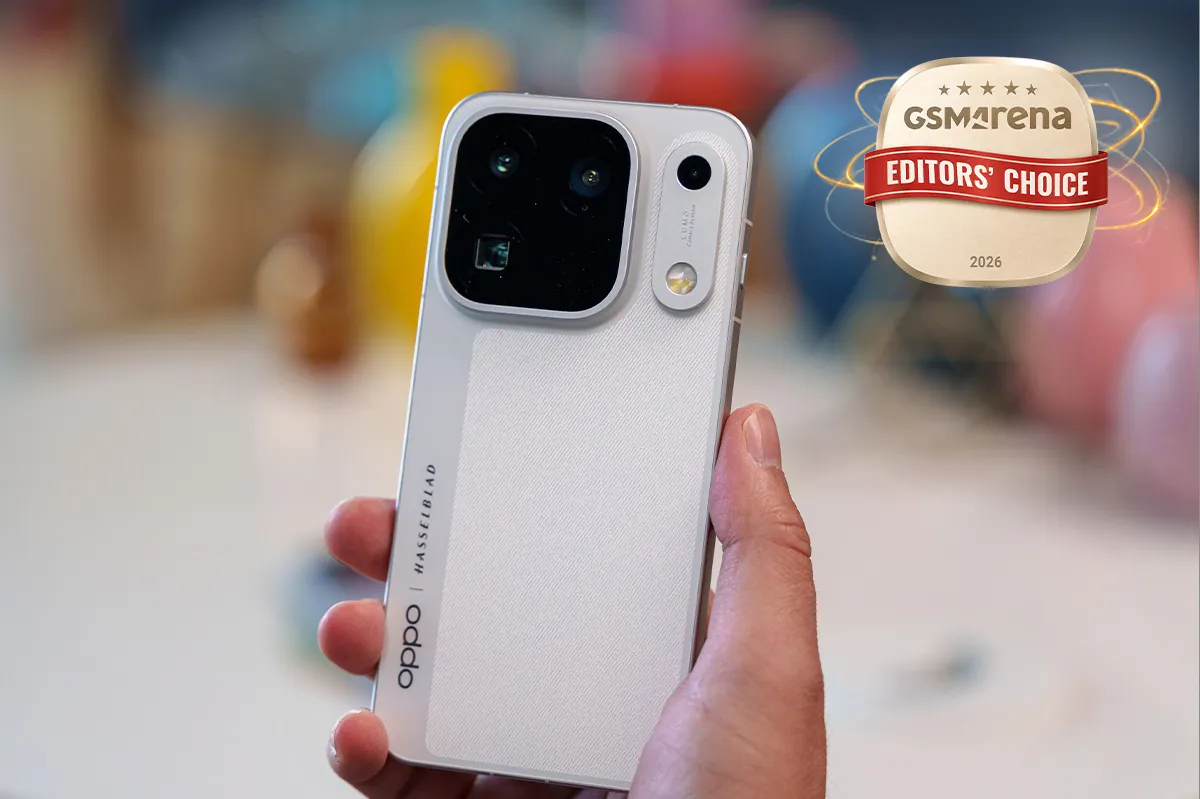
Nevertheless, these critiques don't overshadow Oppo's overall achievement. The Find X10 Pro Max transcends the typical "balanced" flagship; it pushes the industry forward in critical categories, most notably in battery longevity and photographic capability. For users whose budgets allow for the premium, it provides a top-tier experience with very few drawbacks. Consequently, it has earned our Editors' Choice award.
Pros
- Robust construction and an appealing aesthetic, even with the prominent camera module.
- A high-end LTPO OLED screen that is both luminous and versatile.
- Battery endurance that sets a new industry benchmark.
- ColorOS 17 offers a contemporary interface packed with useful tools.
- A superior camera system across all lenses, featuring elite low-light video and impressive ultrawide shots.
- The availability of an optional teleconverter kit for professional-grade photography.
Cons
- High entry price at launch.
- Charging velocities are underwhelming for the class.
- The battery capacity in the European variant has been reduced.
- Speaker volume and fidelity lag behind the competition.
- The dedicated hardware Quick Button for the camera has been removed.